

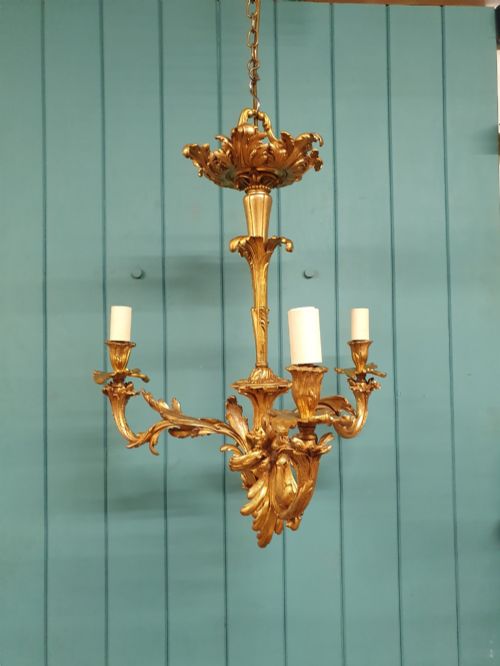
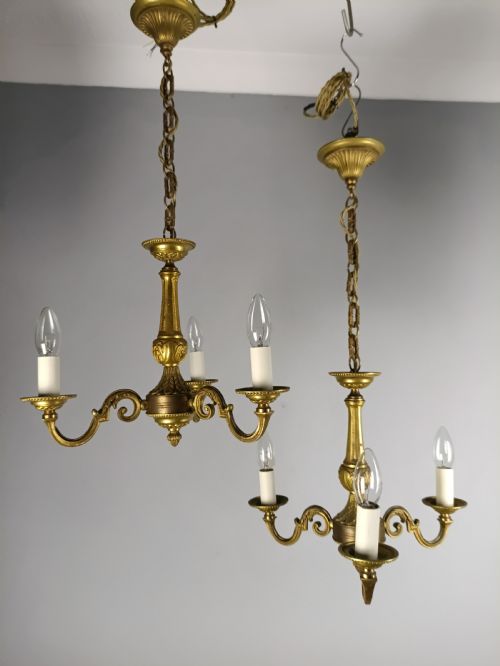
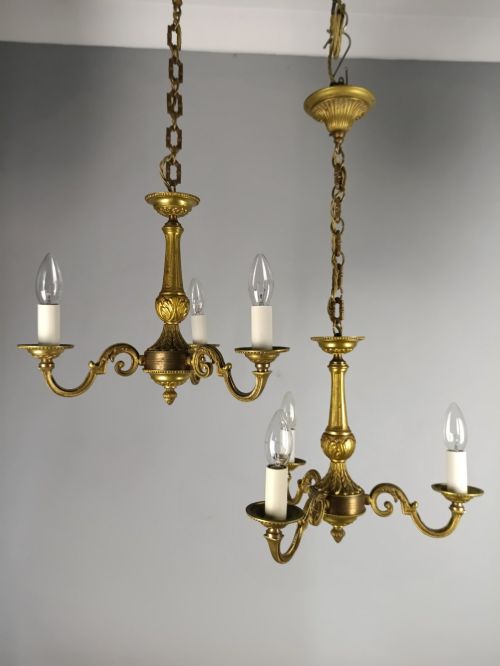
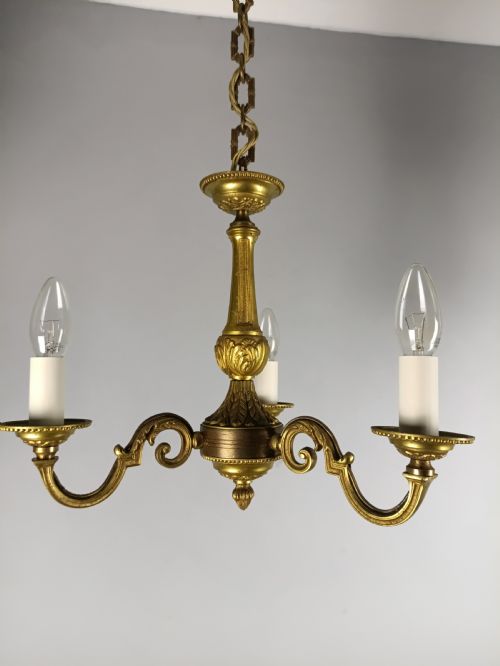



Three Light Gilt Pendant
A three light gilt pendant brings focused illumination and classical warmth to a hallway or reception room.
Three Light Gilt Pendant
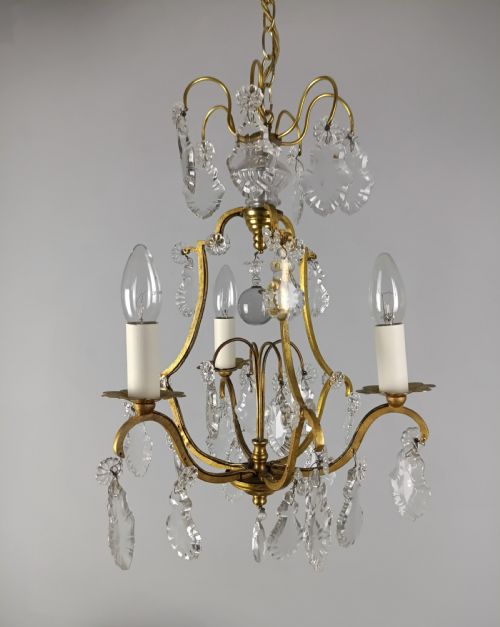
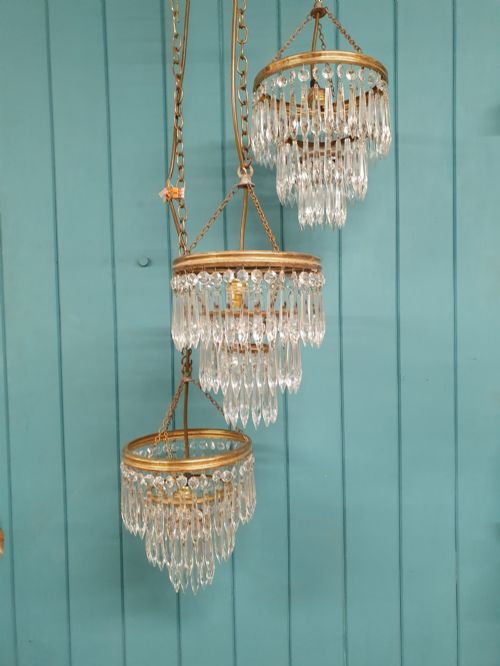
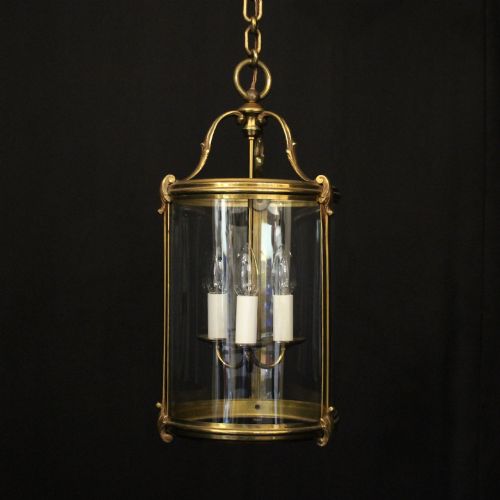
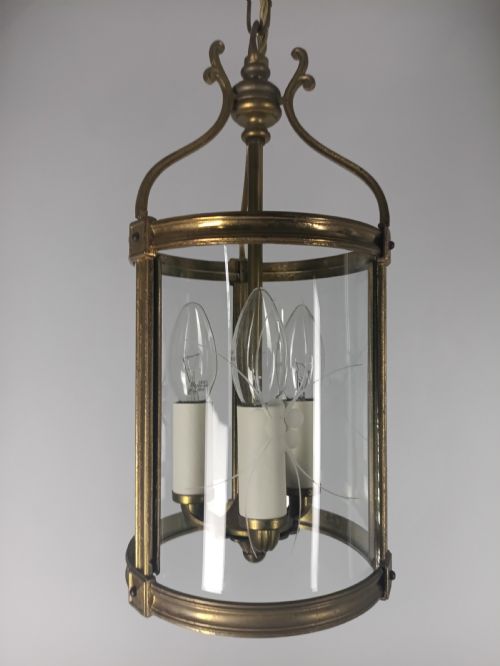
A three light gilt pendant encompasses elaborate chandeliers, convex hall lanterns, and ceiling lights designed to suspend from above. These fixtures draw the eye upward with gilded surfaces and multi-bulb configurations.
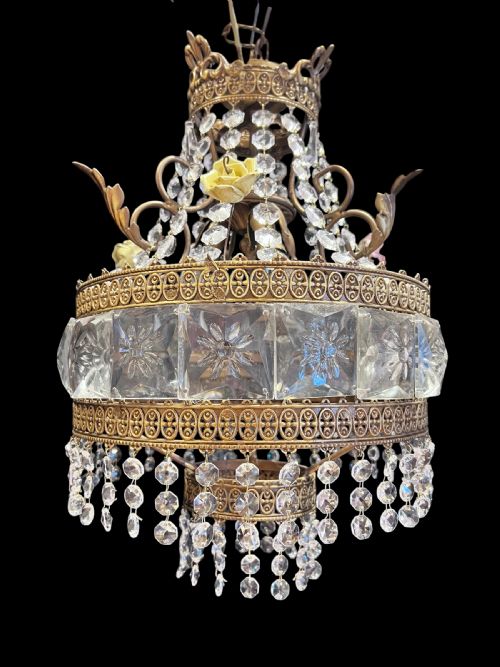
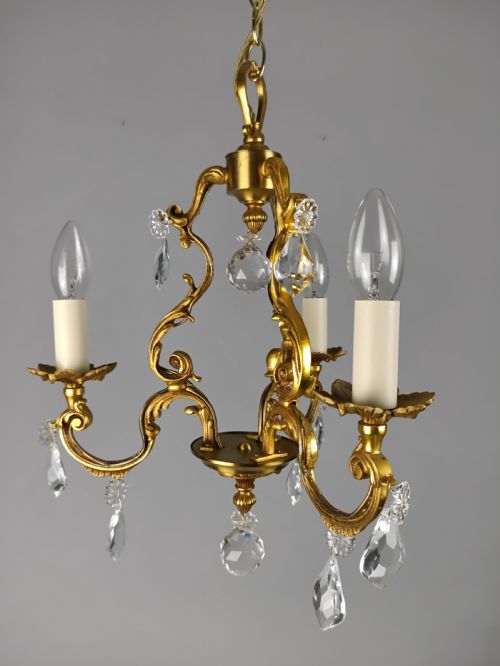
Buyers seeking a three light gilt pendant will most frequently encounter French and Italian pieces dating from the nineteenth century through the nineteen-thirties. Forms range from rustic Italian frames with porcelain flowers to ornate French Rococo Revival designs featuring crystal drops.
The selection includes specific architectural forms such as hall lanterns and arm chandeliers, spanning Edwardian elegance alongside Mid-Century Modern and French Empire expressions. Each piece relies on three distinct points of illumination to distribute light evenly across a space.
Materials and Construction
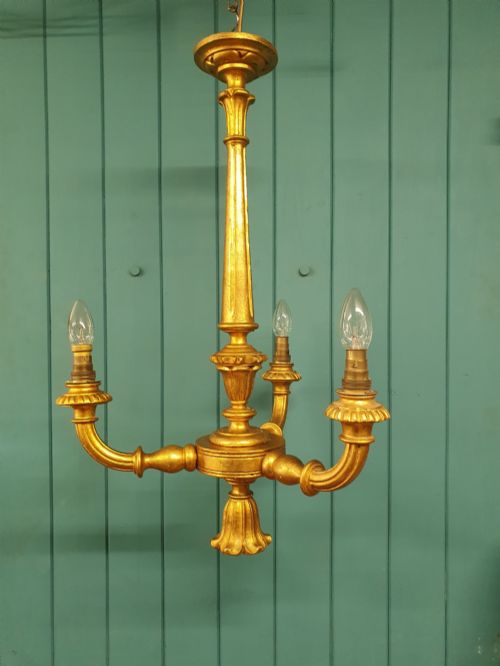
Metalwork forms the structural backbone of these fixtures, utilising brass, bronze, gesso, and carved giltwood. Artisans applied thin layers of gold leaf or gilt finish to metal or wood to achieve a luminous surface appearance.
Transparent elements enhance the optical performance through cut crystal drops, etched glass panels, and shaped convex glass. Delicate details like porcelain flowers and bronze putti figures were incorporated to enrich the decorative programme.
Three Light Gilt Pendant Retail Price Guide 2026
Typical asking prices for three light gilt pendant among the pieces listed under this phrase on Sellingantiques today, from the lower quarter to the upper quarter. They describe what is for sale here now, not the wider market.
Materials recorded across the inventory include glass, brass, gilt bronze, crystal, giltwood, and gesso.
Evaluating Quality
Quality reveals itself in the crispness of the carving or casting, particularly where giltwood, bronze, and brass meet. Superior examples demonstrate refined chiselling on metal surfaces and deep, even relief work on carved wooden frames.
The integration of glass and crystal components dictates the visual richness of the fixture. High-grade pieces feature hand-etched glass panels and well-cut crystal drops that catch and refract light cleanly without dullness.
The Three Light Gilt Pendant Glossary
- Giltwood
- Wood that has been treated with a thin layer of gold leaf or gilt paint. This technique provides a durable metallic sheen while keeping the underlying wooden structure relatively lightweight.
- Gesso
- A plaster-like mixture applied to wood surfaces as a base for gilding or painting. It allows craftsmen to carve intricate relief details before applying the final gilt finish.
- Convex
- Curved outward in the manner of the exterior of a sphere. Convex glass and lanterns use this curvature to widen the angle of reflected interior light.
- Putti
- Depictions of plump, winged infant figures commonly used in classical and revival decorative schemes. They appear modelled in bronze or other cast metals to support or adorn the lighting frame.
- Capodimonte
- A style of porcelain originating from Naples, known for delicate sculptural floral and figurative elements. These ceramic additions decorate the body of specific Italian light fixtures.
Three Light Gilt Pendant: Frequently Asked Questions
Where should I hang a three light pendant?
These fixtures suit entrance hallways, landings, and smaller reception rooms where vertical hanging space allows the piece to catch the eye without obstructing movement.
Their three-bulb configuration provides balanced illumination suitable for transitional spaces rather than vast open halls.
How do I identify French Empire style?
French Empire style pieces draw on classical antiquity, displaying formal symmetry, architectural lines, and restrained decorative motifs in bronze.
They often eschew the heavy asymmetry of Rococo in favour of dignified, structured proportions.
What is the difference between a chandelier and a hall lantern?
Chandeliers typically feature open branching arms designed to hold multiple exposed lamps or candles in a branched formation.
Hall lanterns enclose the light source within glass panels or a framed box shape, originally intended to shield the flame from drafts in corridors.
How do I date a giltwood fixture?
Dating relies on examining the construction of the wooden base, the composition of the underlying gesso, and the wear pattern of the gilding.
Nineteenth-century pieces often display hand-carved depth, whereas later twentieth-century interpretations may show different joining techniques and lighter framing materials.