





Three Bottle Decanter Stand
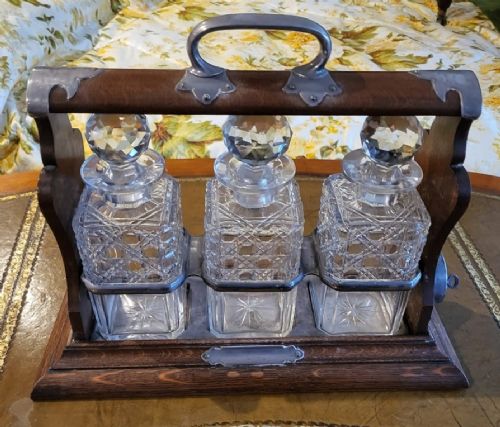
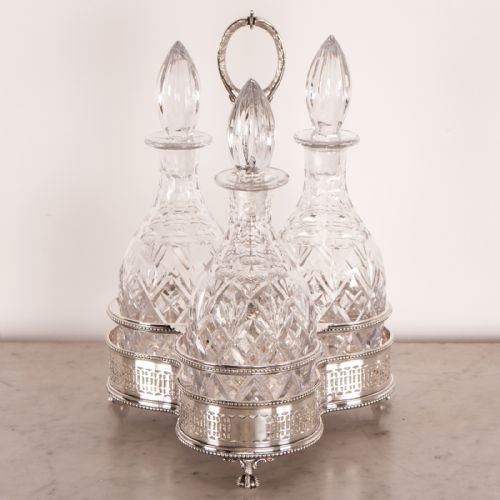
A three bottle decanter stand organises your finest spirits in a secure frame, combining cut crystal and heavy oak for the sideboard.
Three Bottle Decanter Stand
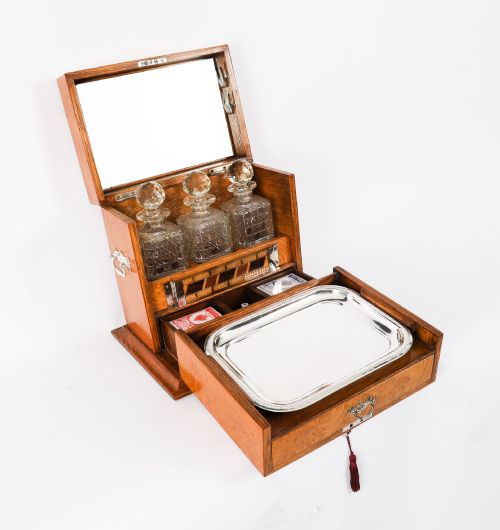
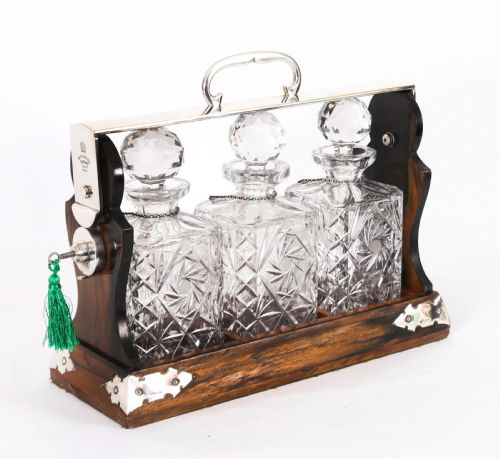
A three bottle decanter stand holds a trio of vessels securely within a fitted frame, often locking in place as a tantalus to protect the contents. These pieces appear frequently in Victorian and Edwardian iterations, designed for the dining room or smoking parlour.
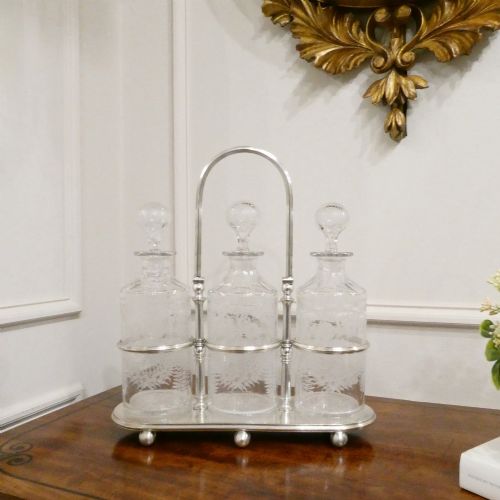
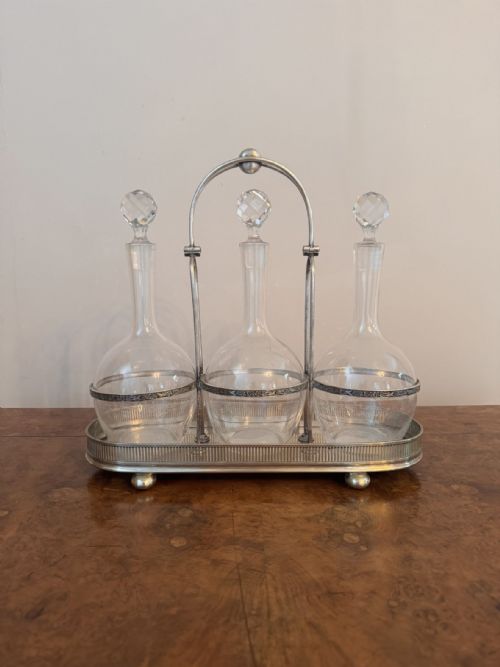
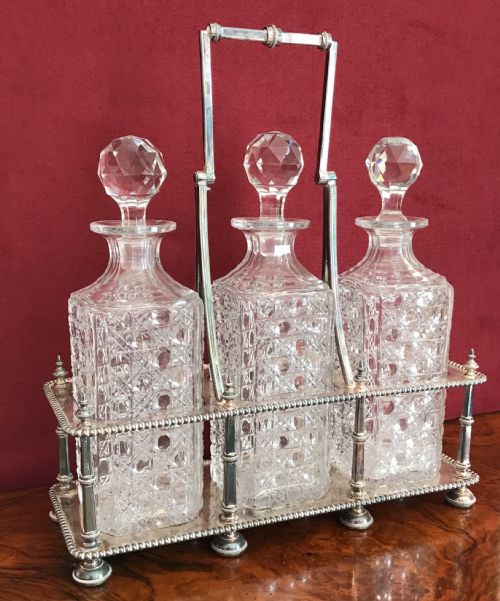
The most common formats on this page combine sturdy timber frameworks with silver plated mounts and cut glass decanters. Whether presented as an open frame or a locking tantalus box, the layout keeps three distinct bottles ready for service.
Materials and construction
Makers utilised dense timbers such as oak and occasionally exotic woods like coromandel for the structural frames and boxes. These wooden bodies often feature brass mounts, marquetry stringing, or fitted lock mechanisms.
Silver plating and Old Sheffield plate provide the metallic framework and carrying handles, housing heavy cut glass or crystal decanters. The glass bottles are typically faceted to catch the light, paired with matching stoppers.
Three Bottle Decanter Stand Retail Price Guide 2026
Typical asking prices for three bottle decanter stand among the pieces listed under this phrase on Sellingantiques today, from the lower quarter to the upper quarter. They describe what is for sale here now, not the wider market.
Listings span the Victorian and Edwardian periods, incorporating oak, silver plate, and cut crystal in various tantalus and cruet formats.
What separates the better examples
Quality rests in the precision of the joinery and the weight of the metal plating over the base metal. Finer examples display crisp marquetry stringing and robust locking mechanisms that engage smoothly.
The glass contributes significantly to the overall standard, where deeply cut crystal decanters with original matching stoppers elevate the piece. Maker attribution, such as work by Betjemann or Walker & Hall, denotes superior workshop execution.
Lee & Wigfull of Sheffield·Walker & Hall·Betjemann·Elkington·Philip Ashberry
The Three Bottle Decanter Stand Glossary
- Tantalus
- A locking drink stand that holds decanters firmly in place so they cannot be removed without a key. This clever device prevented unauthorised access by servants or guests.
- Old Sheffield Plate
- An early fusing technique where a thin sheet of silver is fused to a thicker copper base. Pieces made this way show subtle copper undertones where wear occurs.
- Marquetry
- Decorative woodwork formed by fitted veneer pieces to create geometric or floral patterns on the surface. It adds visual texture to the oak bodies.
- Decanter set
- A grouping of glass bottles designed to hold and display wine or spirits together in a shared frame. They form the central functional element of the stand.
Three Bottle Decanter Stand: Frequently Asked Questions
How do I unlock a tantalus?
Most locking stands utilise a small key that operates a vertical security bar or locking lid mechanism. Turning the key releases the top handle bracket so the decanters tilt or lift free.
If a key is missing, a specialist locksmith can often fit a replacement to the original lever lock without damaging the surrounding timber or silver plate.
Were these stands used for wine or spirits?
They typically housed heavy spirits such as whisky, brandy, or gin within the three matching cut glass decanters. The security of the locking frame kept expensive imported liquors safe.
In grand Victorian and Edwardian dining rooms, they sat on sideboards ready for the host to pour after-dinner drinks.
How do I clean cut glass decanters?
Wash the glass gently by hand in warm water using a mild detergent, avoiding sudden temperature changes that might crack aged crystal. Stubborn interior residue can be cleared using specialist cleaning beads.
Keep silver plated mounts dry and polish them sparingly with a soft cloth to preserve the plating over the base metal.
How do I tell Victorian from Edwardian stands?
Victorian pieces tend to feature heavy, ornate silver plating, dark figured oak, and elaborate brass mounts or marquetry stringing. They reflect a taste for substantial decoration.
Edwardian examples often lean towards simpler, cleaner lines in the woodwork while maintaining the practical three bottle arrangement for the sideboard.