


Thames Barge Painting
These thames barge painting works capture the working vessels of the river in oil and watercolour.
Thames Barge Painting
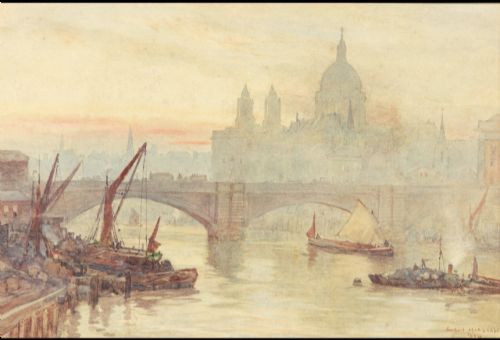
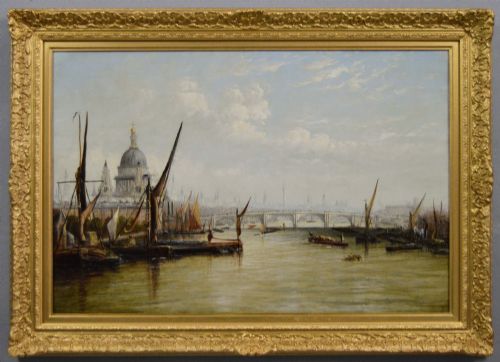
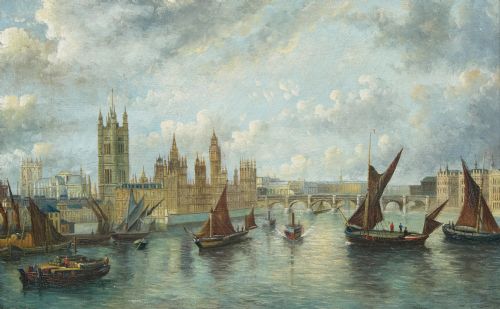
A thames barge painting records the historic sailing vessels that worked the river Thames and nearby estuaries, captured by artists across the centuries. The pieces available here range from detailed Victorian watercolours and nineteenth-century oils to twentieth-century depictions of maritime industry.
The works feature various settings, from industrial estuaries and shipyards to famous London landmarks like St Pauls and Blackfriars Bridge. Most examples on this page date from the Victorian period through to the mid-twentieth century, executed by named British artists and followers of traditional marine schools.
How They Were Made
Artists working in this genre relied primarily on oil paint on canvas or panel, alongside watercolours on paper. Prepared supports received layers of pigment to render river water, sails, and atmospheric skies, sometimes enhanced with impasto texture.
Framing often involved timber and gesso moulding, frequently finished with gold leaf to complement the maritime subject matter. The materials reflect traditional studio practices of the British marine and landscape schools from the seventeenth century onwards.
The inventory includes maritime styles such as British Maritime Realism, Dutch Golden Age, and Victorian Marine.
What Varies in Quality
Quality in these maritime works depends upon the artist's handling of light, water movement, and the specific rigging of the vessels. Stronger examples demonstrate confident brushwork and accurate topographical detail rather than formulaic composition.
The provenance and attribution to recorded painters, alongside the condition of the original canvas, paper, and framing elements, influence the standing of an individual piece within the wider school.
Francis Moltino·John Macvicar Anderson·Edward Henry Eugene Fletcher·E.Elliot·Walter Duncan·Jacob Knyff·Gordon Meadows·Hubert Thornley·William Burns·Frederick James Aldridge·August Ballin·Thomas Bush Hardy
The Thames Barge Painting Glossary
- Oil on Canvas
- A painting medium where pigments suspended in oil are applied to stretched woven fabric. This combination allows for rich colour blending and textured application.
- Gesso
- A plaster-like mixture applied as a base to wood or canvas before painting or gilding. It provides a smooth surface for gold leaf and decorative frames.
- Impasto
- Paint applied in thick layers that stand out from the surface. This technique creates physical texture, often used to emphasise water or industrial elements.
- Watercolour
- A painting method where water-soluble pigments are applied to paper. It produces translucent washes of colour favoured for delicate atmospheric effects.
Thames Barge Painting: Frequently Asked Questions
What periods do these paintings cover?
The selection spans from the seventeenth century through to the mid-twentieth century, with a strong representation of Victorian and Edwardian works.
Artists across these eras recorded the changing appearance of London river traffic and estuary commerce using period-typical mediums.
Which artists painted these scenes?
The inventory includes works by named British and European painters such as Francis Moltino, Thomas Bush Hardy, and Hubert Thornley.
Other pieces are attributed to historical figures or associated with the broader British Maritime Realism and Victorian Marine schools.
Where are the locations depicted?
The subjects focus primarily on the river Thames, London landmarks, shipyards at Deptford, and the Medway estuary.
Compositions often feature working sailing barges alongside other historical river craft and city architecture.