


Terracotta Landscape Art
When you search for terracotta landscape art, you meet paintings and works on paper that capture open views and rustic scenes.
Terracotta Landscape Art
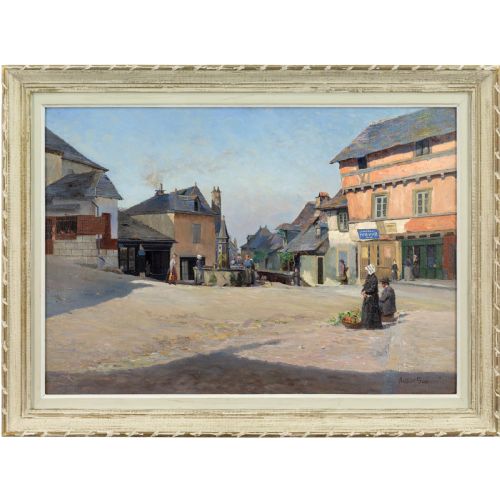
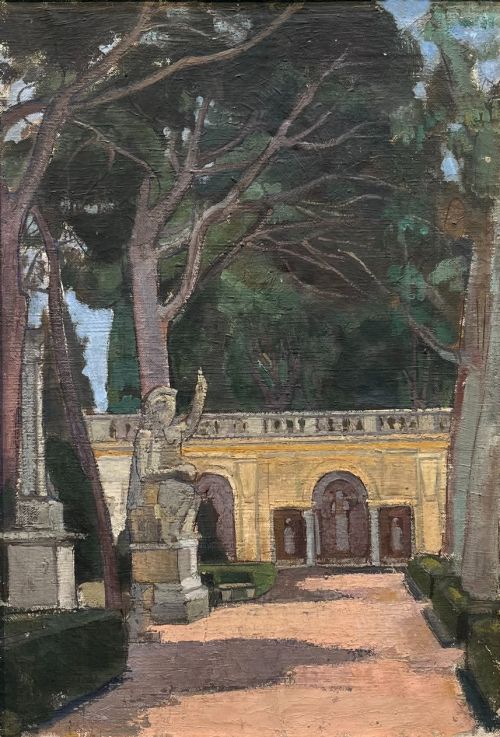
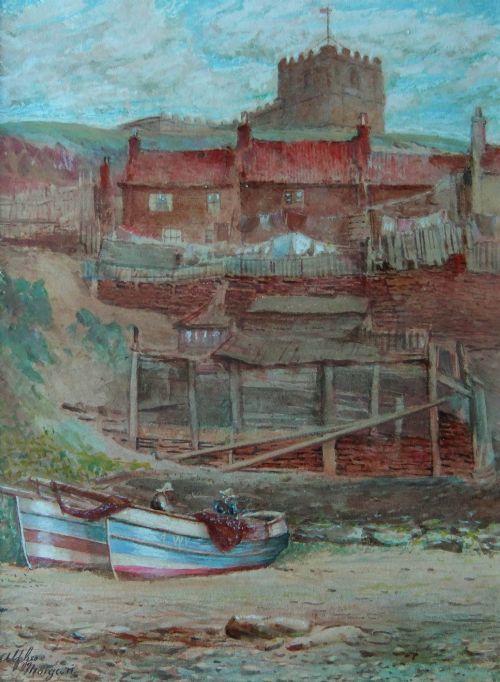
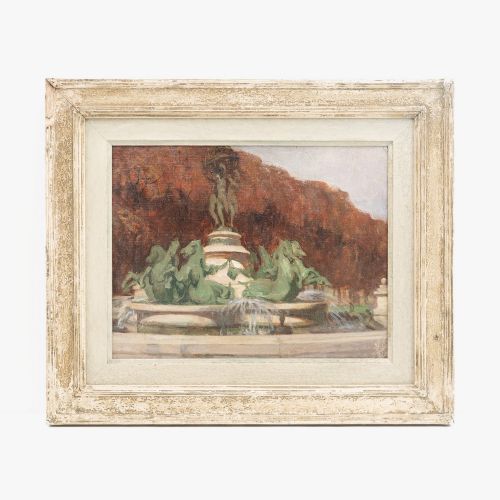
When buyers search for terracotta landscape art, they encounter oil paintings, watercolours, and mixed media works spanning the nineteenth and twentieth centuries. These pieces record rural views, coastal harbours, and urban scenes from British and European locations.
The selections on this page range from Victorian and Edwardian watercolours to mid-century modern cityscapes and impressionist canvases. Most examples date from the late nineteenth century through to the mid-twentieth century, showing diverse regional views.
Subjects include specific locations such as Whitby, Venice, and the French countryside, executed by named artists and anonymous hands alike. Buyers find both intimate studies on paper and larger compositions on canvas.
Materials and Technique
Artists on this page apply oil paint and watercolour pigment to supports including canvas, paper, and wood boards. Many works utilise traditional brushwork, while others incorporate impasto layers or ink lines to build texture and depth.
Works on paper often employ delicate watercolour washes fixed beneath glass, whereas oil paintings utilise heavier binders on stretched canvas or board. These varied methods produce distinct surface qualities that define each period style.
Several watercolours capture damp British docksides alongside sun-drenched Italian lagoons, proving artists chased good weather.
Assessing Quality
Quality rests upon the confidence of the brushwork, the management of light, and the compositional balance of the scene. Stronger pieces demonstrate assured handling of pigment and clear atmospheric depth rather than mere mechanical precision.
Condition of the paper, canvas, and supporting frame also influences the standing of a piece. Works that retain their original colour integrity and show minimal surface disturbance occupy the upper tier of the range.
Arthur Gué·Alfred G. Morgan·Alexander Jamieson·Herbert Royle·Fred Lawson·George Graham·Arthur Tucker·Owen Bowen·Claude Jousset·Berthe des Clayes·Armand Guillaumin·Abraham Hulk Junior·Jack Merriott·Fred Mayor·David Law·George Stanfield Walters·Lester Sutcliffe
The Terracotta Landscape Art Glossary
- Watercolour
- A paint consisting of soluble pigment suspended in a water-based solution. It is typically applied to paper to create translucent washes of colour.
- Impasto
- A technique where paint is laid onto a surface in very thick layers, usually thick enough that the brush or painting-knife strokes are visible.
- Impressionism
- A nineteenth-century movement characterised by relatively small, thin, yet visible brush strokes and an emphasis on accurate depiction of light.
- Canvas
- A closely woven heavy fabric used as a support surface for oil and acrylic paintings. It is typically stretched over a wooden frame.
- Pastel
- A dry painting medium in the form of a stick, consisting of powdered pigment and a binder. It produces surfaces with a velvety texture.
Terracotta Landscape Art: Frequently Asked Questions
What periods do these landscape artworks cover?
The listings span from the nineteenth century through the Edwardian era and into the mid-twentieth century. You will find examples reflecting Victorian sensibilities alongside later impressionist and modern approaches.
Dates range across several decades, showing shifts in palette and technique from the 1890s up to the 1960s.
How should I care for watercolour paintings?
Watercolour works require protection from direct sunlight to prevent the pigments from fading over time. Keeping them behind glass in stable indoor environments helps preserve the paper support.
Avoid hanging these pieces in damp rooms, as moisture damages both the paper and the surrounding mount.
What mediums are used in these works?
Artists employ oil paint, watercolour pigment, pastel, and ink across various supports including canvas, paper, wood, and board. Some pieces combine mixed media elements to build textured surfaces.
Each medium offers a different visual weight, from the transparency of watercolours to the rich texture of oil on canvas.
Where do the depicted scenes come from?
The views record locations across Britain, France, Italy, and beyond, capturing coastal towns, rural farms, and city architecture. Specific sites include Whitby, Venice, Rome, and various countryside lanes.
These topographical and pastoral views reflect the travel and sketching habits of artists from past eras.