



Tent and Bag Light Fixture
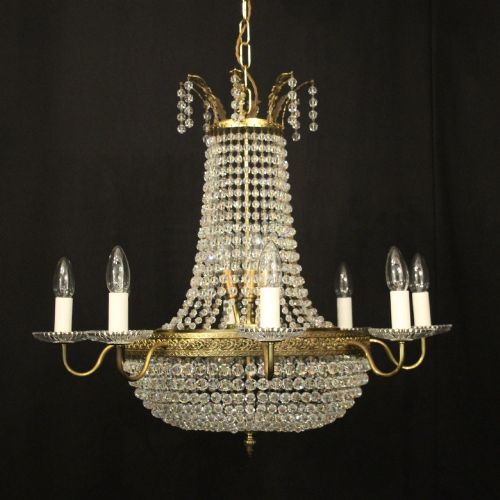
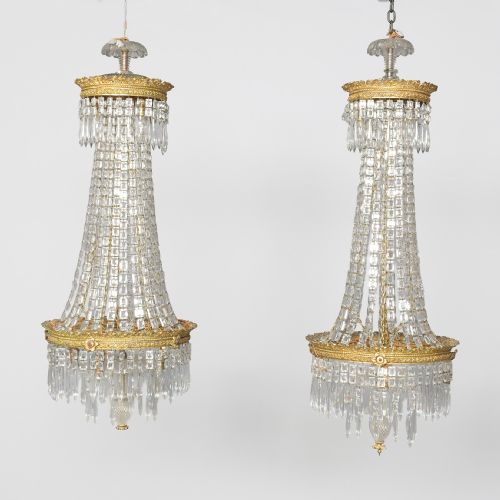
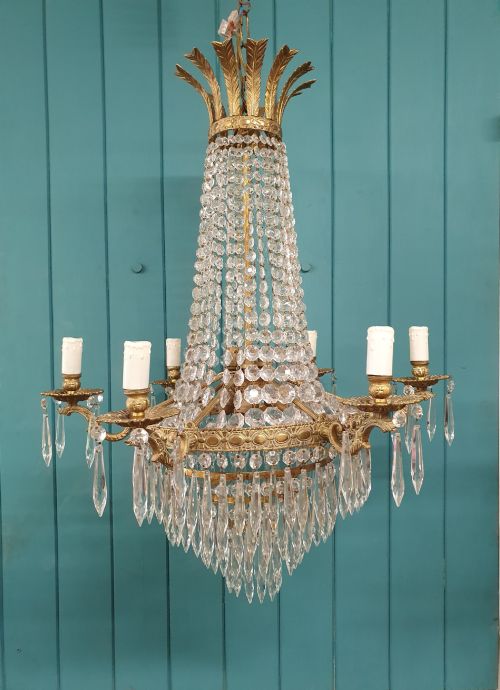
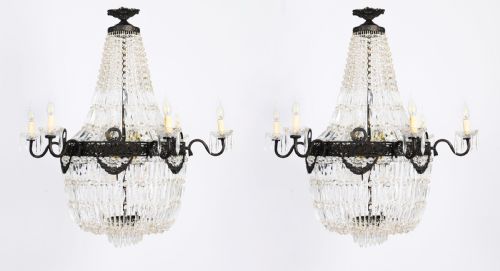
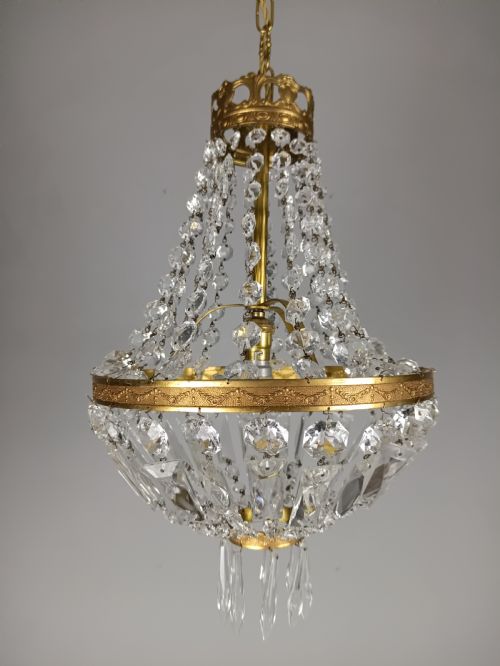
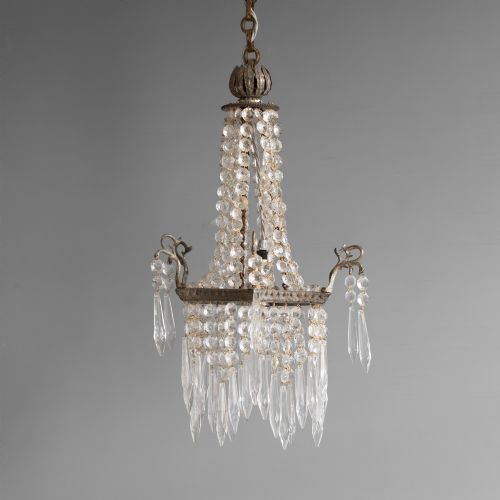
A tent and bag light fixture hangs with cascades of crystal drops above a gathered lower basket, bringing brilliant illumination to any room.
Tent and Bag Light Fixture
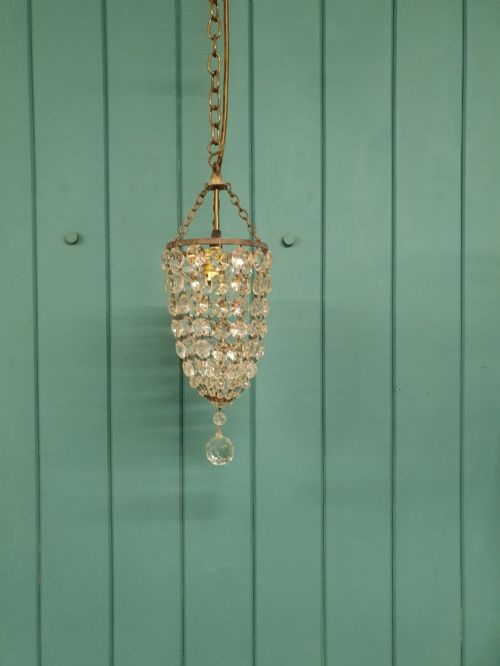
A tent and bag light fixture draws the eye upward with a tiered canopy of glass drops that tapers into a lower gathered basket. These fixtures range from compact Edwardian examples measuring just a few inches to grand ballroom chandeliers with numerous lights.
Most pieces seen here belong to the twentieth century, with strong representation from the 1930s and 1920s, alongside Edwardian designs and older nineteenth-century works. Styles lean heavily toward French Empire, Regency, and Louis Revival aesthetics.
Buyers will find pendant lights and chandeliers functioning primarily as central ceiling sources. Their distinct silhouette combines a pyramidal upper section with a draped bag beneath.
How they were made
Brass, bronze, and wire form the structural frames that support the weight of the glass components. Gilded finishes appear on several bronze mounts, providing a warm metallic lustre beneath the glass.
The decorative elements rely on cut glass and cut crystal drops, strung together to form the tent canopy and the lower bag section. These pieces are pinned or wired directly to the metal armature.
Tent and Bag Light Fixture Retail Price Guide 2026
Typical asking prices for tent and bag light fixture among the pieces listed under this phrase on Sellingantiques today, from the lower quarter to the upper quarter. They describe what is for sale here now, not the wider market.
Listings span from the 18th century through to 1930, uniting brass, bronze, and cut crystal in chandelier and pendant forms.
What varies in quality
Quality rests in the precision of the glass cutting and the clarity of the crystal drops, which determines how sharply the light refracts. Finer pieces demonstrate careful hand-cutting rather than pressed moulding.
The metalwork also defines the standard, with robust bronze and brass frames offering better stability and finer chased leaf decoration compared to simpler wire frameworks.
The Tent and Bag Light Fixture Glossary
- Tent chandelier
- A lighting fixture featuring an upper conical section composed of strings of crystal beads hanging from a central ring down to a wider perimeter.
- Bag chandelier
- A style where the lower portion of the fixture gathers glass drops into a rounded net or bag shape beneath the main tier.
- Cut crystal
- Glass that has been faceted by grinding and polishing to increase its brilliance and light reflection.
- Louis Revival
- A decorative style drawing on French court aesthetics from the reigns of Louis XIV, XV, and XVI, featuring ornate classical motifs.
- French Empire
- A neoclassical design style originating in nineteenth-century France, characterised by symmetry, military motifs, and rich mounts.
Tent and Bag Light Fixture: Frequently Asked Questions
How do I clean a tent and bag light fixture?
Cleaning requires patience, using a mild soapy solution and a soft cloth to wipe each crystal drop individually while it remains attached to the frame.
Taking down every strand is rarely necessary unless a complete rewiring or structural restoration is required.
What rooms suit a tent and bag light fixture?
These fixtures suit formal dining rooms, hallways, and bedrooms where their glittering crystal drops can catch natural and artificial light.
Smaller examples work well in lower-ceilinged spaces, while multi-light versions demand grander proportions to hang correctly.
How do I determine the period of my fixture?
Dating relies on examining the wiring methods, the metal composition of the frame, and the specific cut of the glass drops. Edwardian and early twentieth-century pieces often show machine-tooled elements alongside traditional hand assembly.
Stylistic cues such as French Empire or Louis Revival details also help narrow down the decade of manufacture.
Are these fixtures suitable for modern electrical systems?
Most antique fixtures accept modern wiring, though older installations should be checked by a qualified electrician before use.
Frames generally accommodate standard lamp holders without altering the exterior appearance of the chandelier.