





Teak Lamp Table
These teak lamp tables bring dense colonial carving and sturdy exotic hardwoods straight to your living room as practical surface space.
Teak Lamp Table
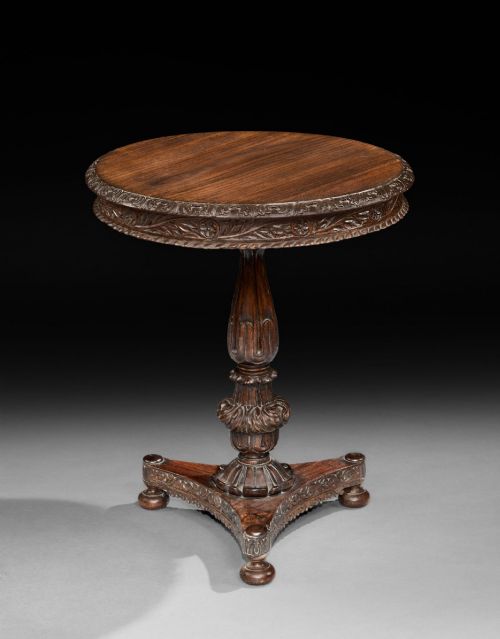
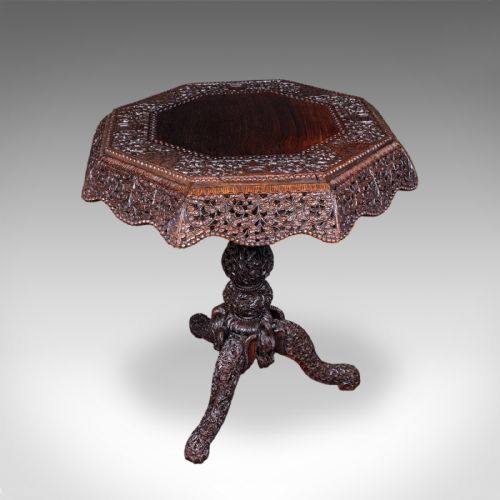
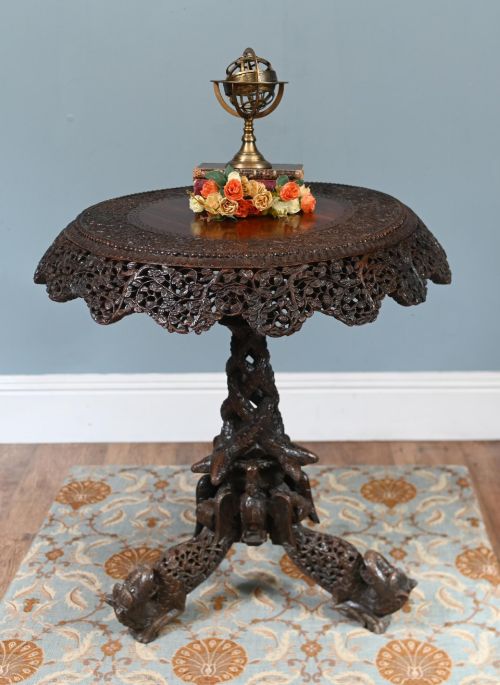
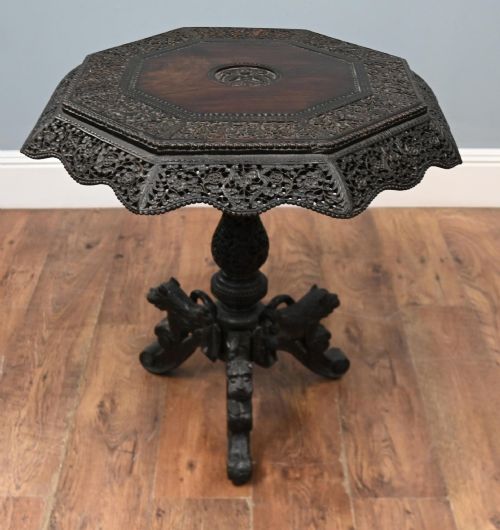
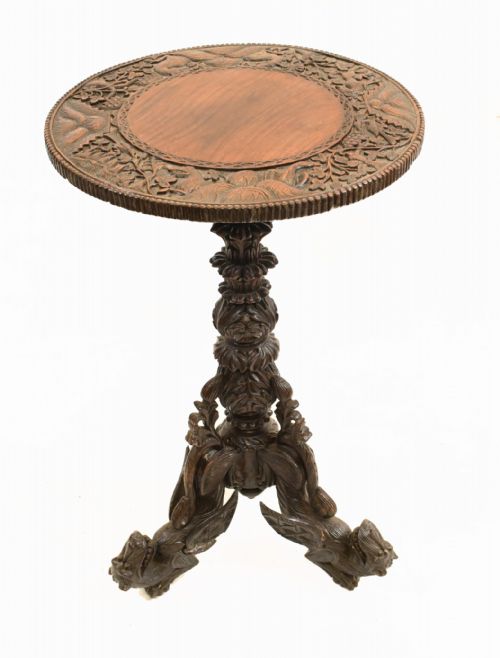
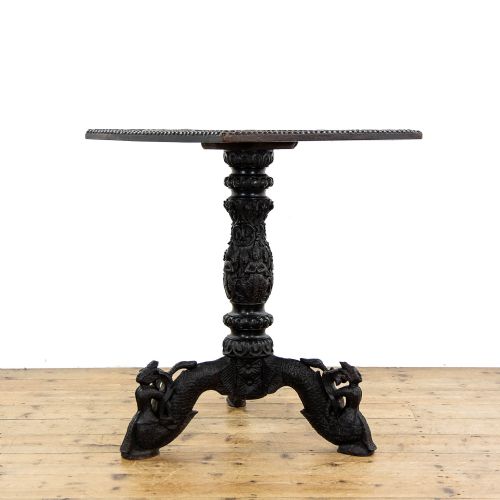
A teak lamp table combines the practical surface needed for daily lighting with the rich, heavily carved aesthetic of late nineteenth and early twentieth century colonial craftsmanship. You will most frequently encounter Burmese, Indian, and Anglo-Indian designs that serve equally well as side tables, tea tables, or occasional stands.
The forms span octagonal folding stands, tilt-top surfaces, and traditional round pedestals that reflect diverse regional traditions from South and Southeast Asia. These pieces bring functional utility together with intricate woodwork, making them adaptable companions beside a sofa or in a quiet reading corner.
How they were made
Makers relied primarily on dense tropical timbers such as teak, rosewood, and general hardwoods that provided a stable foundation for deep, relief-carved ornamentation. These heavy woods allowed artisans to chisel elaborate floral, geometric, and figural motifs into the structure without compromising the overall integrity of the table.
Construction methods often incorporated folding mechanisms and removable trays, demonstrating a pragmatic approach to transport and storage for colonial officers and merchants. Secondary materials occasionally included bone inlay, glass, and marble inserts to contrast against the dark, carved wooden surfaces.
Teak Lamp Table Retail Price Guide 2026
Typical asking prices for teak lamp table among the pieces listed under this phrase on Sellingantiques today, from the lower quarter to the upper quarter. They describe what is for sale here now, not the wider market.
Listings feature items spanning the Victorian era through to the 1930s, constructed mainly from teak and carved hardwoods.
What varies in quality
Quality rests upon the depth, crispness, and symmetry of the hand-carved motifs that cover the top and base of the structure. Superior examples display sharp undercutting and fluid floral or figurative designs executed by skilled hands, whereas simpler items show shallower, more repetitive impressions.
The underlying joinery and stability of the frame also set finer pieces apart, particularly in folding versions where hinges and wooden pins must align accurately. Timber selection contributes to this hierarchy, with dense, unblemished teak providing a better surface and weight than softer alternative hardwoods.
The Teak Lamp Table Glossary
- Anglo-Indian
- A descriptive term for furniture made in India during the British colonial period, often combining British furniture forms with traditional local carving techniques. These items frequently utilise native timbers like teak and rosewood.
- Tilt-top
- A table mechanism featuring a top that pivots to a vertical position when not in use, allowing the piece to be stored flat against a wall. This space-saving design is common in nineteenth-century occasional and tea tables.
- Pedestal table
- A standalone table supported by a single central column rising from a weighted base or feet. This configuration maximises legroom around the surface.
- Bone inlay
- A decorative technique where small pieces of animal bone are cut and pressed into carved recesses within the wooden surface to form intricate geometric patterns. It provides a striking pale contrast against dark tropical hardwoods.
Teak Lamp Table: Frequently Asked Questions
Where should I place a teak lamp table?
These pieces sit comfortably beside a sofa or armchair where they can hold a reading lamp and a cup of tea. Their compact footprints also suit hallways and landings as accent surfaces.
Ensure the table rests on a level floor, particularly with folding variants, to keep the surface stable for daily use.
How do I care for carved wooden surfaces?
Dust the intricate carvings regularly using a soft-bristled brush to prevent dirt from settling deep into the recesses of the wood. Avoid applying heavy liquid polishes that can build up within the carved channels.
Keep the timber away from direct heat sources and strong sunlight to prevent the tropical hardwood from drying out and splitting.
How do I identify the period of these tables?
Look closely at the colour and grain of the timber, alongside the complexity of the carved motifs, which often point towards late nineteenth or early twentieth-century production. Construction clues such as handmade fixings and traditional joints help narrow down the age.
Compare the specific regional style, such as Burmese or Anglo-Indian, with historical records of colonial trade and craftsmanship to refine the dating.
Are folding tables sturdy enough for daily use?
Traditional folding mechanisms on these tables were engineered for practical transport by colonial travellers without sacrificing everyday stability. The interlocking wooden bases distribute weight effectively once fully opened.
Check that the folding hinges or wooden pins align correctly whenever you set the table up to ensure a firm foundation.