








Tambour Cabinet Tables
These tambour cabinet tables combine concealed slatted storage with compact domestic utility, offering a practical antique for the bedroom or study.
Tambour Cabinet Tables
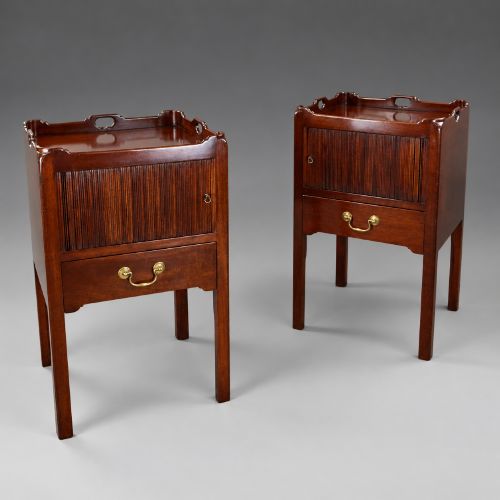
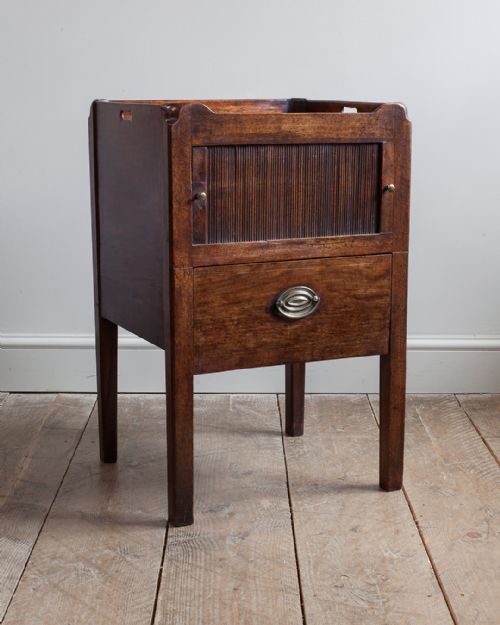
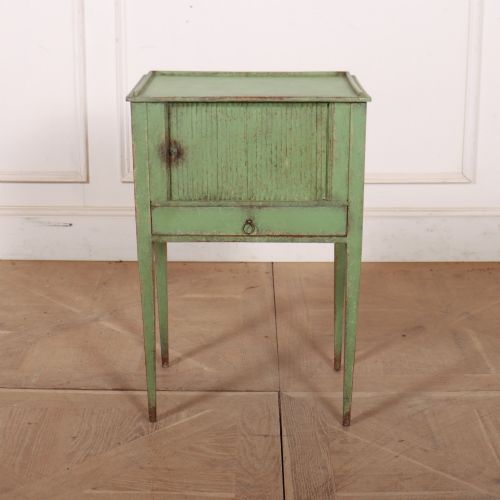
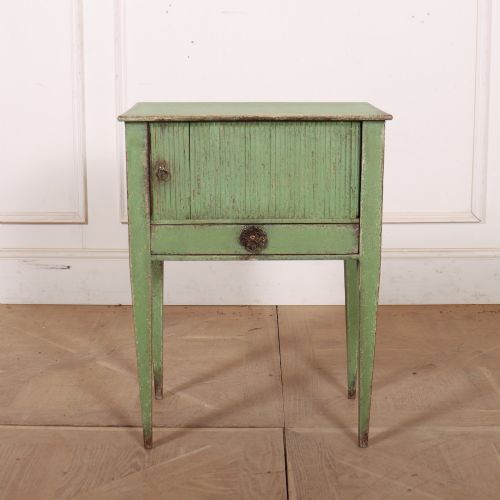
When you search for tambour cabinet tables, you encounter pieces designed primarily for bedside use or small-scale writing, often configured as commodes, nightstands, and cupboards. The listings demonstrate that these forms emerge predominantly from the Georgian, Regency, and Victorian eras.
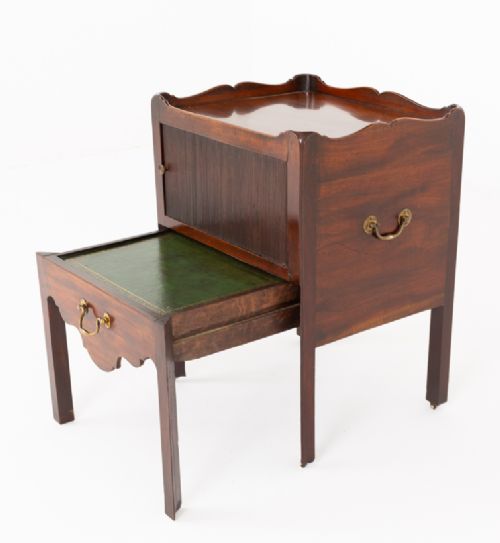
The version you are most likely to meet on this page is a mahogany bedside cabinet or commode featuring a sliding slatted shutter door. These pieces span simple provincial designs to sophisticated George III examples with tray tops and inlaid details.
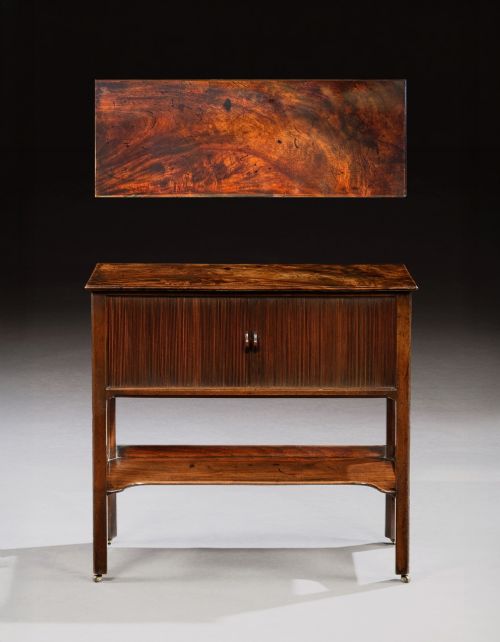
Makers and workshops of the eighteenth and nineteenth centuries applied the flexible tambour shutter to save space where swinging doors proved impractical. This mechanism conceals interior shelving or drawers while maintaining a neat, unbroken exterior line.
How they were made
Cabinet makers constructed the primary carcase and framing of these tables in timbers such as mahogany, walnut, and satinwood. They frequently employed boxwood inlay and contrasting stringing to outline drawers and doors.
The distinctive tambour shutter consists of narrow vertical strips of wood glued to a fabric or leather backing, allowing the panel to run smoothly in grooved tracks. Makers combined this flexible mechanism with brass hardware and occasionally marble tops.
Regional variations span English workshops, Dutch marquetry traditions, and French provincial styles, utilising traditional dovetail joinery for internal drawers and solid timber carcases.
Tambour Cabinet Tables Retail Price Guide 2026
Typical asking prices for tambour cabinet tables among the pieces listed under this phrase on Sellingantiques today, from the lower quarter to the upper quarter. They describe what is for sale here now, not the wider market.
Several tambour doors still slide smoothly after two centuries of midnight reaching.
What varies in quality
The smoothness of the sliding tambour action separates ordinary examples from superior ones. A well-made shutter glides effortlessly within its tracks without binding or sagging.
Timber selection and veneer work dictate visual distinction across the range. Finer pieces display carefully chosen flame mahogany, crisp boxwood inlay, and well-figured satinwood rather than plain secondary woods.
Structural integrity of the tray top, original brass fittings, and the precision of the joinery around curved serpentine or bow fronts indicate the standard of craftsmanship in the original workshop.
Gillows
The Tambour Cabinet Tables Glossary
- Tambour
- A flexible shutter formed of narrow wooden slats glued to a canvas backing, allowing it to slide around a curved track. This mechanism conceals the interior storage of cabinet tables without requiring clearance for swinging doors.
- Commode
- A small cabinet or chest of drawers designed for bedroom use. In these listings, the term often describes bedside tables fitted with tambour fronts and tray tops.
- Tray Top
- A raised gallery edge surrounding the upper surface of a bedside table or commode. This design prevents items from rolling off the table.
- Marquetry
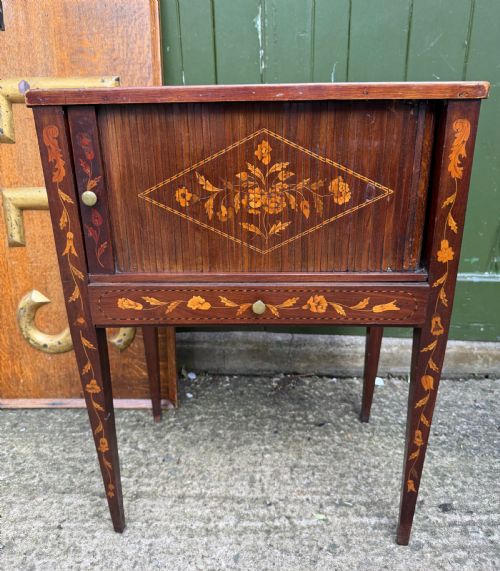
- The art of applying decorative veneer pieces in geometric or floral patterns to a wooden surface. Dutch examples on this page frequently display this technique.
- Serpentine
- A gently undulating front line curving outward in the centre and inward at the sides. This contour requires precise carpentry and sophisticated shaping.
- Pot Cupboard
- A compact bedside cabinet historically designed to enclose a chamber pot. Many survive today as general bedside tables with tambour doors.
Tambour Cabinet Tables: Frequently Asked Questions
What is a tambour mechanism?
A tambour is a flexible door made from narrow strips of wood attached to a flexible backing fabric. This allows the shutter to slide smoothly around curved tracks to hide the interior compartment.
Cabinet makers used this design on bedside tables and desks where traditional hinged doors would require extra clearance space.
Where were tambour tables used?
These tables served primarily as bedside commodes, nightstands, or small writing desks in domestic bedrooms and dressing rooms. Their enclosed storage kept personal items out of sight.
The compact footprint allowed them to fit neatly beside four-poster beds or within smaller chambers.
How do I care for tambour furniture?
Keep these pieces away from direct heat sources and strong sunlight to prevent the timber from warping and the backing fabric of the tambour from drying out. Maintain stable indoor humidity levels.
Dust the slats gently along the grain and periodically wax the running tracks with neutral beeswax to ensure the shutter slides freely.
How do I date a tambour table?
Examine the secondary timbers inside the drawers, the style of the brass hardware, and the overall construction methods such as hand-cut dovetails. Georgian and Regency pieces typically show different veneer choices and proportions compared to later Victorian or 1930s revivals.
Stylistic cues like serpentine fronts, satinwood crossbanding, and floral marquetry point toward eighteenth or early nineteenth-century origins.