
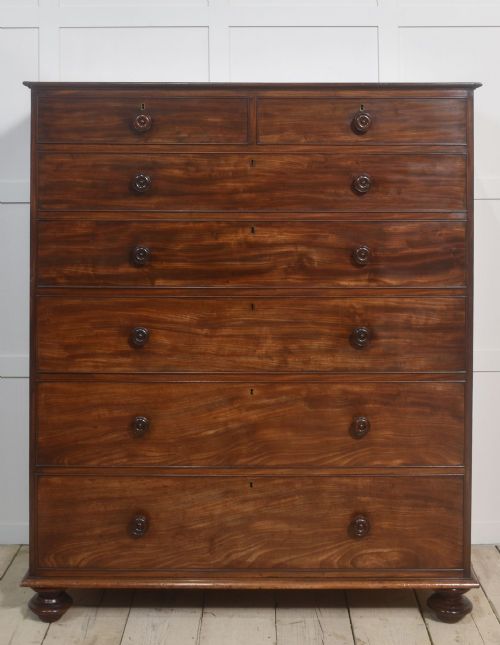


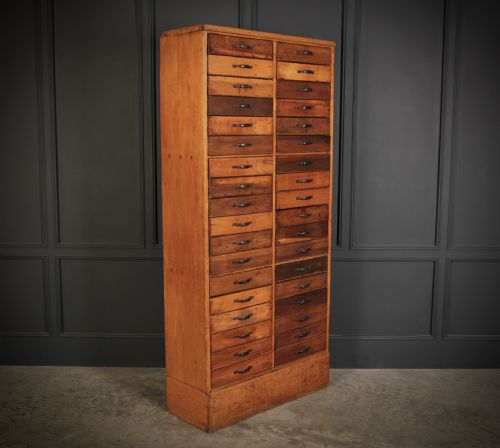


Tall Wooden Drawer Unit
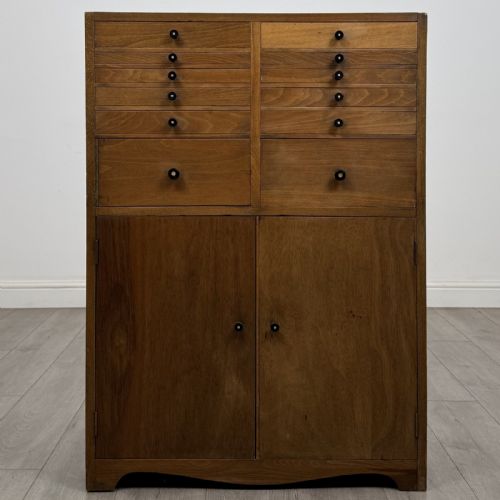
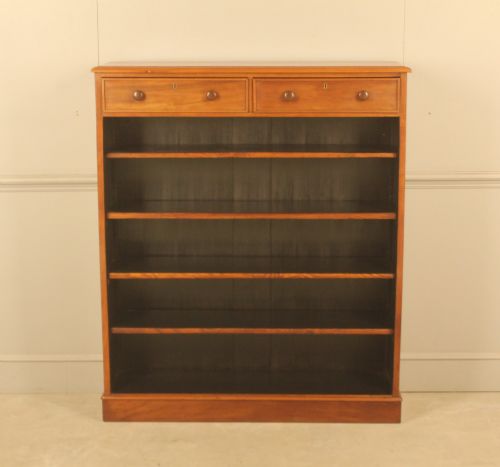
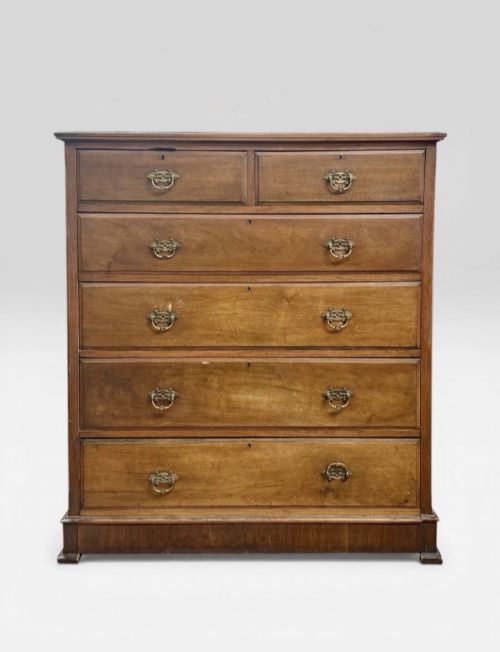
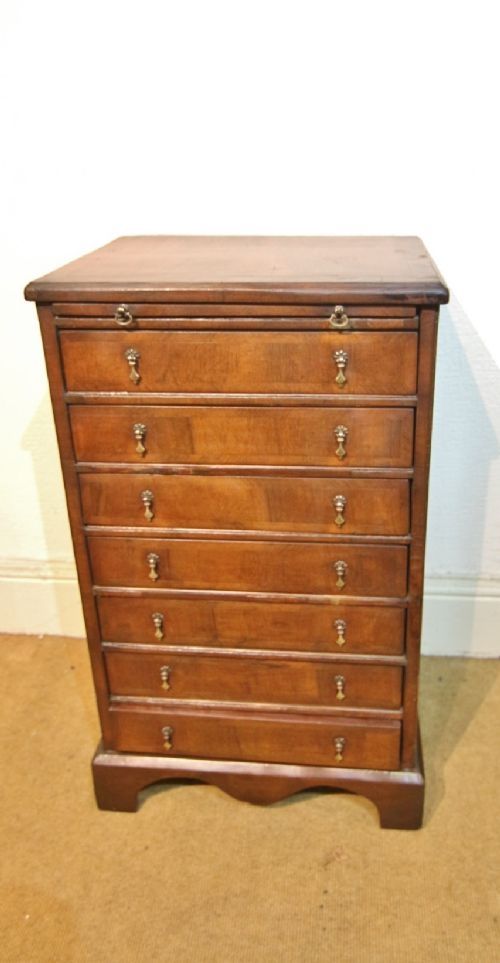
A tall wooden drawer unit brings practical vertical storage and period character into a room using timber and brass.
Tall Wooden Drawer Unit
A tall wooden drawer unit encompasses various vertical storage forms such as chests of drawers, filing cabinets, music cabinets, and haberdashery chests. These pieces span multiple eras including the Georgian, Victorian, Edwardian, and early 20th century periods.
The most common formats you will encounter on this page are upright mahogany and oak chests, alongside narrow filing cabinets and specialised storage units. They serve to maximise storage capacity while maintaining a compact footprint on the floor.
Makers utilised diverse timbers and styles ranging from Regency and Victorian commercial designs to industrial pieces. Each tall wooden drawer unit reflects the specific functional demands of its original domestic or commercial setting.
Materials and construction
Cabinet makers constructed these tall units primarily using hardwoods such as mahogany, oak, walnut, and fruitwood, often paired with secondary softwoods like pine. Brass handles, escutcheons, and label holders frequently complement the timber drawer fronts.
Joinery methods varied according to the period and commercial or domestic purpose, incorporating dovetailed drawer construction and paneled carcasses. Selected pieces feature figured timber veneers such as satinwood, walnut, or satin birch on the primary surfaces.
Listings feature woods including mahogany, oak, walnut, satinwood, pine, fruitwood, and Gonçalo-Alvez across multiple 19th and 20th-century styles.
Assessing quality and execution
The standard of a tall wooden drawer unit depends upon the choice of timber and the precision of the cabinet work. Finely figured mahogany, walnut, or fruitwood paired with clean interior construction distinguishes superior examples from standard utility pieces.
Hardware integrity and the smoothness of drawer operation indicate the original tier of manufacture. Well-executed secondary woods and robust internal framing mark the distinction between commercial workshop output and finer domestic furniture.
The Tall Wooden Drawer Unit Glossary
- Haberdashery chest
- A multi-drawer cabinet originally designed for retail display and storage of textiles and small mercery items.
- Wellington chest
- A tall, narrow locking chest of drawers featuring a hinged side pilaster that secures all the drawers when locked.
- Gonçalo-Alvez
- A dense exotic hardwood sometimes utilised in Regency cabinet making for striking grain patterns and rich colouration.
- Serpentine
- A gently curved front contour shaping that sweeps outward and inward across the width of the chest.
Tall Wooden Drawer Unit: Frequently Asked Questions
How do I date a tall wooden drawer unit?
Dating relies upon identifying timber choices, construction methods, and stylistic cues characteristic of periods like the Georgian era or the Edwardian decade.
Examining secondary woods inside the drawers and the style of the brass handles further helps narrow down the manufacturing timeframe.
Where were haberdashery cabinets used originally?
These multi-drawer units served in shops and ironmongers to sort and display small goods, ribbons, and hardware.
Today they function effectively in domestic settings for organising household items and stationery.
What is the difference between a filing cabinet and a chest?
Filing cabinets from the early 20th century were built specifically for office documentation and correspondence storage.
Standard chests of drawers feature shallower horizontal tiers intended for clothing and domestic belongings.
Can I fit a tall drawer unit in a narrow space?
Narrow Victorian and Edwardian tall chests are specifically designed with a compact footprint to maximise vertical storage.
Their restricted width makes them suitable for hallways, alcoves, and smaller bedrooms.