

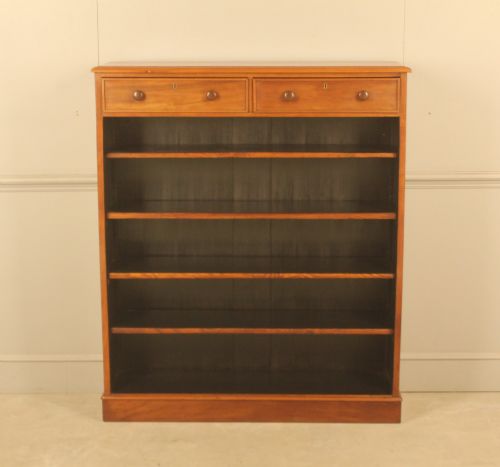
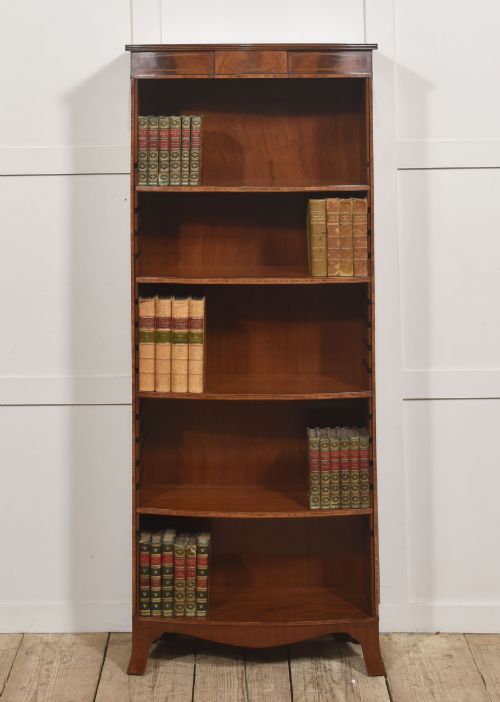


Tall Wood Bookshelf
A tall wood bookshelf organises a room with vertical presence, bringing timber warmth and practical storage together.
Tall Wood Bookshelf
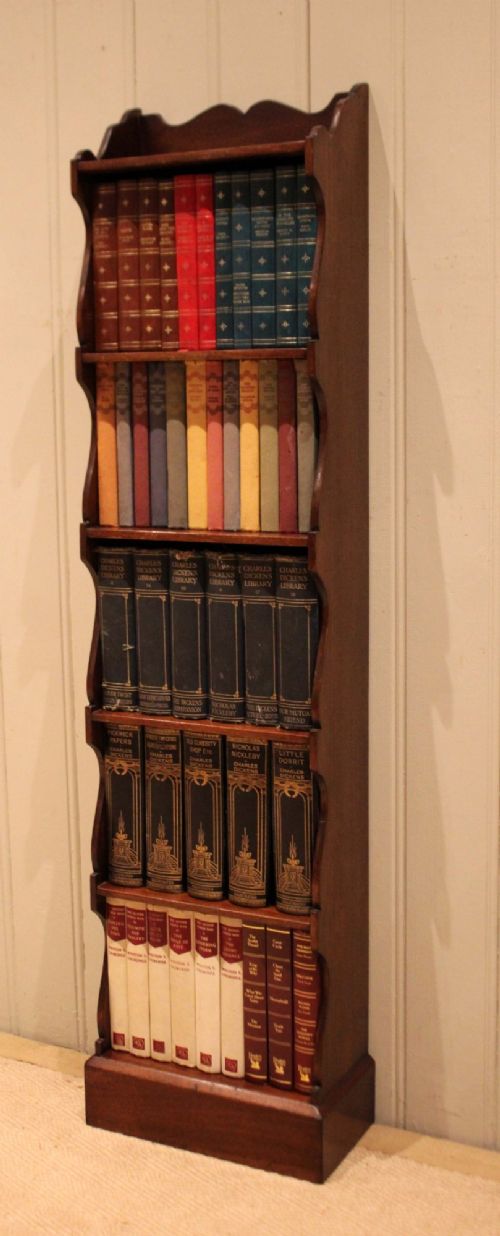
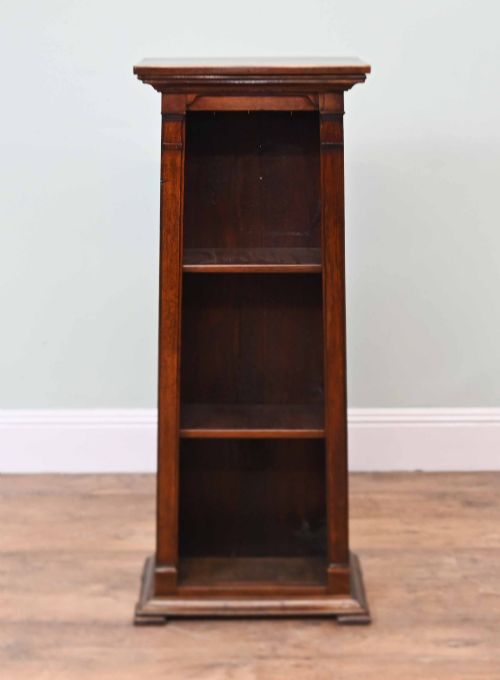
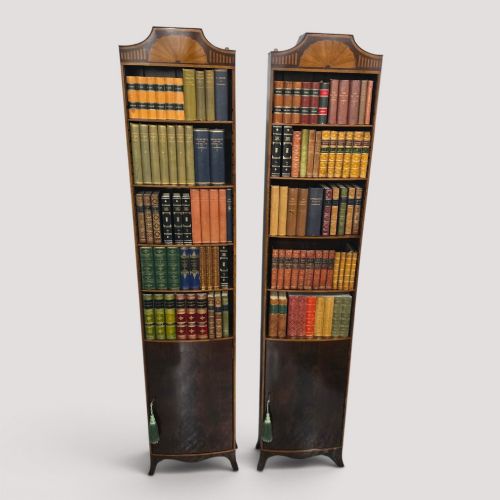
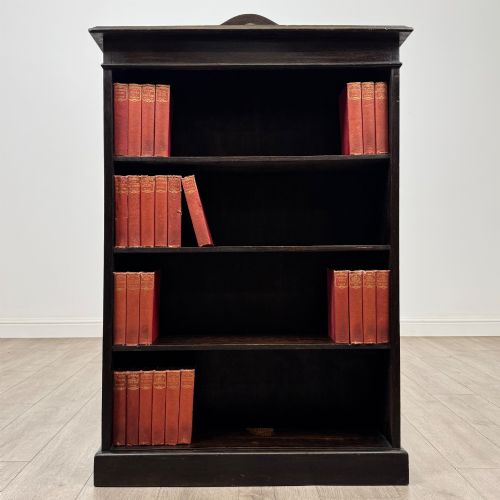
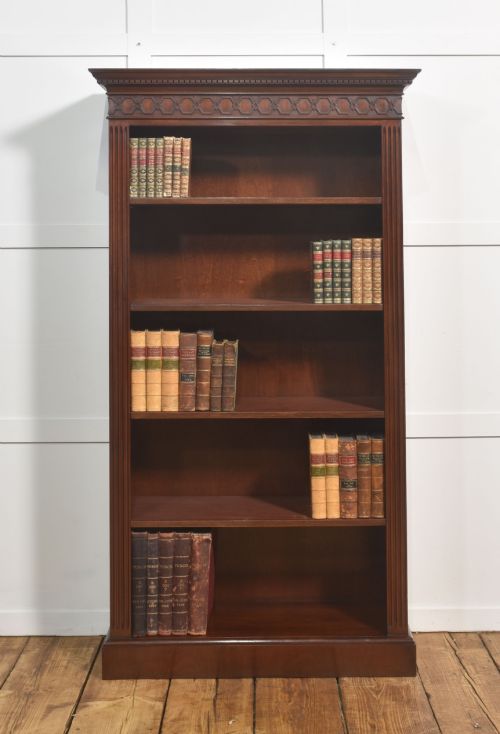
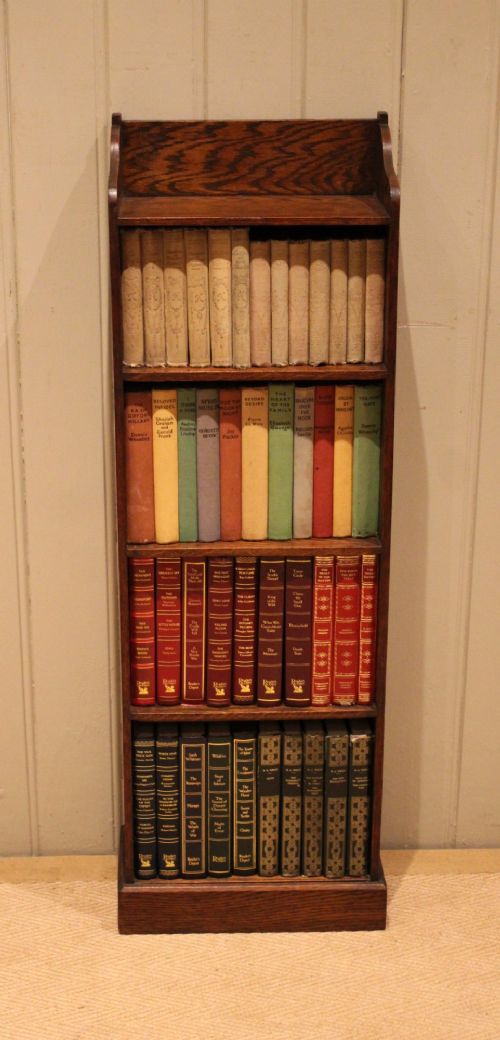
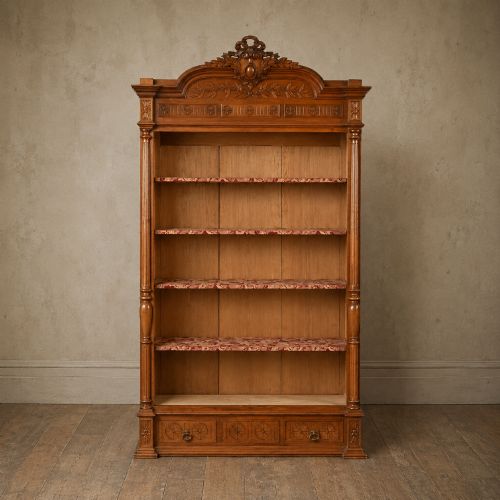
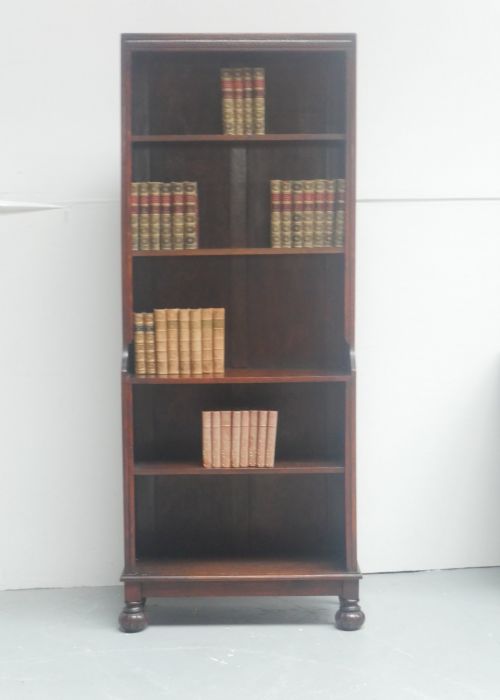
A tall wood bookshelf provides generous vertical storage for collections and volumes while anchoring a room with traditional timber presence. When searching for a tall wood bookshelf, buyers encounter pieces originating primarily from the nineteenth century through the early twentieth century, spanning Victorian, Edwardian, Arts and Crafts, and Art Deco periods.
The selections on this page lean heavily towards open mahogany and oak bookcases, alongside tiered whatnots and cabinet variations. These items range from slender, adjustable single bays to substantial two-part library pieces designed to hold significant weight.
Makers and workshops constructed these utilitarian yet decorative pieces using solid hardwoods and deal wood, often incorporating brass hardware or delicate satinwood inlay. Each version reflects the domestic requirements of its era, balancing architectural scale with accessible daily utility.
How they were made
Cabinetmakers utilised durable timbers such as mahogany, oak, walnut, deal wood, elm, teak, and rosewood, selecting boards for their grain and structural stability. Many examples incorporate solid wood construction, while others apply decorative touches like brass mounts, ormolu, and fine satinwood inlay.
Construction techniques prioritised functional longevity through adjustable shelving systems, raised galleries, and sturdy multi-tier framing. Workshops shaped these materials into open shelf layouts, two-section bookcase cabinets, and tiered whatnots using period joinery methods appropriate for heavy domestic use.
The available furniture encompasses open bookcases, bookcase cabinets, corner cabinets, and multi-tier whatnots.
What varies in quality
The distinction between standard utility items and superior examples lies in timber selection, decorative restraint, and mechanical refinement. Higher-grade pieces utilise choice cuts of figured mahogany or quarter-sawn oak, coupled with precise joinery and well-integrated brass or ormolu mounts.
Proportion and utility also separate the tiers, as finer items offer smoothly functioning adjustable shelving mechanisms and balanced architectural mouldings. Simpler deal wood or plain pine variants serve basic storage functions, whereas refined Edwardian and Victorian specimens demonstrate thoughtful proportion and careful cabinet work.
The Tall Wood Bookshelf Glossary
- Open bookcase
- A piece of furniture designed for book storage featuring unobstructed front access without doors. These items allow immediate visibility of bindings and contents.
- Whatnot
- A multi-tiered open shelving unit traditionally used for displaying ornaments, books, or small objects. They often feature three or four ascending tiers supported by slender uprights.
- Adjustable shelf
- A horizontal board resting on movable supports that allows the user to alter vertical compartment heights. This mechanism accommodates volumes of varying sizes.
- Raised gallery
- A low decorative railing or edge fitted to the top surface of a piece of furniture. It prevents items placed on top from sliding off.
- Two-part bookcase
- A tall storage unit constructed in upper and lower vertical sections to ease transport and placement. The separate halves stack securely to form a towering single unit.
Tall Wood Bookshelf: Frequently Asked Questions
How do I clean a wood bookshelf?
Dust timber surfaces regularly with a soft, dry cloth to prevent particulate accumulation in the grain and carved details.
Avoid commercial silicone sprays and excess moisture, applying a quality beeswax sparingly only when the wood appears dry.
Can shelves be adjusted easily?
Many period bookcases feature slotted wooden uprights or metal pins that allow shelves to be repositioned for different book heights.
Fixed shelves do exist in older pieces, so inspect the interior vertical panels for adjustment tracks before attempting to move them.
Are these bookcases sturdy enough for heavy books?
Solid hardwood versions constructed from oak, mahogany, or teak possess the structural strength required to support dense rows of volumes.
Softer deal wood or elm variants suit lighter displays, and proper wall anchoring is recommended for very tall pieces.
How do I date a wooden bookcase?
Examine the secondary timbers, nail types, and overall stylistic markers such as Arts and Crafts brackets or Edwardian inlay.
Comparing the proportions and moulding profiles against known Victorian and twentieth-century design patterns clarifies the period of manufacture.