





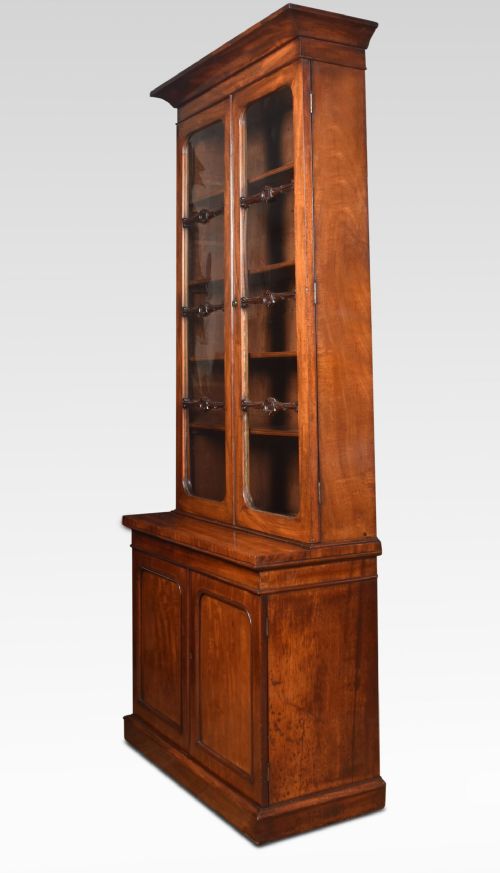

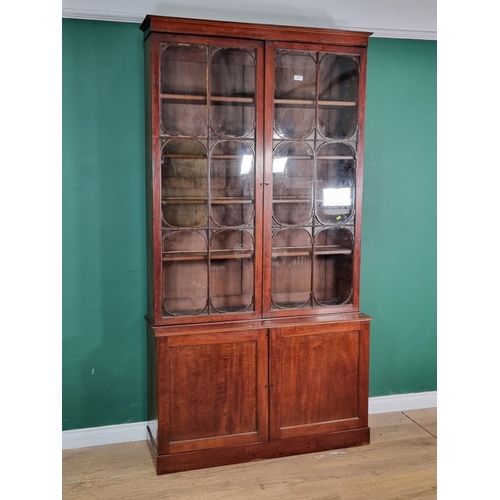

Tall Victorian Book Cabinet
A tall victorian book cabinet brings serious presence to a room, offering vertical display and sturdy shelving for a proper library.
Tall Victorian Book Cabinet
A tall victorian book cabinet combines generous vertical storage with architectural presence, designed to house substantial libraries in nineteenth-century homes. The pieces appearing here span the broader Victorian era alongside related nineteenth-century examples, taking forms that range from glazed display frontages to open shelving configurations.
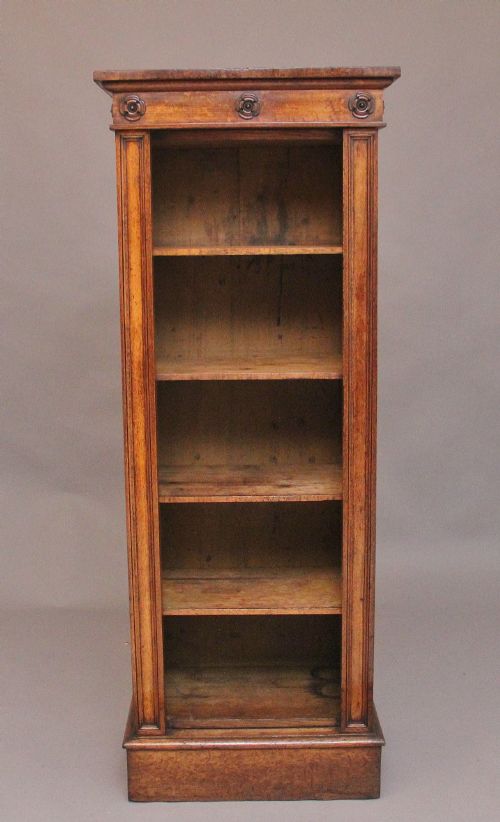
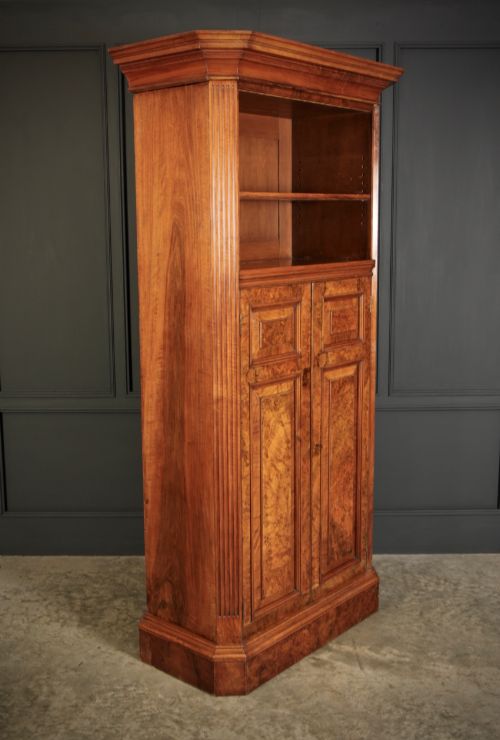
Buyers will most frequently encounter mahogany and oak constructions, often configured as two-section cabinet units with lower cupboard storage beneath upper book shelves. Narrower footprints and burr walnut finishes also appear among the selection, offering varied solutions for rooms requiring substantial book storage without an excessive horizontal footprint.
How they were made
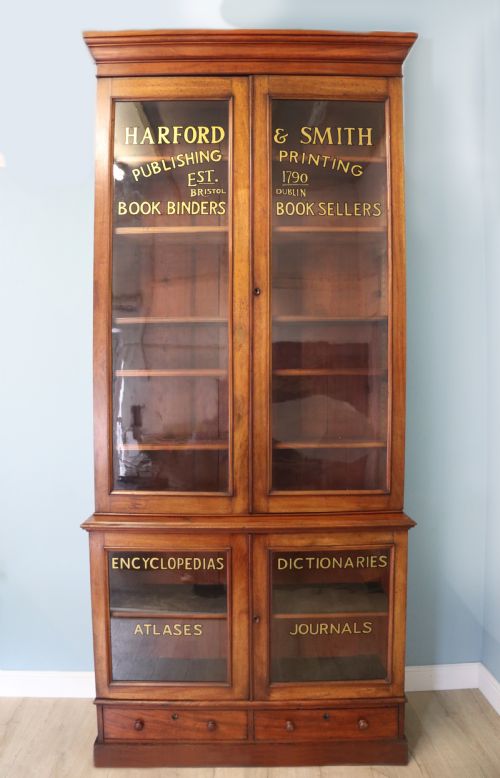
Cabinetmakers relied heavily on dense timbers such as mahogany, oak, and walnut, frequently applying fine veneers like burr walnut or flame mahogany over secondary woods to create rich surface pattern. Glass doors were fitted to protect precious volumes from dust, whilst brass hardware and occasional ormolu mounts provided structural reinforcement and decorative accent.
Internal joinery utilised adjustable wooden shelving systems to accommodate varying book heights, a practical necessity for nineteenth-century libraries. Carved architectural details and glazed panels demonstrate the cabinetmaker's attention to proportion and structural integrity across the tall framework.
Tall Victorian Book Cabinet Retail Price Guide 2026
Typical asking prices for tall victorian book cabinet among the pieces listed under this phrase on Sellingantiques today, from the lower quarter to the upper quarter. They describe what is for sale here now, not the wider market.
Dated examples span from the mid-nineteenth century through the Edwardian period, incorporating styles from Victorian to French Empire.
What varies in quality
The distinction between standard utility pieces and finer library cabinets lies in the selection of timber veneers and the crispness of architectural detailing. Cabinets featuring figured flame mahogany or selected burr walnut display a superior grade of material chosen by the maker for visual depth.
Proportion and execution define the upper tier of these pieces, where balanced cornices, finely glazed doors, and well-fitted lower cabinet cupboards demonstrate superior craftsmanship. The integration of adjustable shelving mechanisms and robust internal carcase construction further separates simpler regional items from metropolitan workshop production.
The Tall Victorian Book Cabinet Glossary
- Burr walnut
- A highly figured timber veneer taken from the excrescences or growths on walnut trees, prized for its swirling grain patterns.
- Flame mahogany
- Timber veneer exhibiting a distinctive undulating flame-like grain pattern, frequently utilised on prominent nineteenth-century cabinet doors.
- Glazed bookcase
- A cabinet featuring glass-fronted upper doors designed to keep dust away from bound volumes while allowing visual inspection.
- Cornice
- The decorative moulded projection that crowns the top of a tall cabinet structure.
Tall Victorian Book Cabinet: Frequently Asked Questions
How do I choose the right height?
Measure your ceiling clearance carefully before selecting a tall Victorian book cabinet, ensuring sufficient room for the decorative cornice at the top. Account for any skirting boards or picture rails that might affect how the cabinet sits against the wall.
Consider the proportions of your room alongside your storage needs, as narrower footprints provide strong vertical presence without dominating smaller floor spaces.
Can the shelves be adjusted?
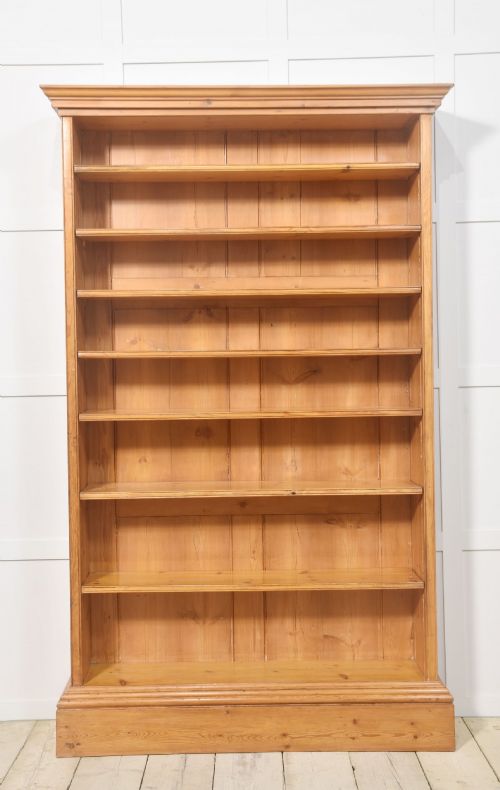
Many nineteenth-century bookcases feature adjustable shelving systems, often using wooden rack strips or brass studs set into the interior sides. This allows you to customise shelf spacing for everything from small pocket editions to folio volumes.
Check the specific description of each cabinet to confirm whether the shelving mechanism is fixed or adjustable.
Are these cabinets supplied in sections?
Taller Victorian bookcases and cabinet combinations were frequently constructed in two distinct sections to facilitate transport and placement within domestic interiors. The upper glazed or open shelf unit typically rests upon a lower cupboard base.
This sectional design makes moving and installing these substantial pieces significantly more manageable.
How do I care for walnut veneer?
Keep nineteenth-century polished furniture away from direct sunlight and heat sources to prevent the timber and delicate veneers from drying out. Dust regularly with a dry, soft cloth and maintain a stable room temperature.
Applying quality beeswax polish occasionally will help nourish the wood and maintain its natural lustre.