


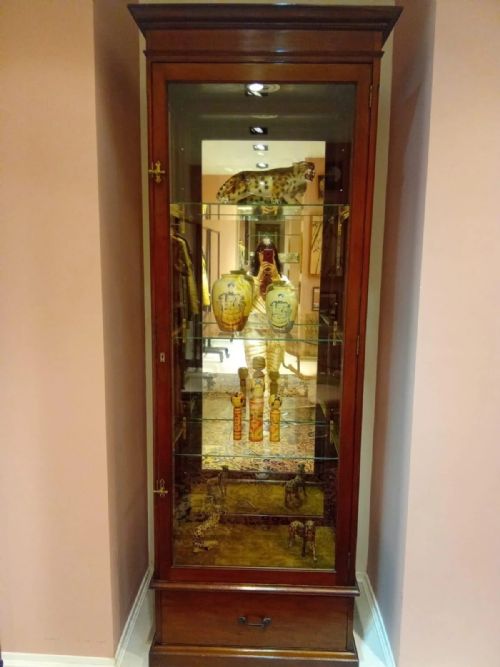
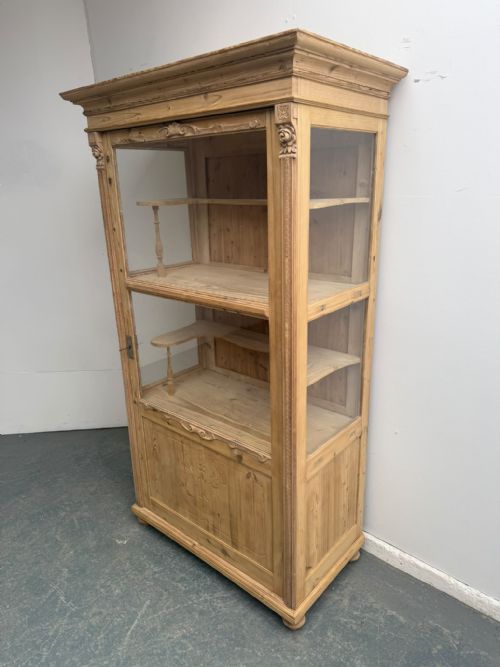


Tall Display Case
A tall display case brings vertical presence to a room, framing collections behind glass through Edwardian, Victorian and Art Deco forms.
Tall Display Case
A tall display case encompasses upright display cabinets, shop display units, bookcases, corner cabinets and glass domes on bases. These pieces emerge across the nineteenth century, the Edwardian era, the nineteen-twenties and nineteen-thirties.
The most common examples on this page are Edwardian and Victorian mahogany cabinets alongside glass domes for taxidermy and specimens. Oak, pine, satinwood and ebonised wood also appear.
Styles range from Gothic Revival and Edwardian Chinoiserie to Art Nouveau and Art Deco, alongside Georgian style pieces.
Materials and construction
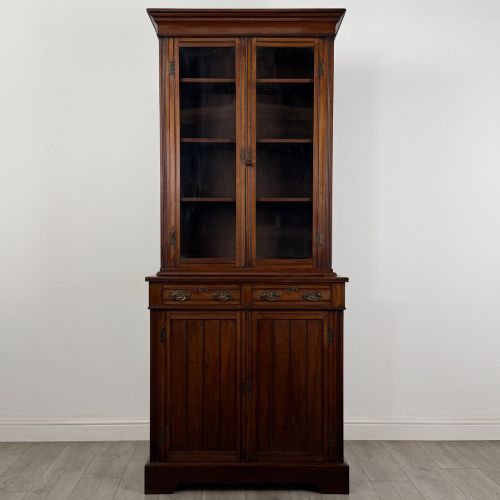
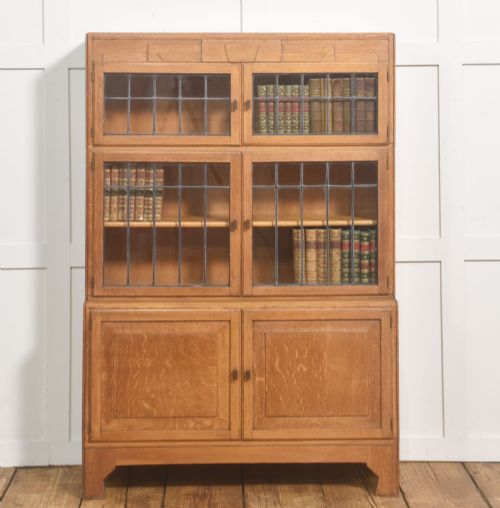
Makers built these cabinets primarily in mahogany, oak, pine and satinwood, often pairing timber frames with extensive glass panels, brass mounts and leaded sections.
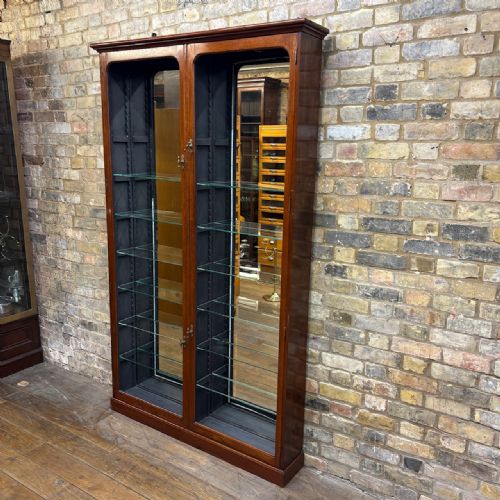
Shop display cabinets and tower cases incorporate adjustable glass shelves and steel elements, while taxidermy showcases rely on blown glass domes seated on wooden bases.
Tall Display Case Retail Price Guide 2026
Typical asking prices for tall display case among the pieces listed under this phrase on Sellingantiques today, from the lower quarter to the upper quarter. They describe what is for sale here now, not the wider market.
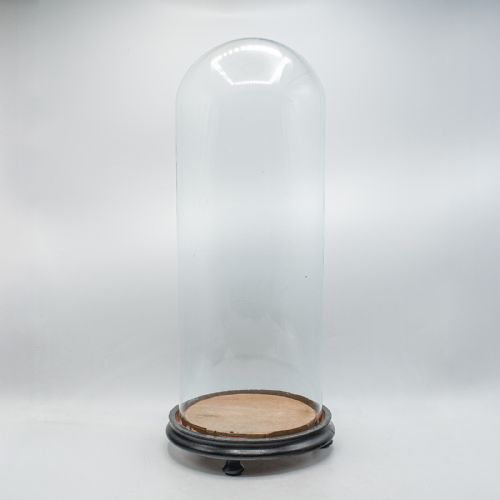
Several towering glass domes stand ready to shelter stuffed birds or mysterious Victorian curiosities from household dust.
Design and proportion
Quality rests in the handling of timber and glass, from plain pine surfaces to crossbanded satinwood and inlaid mahogany.
The sophistication of period details, such as leaded glass, brass mounts and moulded fronts, separates standard utility pieces from exceptional showcases.
E. Pollard & Co. Ltd.
The Tall Display Case Glossary
- Bijouterie cabinet
- A glazed display table or cabinet designed specifically for small ornaments and jewellery. These often feature velvet or fabric lined interiors.
- Chinoiserie
- European imitation of Chinese artistic motifs and styles. This style appears on lacquered display cabinets from the Edwardian period.
- Crossbanding
- A strip of veneer running perpendicular to the grain of the primary surface. It frames panels on Edwardian mahogany furniture.
- Ebonised wood
- Timber stained to resemble ebony. This dark finish appears on tower cabinets from the nineteen-twenties.
- Taxidermy dome
- A blown glass cover mounted on a wooden base to protect preserved specimens. Victorian and Edwardian examples often include tall proportions.
Tall Display Case: Frequently Asked Questions
What is a tall display case used for?
These cabinets house books, ceramics, ornaments and delicate collections behind protective glass. Tall proportions allow them to occupy vertical wall space efficiently.
Shop display variants and tower cabinets originally served commercial spaces to exhibit goods to customers. Domestic versions bring that same visibility to personal collections.
How do I identify an Edwardian display cabinet?
Edwardian pieces often utilise lighter timbers such as satinwood crossbanding, mahogany and lacquered finishes. Their styling frequently draws on earlier Georgian or Chinoiserie motifs.
Construction details from this era include adjustable glass shelving and refined brass mounts. The proportions tend toward narrow, tall formats designed for smaller rooms.
What are glass display domes used for?
Display domes house taxidermy specimens, collectors' items and delicate ornaments. The glass cover protects the contents from dust while offering a clear view from all angles.
Victorian and Edwardian examples sit on wooden bases, sometimes incorporating oval or tall vertical proportions specifically for birds or tall specimens.
How do I place a tall cabinet in a room?
Narrow bookcases and corner cabinets fit into tighter floor plans while providing height. Their glazed doors keep collections visible without overwhelming the room.
Freestanding tower cabinets and shop display units need adequate clearance to showcase glass panels on multiple sides. Placing them away from direct sunlight protects both the timber and the contents.