

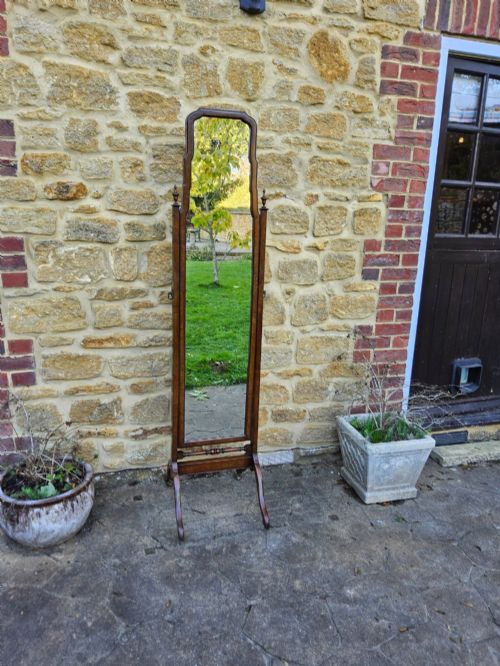
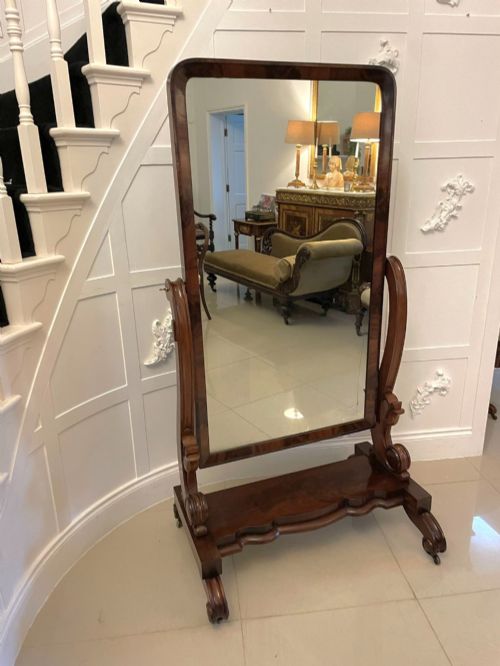


Tall Cheval Glass
A tall cheval glass offers full-length reflection with adjustable tilt, framed in mahogany, walnut or giltwood for bedroom and dressing room use.
Tall Cheval Glass
A tall cheval glass is a freestanding floor mirror suspended on a pivoting frame, allowing the glass to swing and angle for dressing. The selections here span the Victorian era, the nineteenth century, the Regency period, and the Edwardian years.
The most common formats on this page are mahogany and walnut dressing mirrors, alongside giltwood and ebonised examples. These pieces function primarily as tall floor or console dressing mirrors designed to show the full figure.
Originating as practical furniture for gentleman's outfitters and domestic dressing rooms, these mirrors combine height with stability. Buyers encounter both simple wooden frames and more ornate revival styles from the nineteenth and early twentieth centuries.
Materials and construction
Frames are constructed from solid and veneered timbers including mahogany, walnut, burr walnut and oak, often paired with brass pivot pins and mounts. Giltwood and gesso finishes provide ornate decorative detail on nineteenth-century examples.
The swinging mirror plate is mounted within a supportive wooden stand secured by floor feet or a console base. Joinery utilises traditional methods to bear the weight of the tall glass plate while maintaining smooth movement on the pivots.
Tall Cheval Glass Retail Price Guide 2026
Typical asking prices for tall cheval glass among the pieces listed under this phrase on Sellingantiques today, from the lower quarter to the upper quarter. They describe what is for sale here now, not the wider market.
Listings feature woods such as mahogany, walnut, burr walnut, and oak, alongside giltwood and ebonised finishes across Victorian and Regency periods.
Markers of quality
Quality rests in the balance of the framing timbers and the precision of the brass pivoting hardware. Heavier woods like mahogany and burr walnut provide the structural rigidity needed to support a tall glass plate without distortion.
Carved gesso and gilded details separate standard domestic mirrors from grander decorative pieces. The clarity of the glass plate and the integrity of the original frame finish determine the standing of each mirror.
The Tall Cheval Glass Glossary
- Cheval glass
- A tall freestanding mirror mounted on a pivoting frame. This design allows the user to tilt the glass to various angles for full-length viewing.
- Giltwood
- Timber carved and coated with gold leaf or metallic paint. This finish appears frequently on ornate nineteenth-century frames.
- Ebonised
- Wood stained or painted black to imitate ebony. This dark finish creates a sharp contrast in Victorian and nineteenth-century pieces.
- Pier glass
- A tall mirror designed to fit on the wall space between windows. These mirrors often share proportions with tall dressing glasses.
- Gesso
- A plaster-based mixture applied to wood frames before gilding. It provides a smooth surface for intricate carved decoration.
Tall Cheval Glass: Frequently Asked Questions
Where should I place a tall cheval glass?
These freestanding mirrors suit bedrooms, dressing rooms and hallways where full-length reflection is useful. Their pivoting design requires adequate clearance around the base to tilt the glass.
Positioning the glass away from direct moisture helps preserve the wooden frame and the silvering on the mirror plate over time.
How do I adjust the mirror angle?
Most tall cheval glasses use brass pivot screws or pins set into the side uprights. Tightening or loosening these fixings controls the tension on the swinging frame.
Keeping the pivot hardware clean ensures the mirror holds its position without slipping during daily use.
What periods do these mirrors represent?
The pieces on this page span the Regency period, the Victorian era, and the Edwardian years. Construction details and timber choices usually reflect the prevailing taste of each decade.
Mahogany and walnut predominate in nineteenth-century examples, while oak appears more frequently in later Edwardian pieces.
Are these mirrors stable on floors?
Freestanding cheval glasses rely on sturdy feet or splayed legs to support the weight of the tall frame. Placing them on level flooring ensures the pivoting mechanism functions correctly.
Heavier wood frames offer natural ballast, keeping the structure secure during adjustment.