






Tall Brown Bookshelves
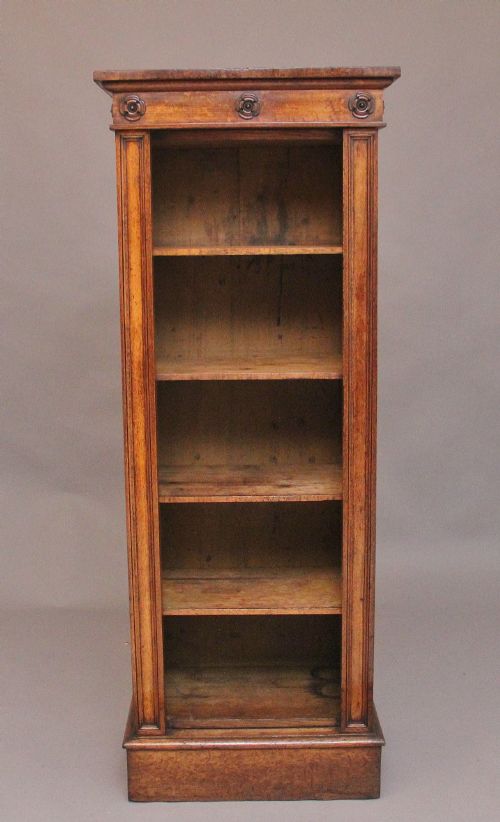
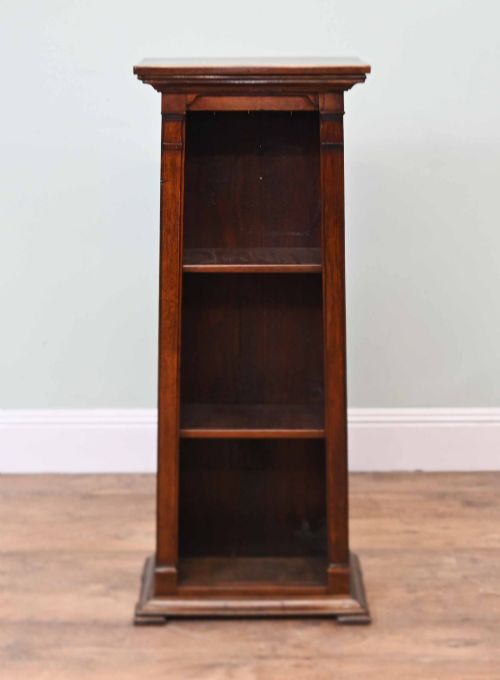
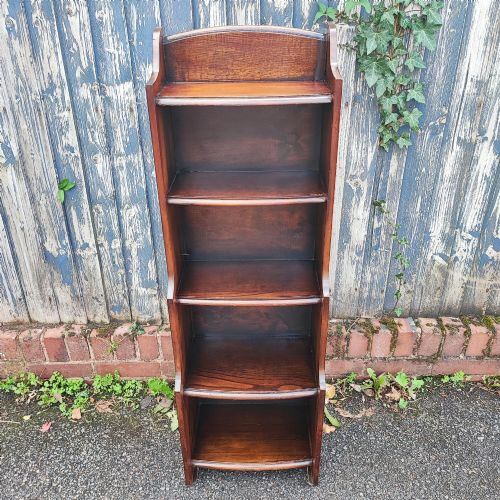
Tall brown bookshelves give vertical presence to a room, offering sturdy timber shelving for substantial libraries without dominating the floor space.
Tall Brown Bookshelves
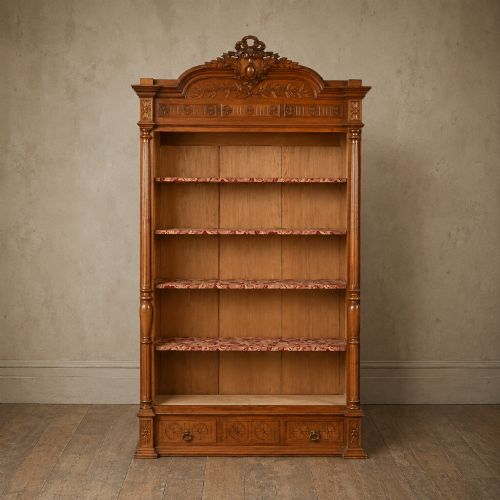
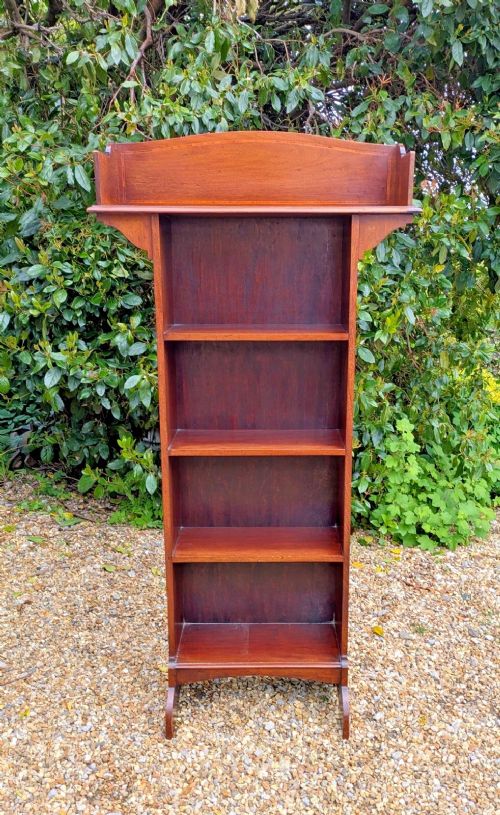
When you search for tall brown bookshelves, you find vertical storage furniture designed to hold large quantities of books while utilising timber tones like mahogany, oak, and walnut. These pieces span periods from the mid-nineteenth century through the interwar years, including Victorian, Edwardian, and Arts and Crafts examples.
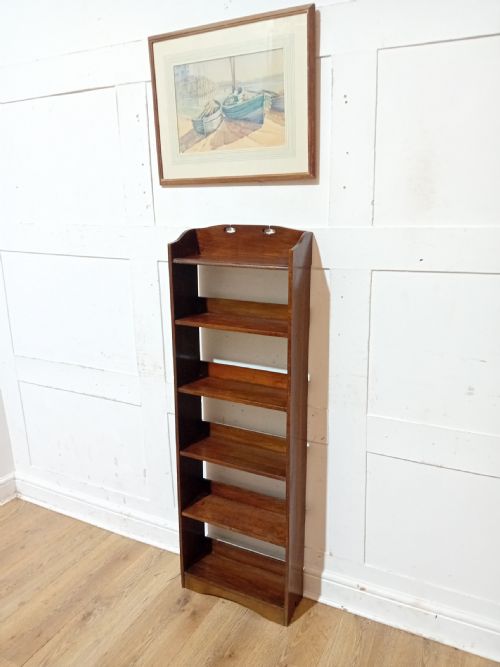
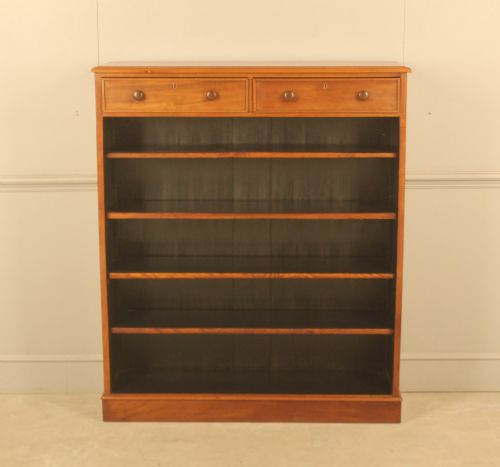
The pieces on this page are predominantly open bookcases, alongside bookcase cabinets and etageres that provide multiple tiers of shelving. Many items arrive in narrow, slim, or neat proportions suited to spaces where floor area is at a premium.
Origins range from British workshops to continental makers, utilising solid woods and veneers shaped into styles from Georgian revivals to early twentieth-century designs.
How they were made
Cabinet makers constructed these bookcases using dense hardwoods such as mahogany, oak, and walnut, frequently selecting deal or pine for internal carcases and backing boards. Timber selection dictated both the weight the shelves could bear and the richness of the brown surface grain.
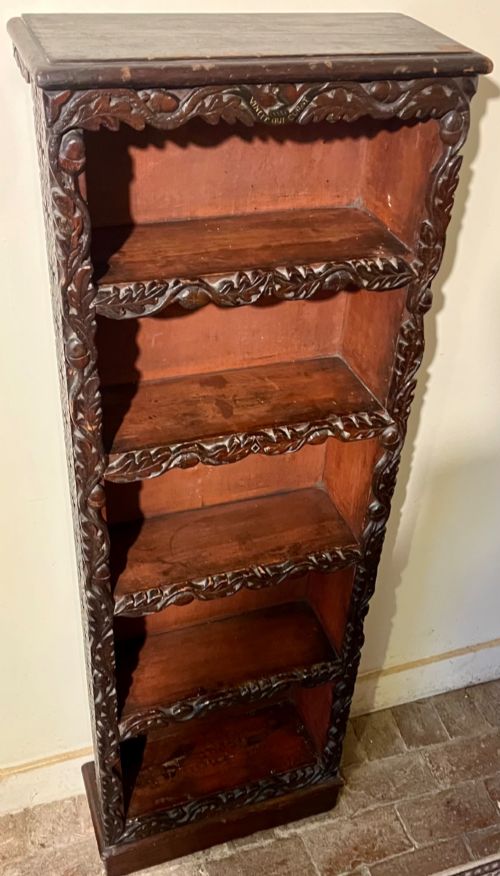
Decoration relied on fine carpentry and applied details, including dentil cornices, beaded edges, satinwood inlay, and occasional brass or ormolu mounts. Carved elements defined Renaissance Revival and Arts and Crafts pieces, while simpler forms showcased clean vertical lines.
Tall Brown Bookshelves Retail Price Guide 2026
Typical asking prices for tall brown bookshelves among the pieces listed under this phrase on Sellingantiques today, from the lower quarter to the upper quarter. They describe what is for sale here now, not the wider market.
Listings feature timbers including mahogany, oak, walnut, pine, and brass across Victorian, Edwardian, and Arts and Crafts periods.
What varies in quality
The standard of timber preparation and construction sets superior tall brown bookshelves apart from basic utility items, visible in the choice of figured grain and the precision of the joints. Finer pieces employ solid hardwoods with careful consideration of the natural wood figure across the front elevation.
Proportion and architectural detail also distinguish the range, where well-judged cornices, adjustable shelving mechanisms, and delicate inlay elevate a piece from a simple utility to a considered interior furnishing.
WYLIE LOCHHEAD of GLASGOW·E.A. TAYLOR
The Tall Brown Bookshelves Glossary
- Open bookcase
- A piece of furniture consisting of a vertical frame fitted with horizontal shelves, lacking doors to enclose the storage space. This format allows immediate visibility of book spines.
- Dentil cornice
- A architectural moulding featuring a series of small, rectangular blocks projecting like teeth along the top edge of the bookcase. It draws the eye upward and signals formal cabinet making.
- Satinwood inlay
- Contrasting blonde wood inserted into incisions made in the darker primary timber, creating decorative borders or motifs. This technique highlights the skill of the workshop.
- Etagere
- A piece of furniture consisting of a set of open shelves for displaying small objects or books. They provide tiered storage with an emphasis on decorative lightness.
- Bookcase cabinet
- A hybrid storage form featuring open or glazed shelving above a lower enclosed cupboard base. The lower section provides concealed storage for larger volumes or papers.
Tall Brown Bookshelves: Frequently Asked Questions
Are the shelves adjustable?
Many period bookcases feature adjustable shelves supported by wooden ratchets or metal pins, allowing you to alter the tier heights to suit varying book sizes.
Simpler or earlier vernacular pieces often have fixed shelves secured directly into the sides during initial construction.
How do I secure a tall bookcase?
Tall furniture requires physical attachment to the wall using discreet brackets to prevent tipping, particularly when loaded with heavy volumes.
Ensuring the piece rests squarely on the floor before anchoring protects the joints from long-term stress.
What woods were commonly used?
Makers relied heavily on mahogany, oak, and walnut for visible exterior surfaces, utilising their rich brown tones to anchor library interiors.
Secondary timbers such as pine or deal often appear on backing boards and internal shelf supports.
How do I date a bookcase?
Dating relies on stylistic clues like dentil cornices, brass mounts, and inlay work, alongside construction marks such as hand-cut joints.
Comparing the proportions to documented periods like the Victorian or Edwardian eras helps narrow the timeline.