




Swivel Clip Watch Chain
A swivel clip watch chain secures a pocket watch with a sturdy pivoting clasp, offering a practical piece of history adapted today as a necklace or bracelet.
Swivel Clip Watch Chain
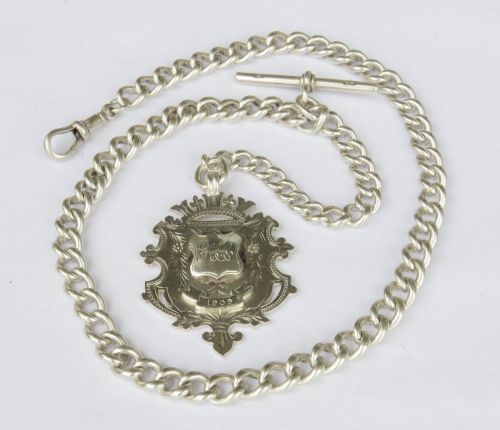
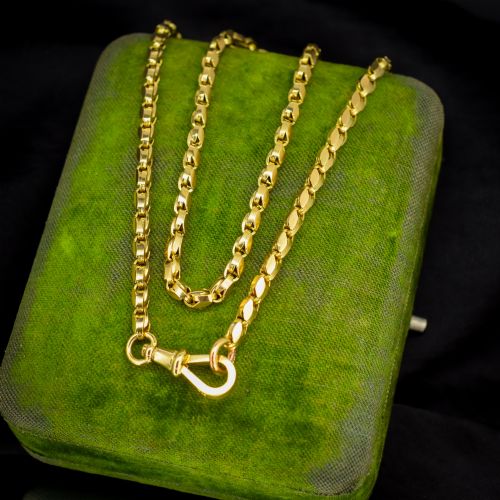
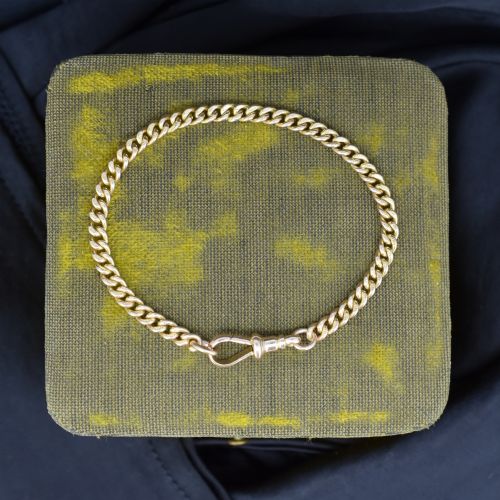
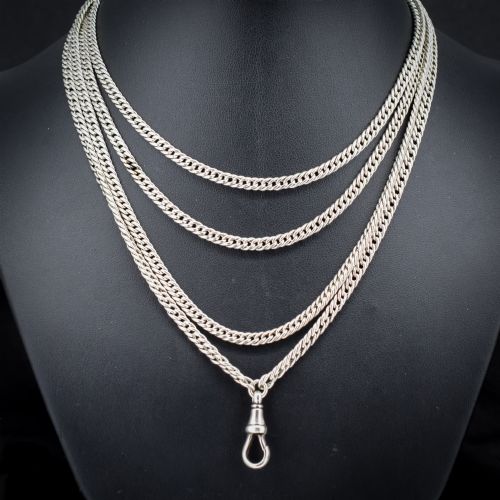
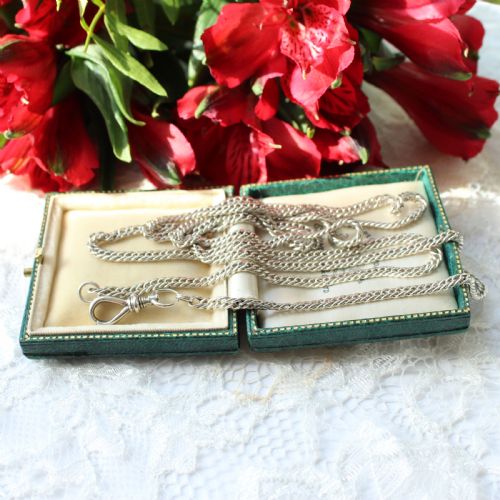
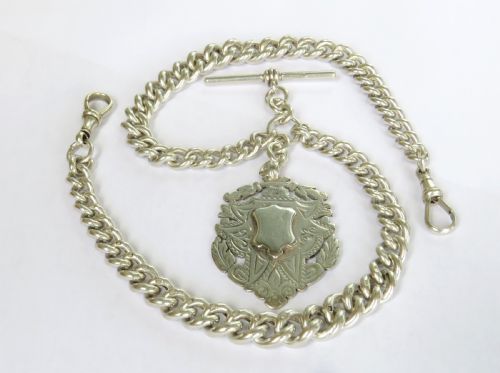
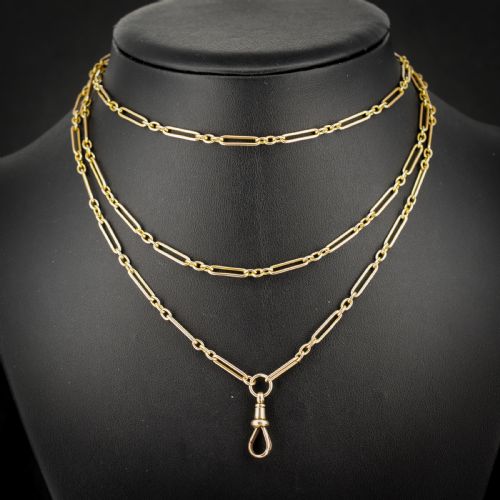
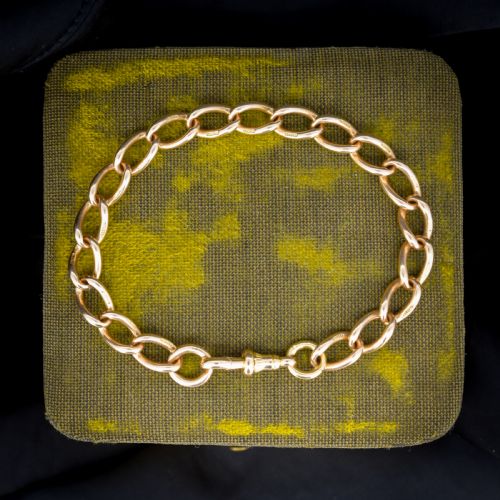
A swivel clip watch chain brings together functional Victorian timekeeping hardware and wearable jewellery forms such as necklaces and bracelets. Buyers searching for a swivel clip watch chain encounter pieces intended originally for pocket watches, now often worn as long guard chains, double albert chains, or curb bracelets.
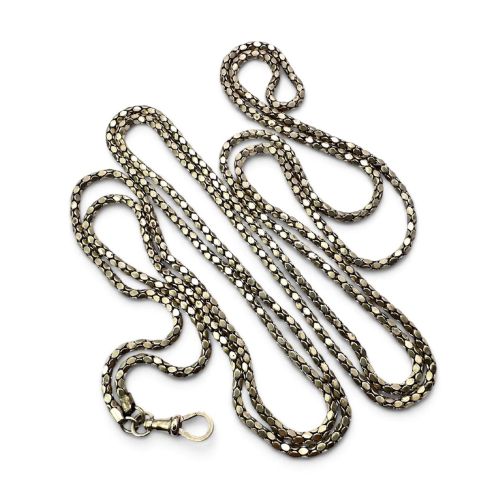
The pieces on this page span the Victorian, Edwardian, and subsequent decades up to 1920, originating primarily from British working contexts where gold and silver links predominated. Forms range from very long guard chains measuring over seventy inches to shorter lengths fitted with T-bars and dog clips.
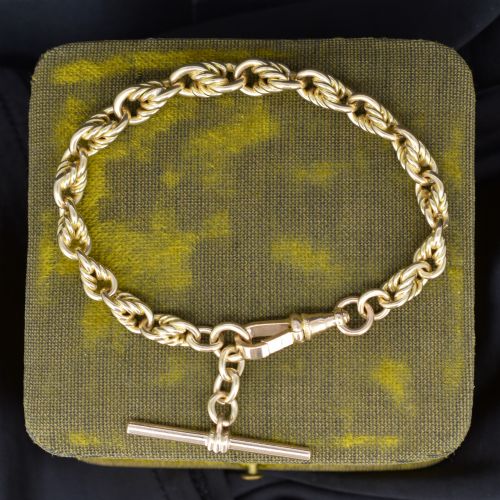
Object types include watch chains, necklaces, bracelets, and individual jewellery clasps or charm pendants. Many examples feature fancy links such as trombone, paper, oval curb, and fancy patterns that reflect the specific period of their manufacture.
Materials and construction
Gold and silver form the foundational materials of these pieces, utilising various purities including nine carat, fifteen carat, eighteen carat, and sterling silver alongside yellow, rose, white, and platinum combinations. Metal selection dictates both the weight and the tonal appearance of each individual chain.
Construction relies upon linked metal segments joined securely by hand or mechanical assembly, terminating in functional swivel clasps, dog clips, or bolt rings. Makers incorporated specialised components like T-bars and dog clips directly into the chain structure to attach pocket watches securely.
Swivel Clip Watch Chain Retail Price Guide 2026
Typical asking prices for swivel clip watch chain among the pieces listed under this phrase on Sellingantiques today, from the lower quarter to the upper quarter. They describe what is for sale here now, not the wider market.
Some guard chains stretch past seventy inches, offering enough gold length to double, loop, and still dangle a dog clip.
Distinctions in quality
Quality rests upon the proportion of higher carat gold or sterling silver utilised in the links and the substantial weight of the metal itself. Heavier chains with well-defined fancy links demonstrate superior substance compared to lighter, simpler iterations.
The original mechanical integrity of the swivel mechanism and dog clip separates ordinary examples from finer survivals. A crisp pivoting action in the clip and clear hallmarks stamped upon the metal signify higher manufacturing standards.
The Swivel Clip Watch Chain Glossary
- Dog clip
- A spring-loaded clasp with a pivoting tongue, used to attach pocket watches or charms securely to a chain.
- Swivel clasp
- A finding featuring a rotating loop that prevents the attached chain from twisting during daily wear.
- T-bar
- A transverse metal bar attached to the middle of a watch chain, designed to slip through a waistcoat buttonhole.
- Albert chain
- A type of pocket watch chain named after Prince Albert, worn either single across the front or double from pocket to pocket.
- Long guard chain
- An exceptionally long necklace length chain, often Victorian, designed to be doubled around the neck.
- Trombone link
- A distinctive chain link shape resembling a musical instrument's slide, featuring elongated rectangular links connected by smaller round rings.
Swivel Clip Watch Chain: Frequently Asked Questions
How do I wear a watch chain today?
These chains adapt readily to modern wear as layered necklaces, long single-strand pendants, or wrapped bracelets secured by the original dog clip.
The inclusion of swivel clasps and T-bars allows contemporary owners to hang charms or fasten the links in versatile configurations.
What is the difference between an albert and a guard chain?
Albert chains are traditionally shorter and designed to span a waistcoat or pocket, often featuring a T-bar in the centre.
Guard chains are significantly longer, measuring up to seventy inches, and slip directly over the head without needing a fastening mechanism.
How can I tell the period of a chain?
Dating relies upon stylistic markers such as Victorian paper links, Edwardian curb bracelets, or specific link patterns recorded across the eras.
Maker marks and metal stamps further assist in identifying the manufacturing timeframe from the nineteenth and early twentieth centuries.