


Swivel Clip Necklace
These swivel clip necklaces are substantial silver and gold chains designed with secure fasteners, offering versatility and timeless appeal for daily wear.
Swivel Clip Necklace
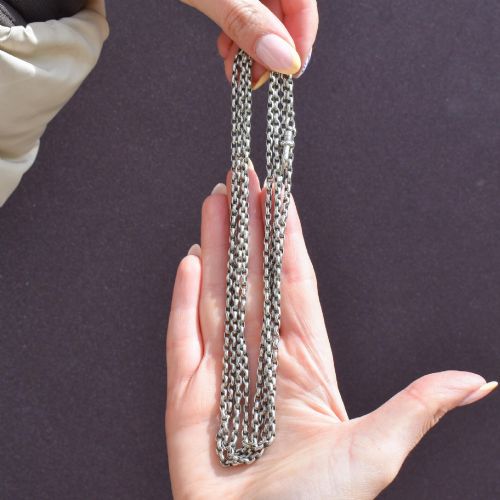
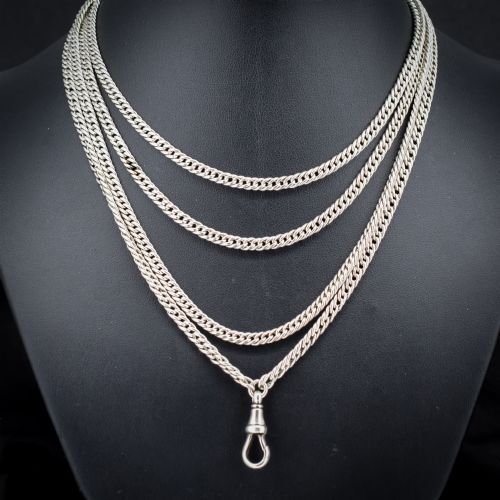
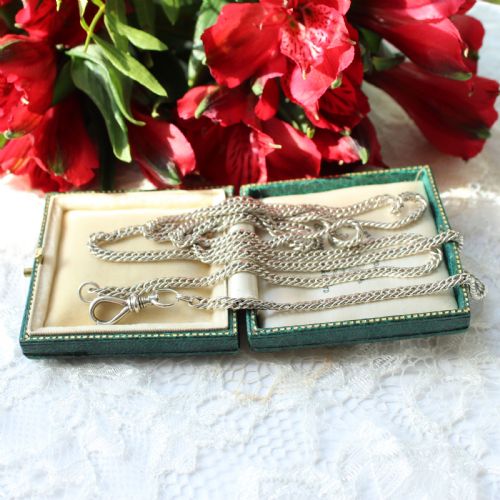
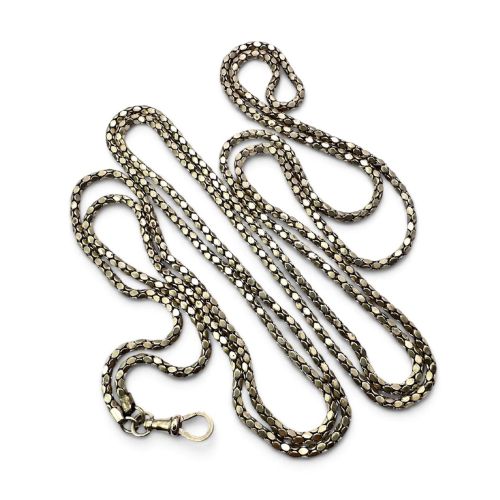
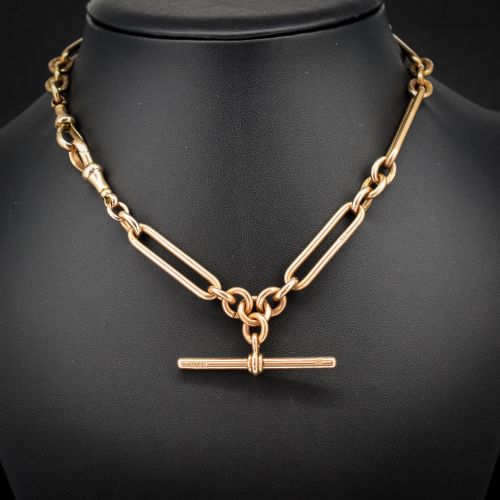
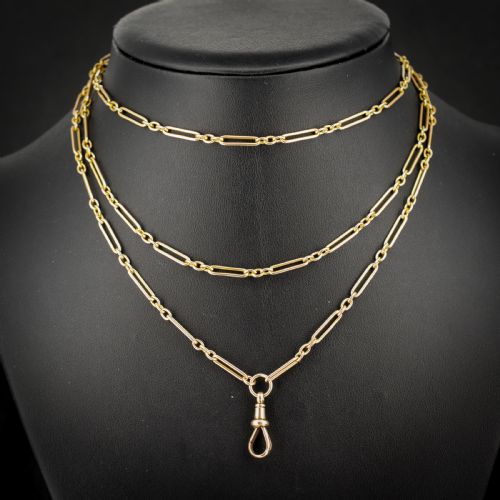
A swivel clip necklace is typically a long guard chain, watch chain, or albert chain adapted for neck wear, appearing frequently in Victorian, Edwardian, and early twentieth-century examples. These pieces combine utility with decorative metalwork, featuring links such as flat curb, trombone, paper clip, and fancy patterns.
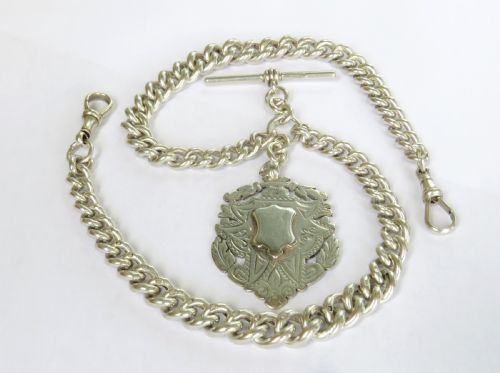
The dominant forms on this page include lengthy guard chains reaching over sixty inches alongside shorter watch chains complete with dog clips, swivel clasps, and T-bars. Dating spans from the nineteenth century through the 1930s, reflecting various shifts in jewellery design across different decades.
Buyers seek these chains for their adaptability, as the integrated swivel and dog clips allow the wearer to suspend pendants, pocket watches, or charms securely. The diverse link formations and substantial lengths define the character of these historical neck chains.
How they were made
Materials span sterling silver and solid gold variations, including 9ct yellow, white, and rose gold, alongside 18ct gold and platinum combinations. Artisans constructed these chains using individual hand-assembled links that provide both flexibility and structural durability.
Fastening mechanisms such as dog clips, swivel clasps, and screw-lock pocket watch clips demonstrate precision metalworking tailored to secure valuable timepieces and pendants. Each link type, from uniform curb to intricate fancy links, required specialised soldering and finishing techniques.
Listings feature yellow gold, sterling silver, 9ct rose gold, and platinum across Victorian, Edwardian, and early twentieth-century periods.
What varies in quality
Quality rests in the gauge of the metal and the integrity of the individual links, where heavier gram weights indicate superior durability and substance. Superior examples retain crisp detail in the clasp mechanisms and show minimal wear at the pivot points of the swivel clips.
The sophistication of the link design and the completeness of original components, such as matching T-bars and functional dog clips, distinguish finer specimens. Consistency in metal colour across lengthy chains and well-preserved hallmarks further separate standard items from exceptional ones.
The Swivel Clip Necklace Glossary
- Dog clip
- A spring-loaded fastening device with a pivoting tongue, commonly attached to watch chains and guard chains for securing charms or pocket watches. This mechanism allows the clip to rotate freely without twisting the chain itself.
- Albert chain
- A pocket watch chain named after Prince Albert, designed to secure a timepiece in a waistcoat pocket while displaying a fob. In modern contexts, these are frequently worn as necklaces.
- Guard chain
- An exceptionally long chain worn around the neck during the nineteenth century, often used to secure opera glasses, watches, or small purses. Their generous length permits doubling or tripling around the neck.
- T-bar
- A transverse bar of metal attached to the centre of a watch chain, designed to slip through a buttonhole to anchor the chain securely. It remains a decorative and functional feature on many period chains.
- Curb link
- A type of chain link that has been twisted and flattened so that the links lie flat against the skin. This formation provides a smooth, uniform texture appreciated for everyday wear.
Swivel Clip Necklace: Frequently Asked Questions
What is a swivel clip necklace?
A swivel clip necklace is a historical chain, often originating as a watch chain or guard chain, fitted with a rotating spring clip. These versatile pieces allow wearers to attach and rearrange pendants or charms with ease.
They appear in various lengths and gold or silver alloys, reflecting the craftsmanship of the nineteenth and early twentieth centuries.
How were these chains originally worn?
In the nineteenth century, guard chains and albert chains served practical functions, such as securing pocket watches, eyeglasses, or fob seals to garments. Men wore them across waistcoats, while women often looped long guard chains around their necks.
Today, collectors repurpose these historical items purely as statement necklaces, utilising the original clasps to hold modern pendants.
How do I care for antique gold and silver chains?
Maintaining these pieces requires gentle cleaning with warm soapy water and a soft cloth to protect the intricate link structures and moving clip mechanisms. Harsh chemical dips should be avoided, particularly on hollow or delicate links.
Store the chains flat or hung carefully to prevent tangling and undue stress on the solder points of the links.
How can I tell the period of a chain?
Dating relies on hallmarks stamped onto the metal, the style of the links, and the specific mechanics of the dog clips or swivel clasps. Victorian pieces often feature heavy curb or paper links, whereas 1930s examples introduce different fastening innovations.
Comparing the weight, alloy colour, and construction style helps establish the likely era of manufacture.