


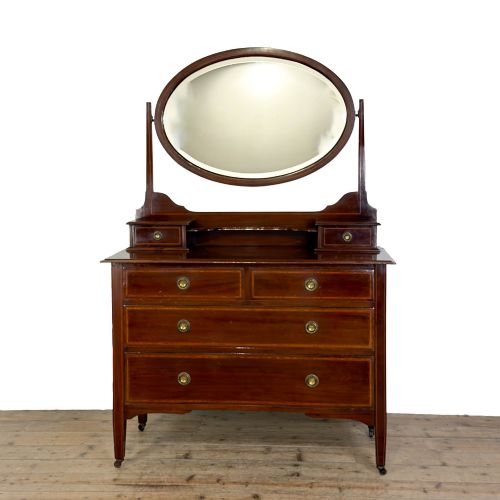
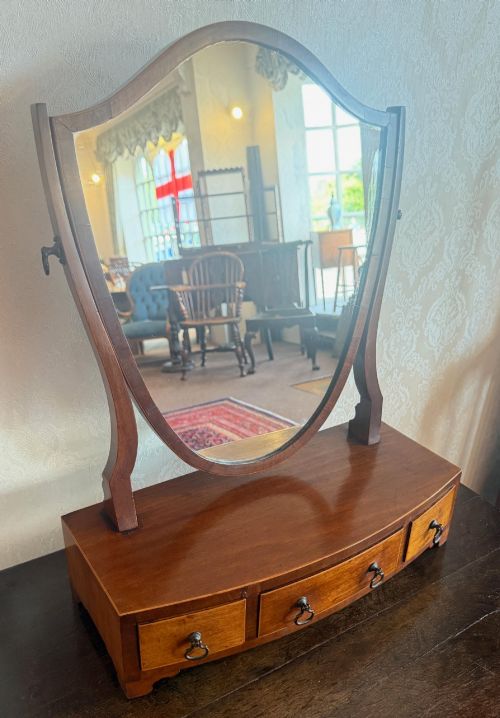


Swivel Bedroom Mirror
These swivel bedroom mirror designs combine functional tilting glass with period timber frames, offering adjustable reflections for dressing and grooming.
How they were made
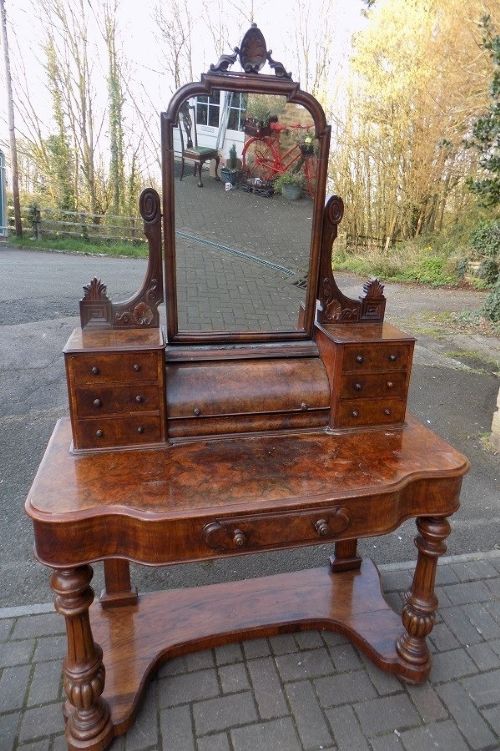
Cabinetmakers constructed these frames using dense timbers like mahogany, walnut, and satinwood, often applying burr walnut veneers to create figured grain patterns. Joinery relied on traditional techniques to house the pivoting glass securely within upright supports.
Brass formed the adjustable pivot screws, hinge mechanisms, and decorative candle sconces or fittings found on many cheval and swing mirrors. Mirror glass was set into rebated frames, sometimes featuring bevelled edges or original silvering that shows age.
What varies in quality
Quality rests in the choice of timber figure, such as richly grained burr walnut or select mahogany, and the crispness of any carved ornamentation on the frame or supports. Superior examples exhibit substantial construction, balanced proportions, and careful attention to the turning of upright columns and stretcher rails.
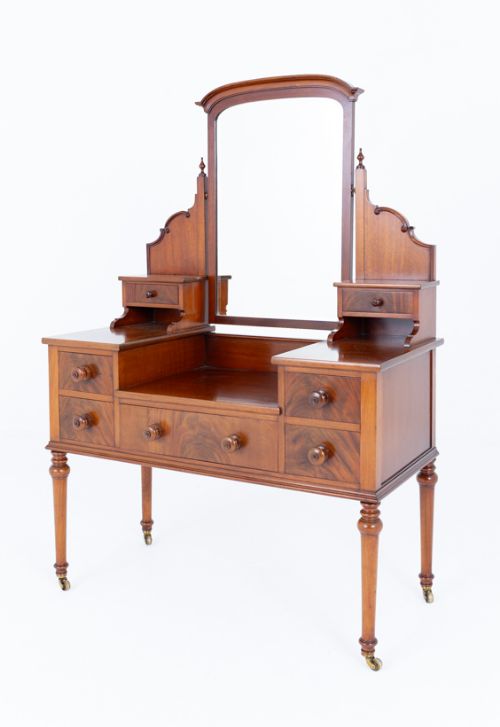
The hardware also marks the grade of a piece, with heavy cast brass pivot nuts and original fittings indicating finer manufacture. The clarity and preservation of the mirror glass itself, along with secondary timbers used in the drawers of associated dressing chests, further distinguish standard production from exceptional pieces.
Swivel Bedroom Mirror Retail Price Guide 2026
Typical asking prices for swivel bedroom mirror among the pieces listed under this phrase on Sellingantiques today, from the lower quarter to the upper quarter. They describe what is for sale here now, not the wider market.
Materials recorded across the inventory include mahogany, walnut, burr walnut, satinwood, marble, and brass.
Harrods
The Swivel Bedroom Mirror Glossary
- Swivel mirror
- A glass panel mounted on side pivots allowing it to tilt back and forth. This mechanism is central to dressing and toilet mirrors.
- Cheval mirror
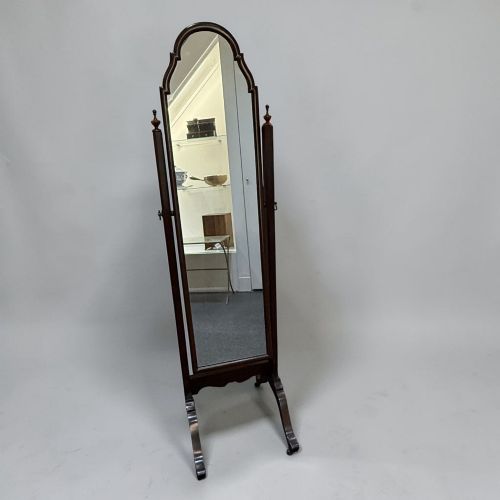
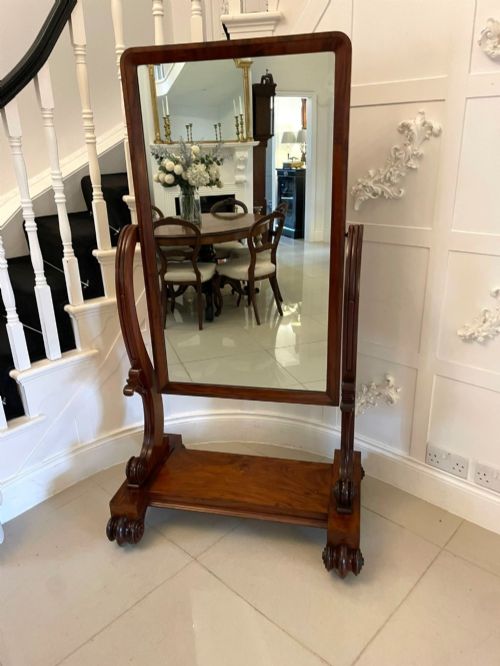
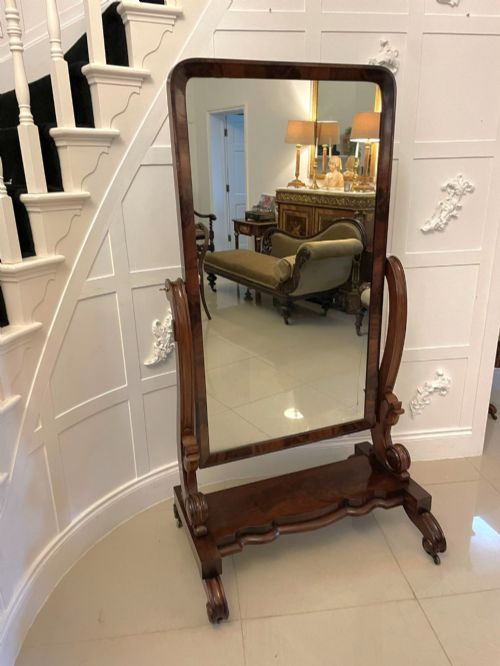
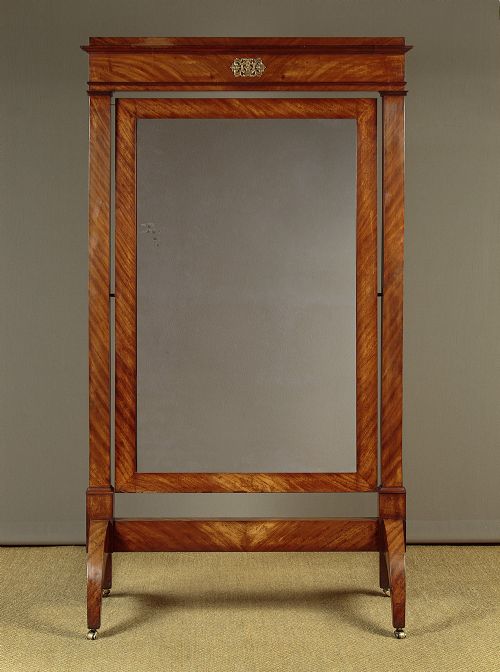
- A tall, full-length floor-standing mirror that swings within a supportive wooden frame. The term derives from the French word for horse.
- Toilet mirror
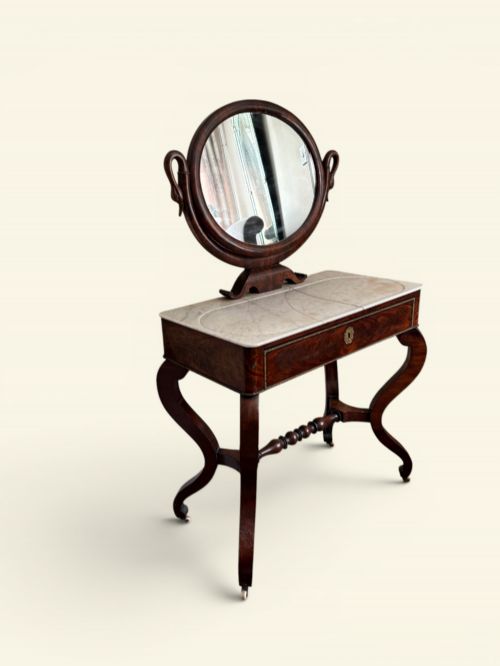
- A smaller tabletop swing mirror designed to sit on a dressing table or chest of drawers. These often feature small drawers within the base plinth.
- Burr walnut
- A prized timber veneer taken from the warted growths of walnut trees, displaying swirling, highly decorative grain patterns. Makers used it on high-end Victorian furniture.
- Swing mirror
- An alternative term for a pivoting dressing glass supported on side uprights. It allows the user to adjust the angle of reflection.
Swivel Bedroom Mirror: Frequently Asked Questions
Where do you put a cheval mirror?
A cheval mirror stands directly on the floor, making it suitable for bedrooms, dressing rooms, or hallways where full-length reflection is useful. Because it is self-supporting, it requires no wall mounting.
Position it near natural light sources to maximise illumination, ensuring adequate clearance around the frame for the pivoting action.
How do you date a Victorian mirror?
Dating a Victorian mirror involves examining the timber species, construction methods, and the characteristics of the mirror glass. Pieces from this era frequently utilise solid mahogany or burr walnut with hand-cut dovetails on any associated drawer boxes.
Makers often stamped retailer names or used specific brass pivot hardware styles that help narrow the production period between 1837 and 1901.
What is a duchess dressing table?
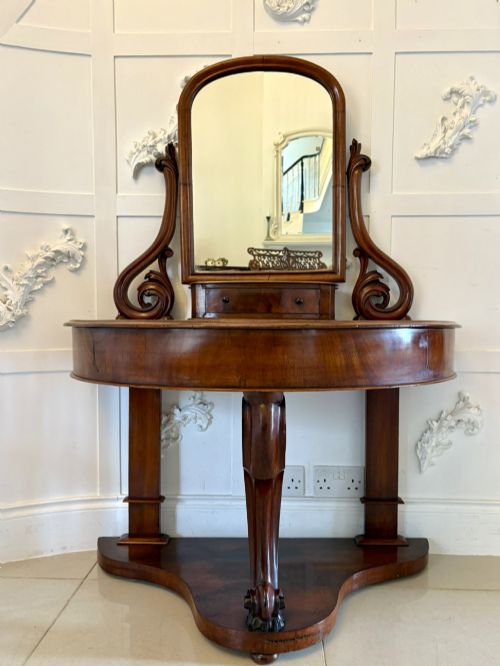
A duchess dressing table is a nineteenth-century vanity unit featuring a large central swivel mirror flanked by smaller drawers or trinket boxes. These pieces often incorporate a curved table base and elaborate serpentine woodwork.
They serve as both a functional dressing station and a decorative centrepiece, frequently constructed from walnut or mahogany.