


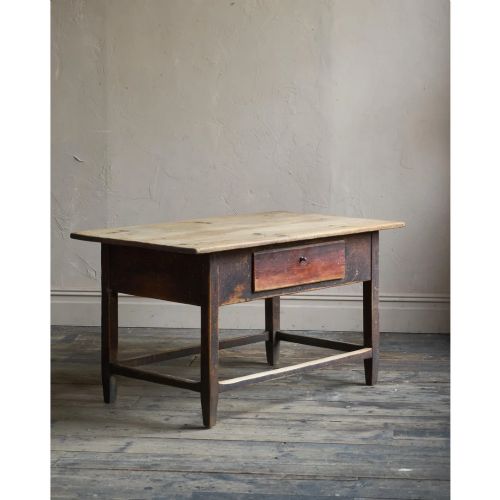


Swedish Country Console Table
A swedish country console table brings clean Scandinavian utility and pale painted charm to a hallway, bringing a quiet architectural silhouette.
Swedish Country Console Table
When you search for a swedish country console table, you are looking at practical furniture shaped by Scandinavian utilitarian traditions. These pieces include painted side tables, demi lune console tables, and preparation or baking tables originating from the nineteenth century, Edwardian era, and nineteen-twenty.
You are most likely to meet painted pine furniture on this page, often featuring box stretchers and scraped paint finishes. The forms range from rustic farmhouse examples to refined Gustavian and Swedish Rococo influences.
The objects serve primarily as side tables, occasional tables, or central tables within domestic spaces. Their origins sit firmly within Scandinavian country workshops, blending folk art aesthetics with functional daily utility.
How they were made
Makers utilised pine and birch as primary timbers, shaping structural elements with traditional hand woodworking techniques. Painted timber surfaces received multiple coats of paint, which often weathered over decades to reveal layered tones beneath scraped finishes.
Hardware details remained sparse, relying on occasional brass accents alongside organic touches like tree bark in specific rustic designs. Construction methods prioritised sturdy box stretchers and pegged joints to withstand heavy domestic preparation work.
Swedish Country Console Table Retail Price Guide 2026
Typical asking prices for swedish country console table among the pieces listed under this phrase on Sellingantiques today, from the lower quarter to the upper quarter. They describe what is for sale here now, not the wider market.
Styles span rustic farmhouse, Scandinavian country, and Swedish Rococo, reflecting diverse regional workshop traditions.
What varies in quality
The distinction between standard utility items and finer examples rests upon the integrity of the original paint surface and the subtlety of regional detailing. Pieces retaining authentic scraped paint or untouched painted pine demonstrate a higher degree of historical survival.
Proportion and structural grace separate simple rustic farmhouse items from pieces displaying restrained Gustavian or Swedish Rococo lines. Refined turnings on legs and balanced demi lune shapes indicate a more deliberate design ambition within the maker's workshop.
The Swedish Country Console Table Glossary
- Demi lune
- A half-moon shape used for console tables designed to sit flush against a wall. This format saves floor space while providing a decorative surface.
- Box stretcher
- A system of horizontal wooden bars connecting the lower legs of a table to add structural rigidity. This feature is common on heavy preparation and baking tables.
- Gustavian
- The Swedish neoclassical style inspired by King Gustav III, characterised by restrained symmetry and pale finishes. It brings lighter proportions to rural forms.
- Scraped pine
- Pine furniture where later layers of paint have been manually pared back to reveal historical colour layers underneath. This technique highlights the age and decorative history of the wood.
- Preparation table
- A sturdy utility table originally built for kitchen work such as baking or food preparation. These pieces often feature thick pine tops and robust underframes.
Swedish Country Console Table: Frequently Asked Questions
What is a Swedish country console table?
A Swedish country console table is a practical nineteenth century or Edwardian wooden table built for Scandinavian homes. These pieces often feature painted pine construction and simple rectangular or demi lune formats.
They combine utilitarian function with the pale, understated aesthetic typical of northern European folk design. Many examples originate from rural workshops rather than urban cabinet makers.
How were these tables used originally?
These tables served various practical domestic functions ranging from kitchen baking and food preparation to hallway surface storage. Their robust pine frames handled heavy daily chores in farmhouse settings.
Over time, many transitioned from working prep spaces into decorative side tables and occasional furniture within living areas and halls.
How do I style a Swedish console table?
Place a console table against a hallway or living room wall to anchor the space with pale painted timber tones. Pair the surface with simple ceramics or organic elements to complement the rustic farmhouse aesthetic.
Keep surrounding decor minimal to let the natural texture of the pine and the character of the painted finish stand out.
How do I identify a 19th-century Swedish table?
Examine the timber species, construction joints, and paint layers to assess the period characteristics. Nineteenth-century Swedish pieces commonly utilise native pine or birch with hand-planed surfaces and traditional joinery.
Look for authentic painted finishes that show natural wear patterns rather than modern distressing. Box stretchers and heavy board tops also point towards nineteenth-century utilitarian manufacture.