

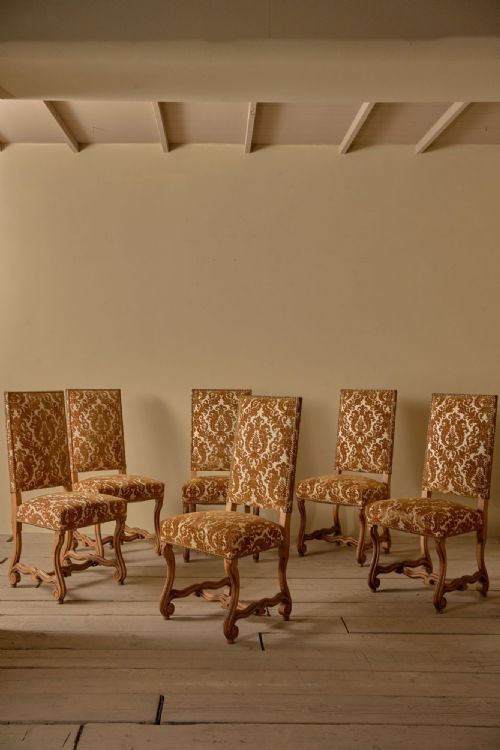
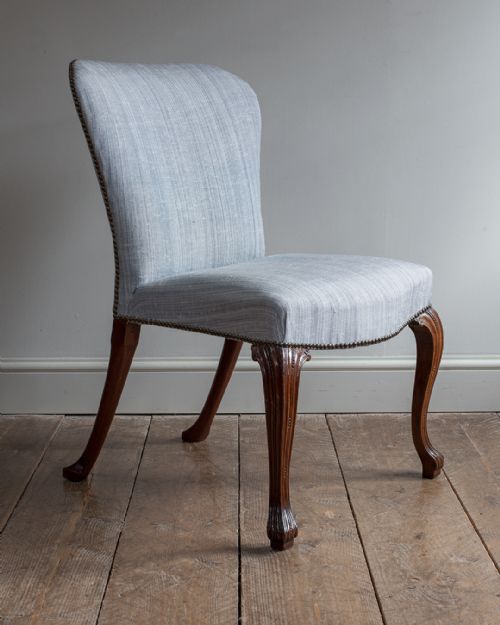

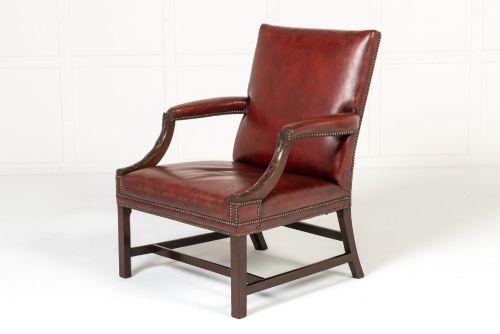
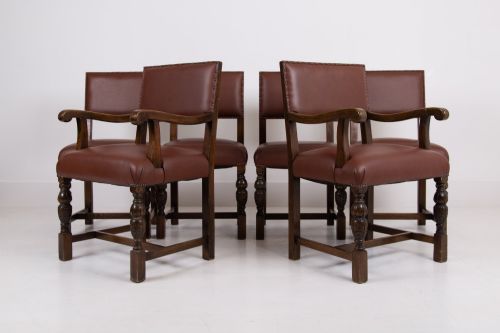



Stud Upholstered Chair
When you need a stud upholstered chair, you are looking at seating defined by exposed metal fastenings securing leather or fabric to a wooden frame.
Stud Upholstered Chair
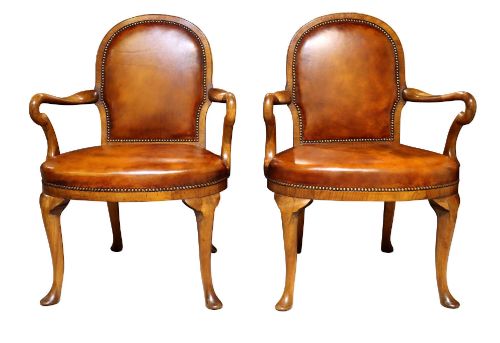
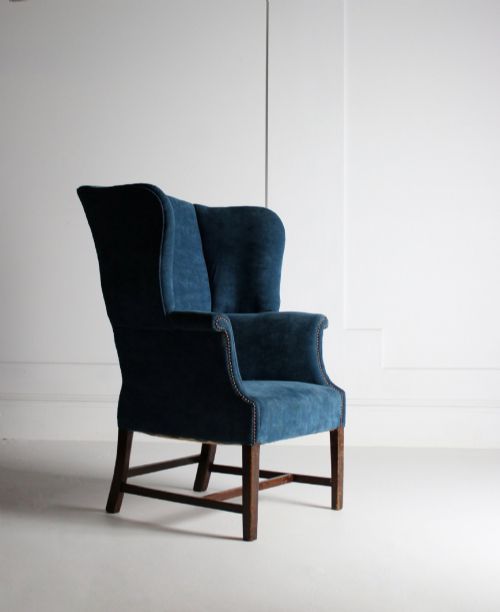
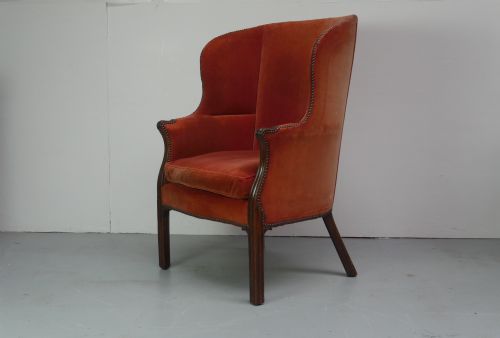
A stud upholstered chair combines timber framing with textile or hide coverings secured by rows of metal nails, appearing in formats from dining sets to library armchairs. The pieces seen here span the eighteenth, nineteenth, and early twentieth centuries, encompassing Georgian library models, Victorian club chairs, and Edwardian wingbacks.
Buyers frequently encounter dining chairs and carvers in sets, alongside single library or desk armchairs designed for heavier use. Frames shift from mahogany and walnut to oak and cast iron, reflecting the utilitarian or formal purpose of each individual seat.
Materials and construction
Makers constructed the structural frames of these seats using hardwoods such as mahogany, oak, and walnut, joined to withstand regular weight. Metal studs, most commonly brass, were hammered individually or in close rows to anchor the hide or fabric securely to the wood.
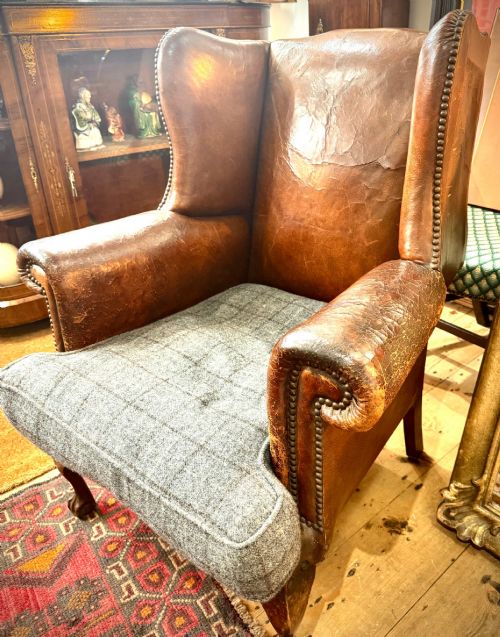
Upholstery materials relied heavily on durable leather for library and club models, while dining and drawing room chairs incorporated woven fabrics and needlepoint panels. Exposed wooden elements received hand polish or painted finishes appropriate to the period.
Stud Upholstered Chair Retail Price Guide 2026
Typical asking prices for stud upholstered chair among the pieces listed under this phrase on Sellingantiques today, from the lower quarter to the upper quarter. They describe what is for sale here now, not the wider market.
The selection includes seating styles from Jacobean Revival and Art Deco to French Provincial and Regency.
Judging quality in construction and material
Quality rests upon the integrity of the timber frame and the precision of the joinery beneath the upholstery. Firmer, more supportive internal webbing and stuffing separate robust library chairs from lighter decorative seating.
The finish of the metal studs and the grade of the leather or fabric dictate the overall refinement of the piece. Regular, evenly spaced fastening and well-figured mahogany or walnut indicate superior workshops.
Howard and Co London
The Stud Upholstered Chair Glossary
- Gainsborough chair
- An eighteenth-century style of upholstered armchair with an open-framed mahogany or walnut structure, designed specifically for writing desks or libraries.
- Wingback armchair
- A large seat featuring protective side panels attached to the arms to deflect drafts, traditionally upholstered in leather or heavy fabric.
- Carver chair
- An armchair intended to match a set of dining chairs, usually positioned at the head of the table.
- Fauteuil
- An open-framed armchair of French origin, typically featuring exposed polished wood and upholstered armrests.
- Needlepoint
- A form of counted thread embroidery used historically for seat panels and decorative footstools.
Stud Upholstered Chair: Frequently Asked Questions
What is a stud upholstered chair?
A stud upholstered chair is a seat where leather or fabric covering is fastened directly to the wooden frame using exposed decorative metal nails.
These chairs range from formal dining sets to heavy library armchairs built for long-term use.
How do I identify a Georgian chair?
Georgian chairs generally feature mahogany or walnut frames with restrained carved details, straight or cabriole legs, and traditional joinery.
Library versions often incorporate brass studding along leather armrests and back panels.
Where were these chairs used?
These seats were placed in studies, libraries, dining rooms, and parlours depending on their specific form and wood type.
Sturdier oak and leather designs suited working spaces, while mahogany and walnut models served formal rooms.
How do I clean leather upholstery?
Leather upholstery requires gentle dusting with a dry cloth and occasional treatment with appropriate conditioning balms to prevent drying.
Harsh chemical cleaners should be avoided to protect the original finish and the surrounding metal studs.