

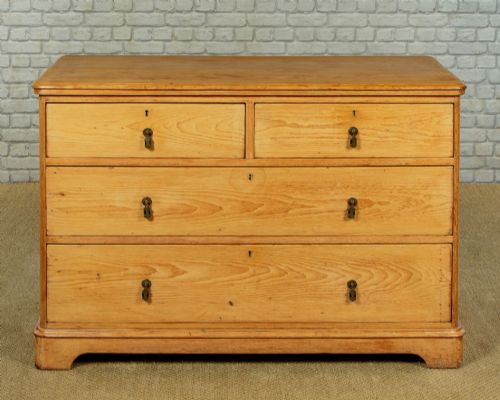


Stripped Pine Tallboy Chest
A stripped pine tallboy chest offers honest vertical storage in untreated timber, bringing clean country utility and warm grain to any room.
Stripped Pine Tallboy Chest
A stripped pine tallboy chest stands as a tall vertical storage unit, combining the capacity of a wardrobe or tall chest with the familiar drawer arrangement of domestic furniture. These pieces reach us from the Victorian era, the Edwardian period, and the early twentieth century, showing straightforward utility across domestic interiors.
The versions met on this page typically arrive as chests of drawers, alongside related forms like bureaux and cupboard units in nineteenth century and later formats. Makers from this tradition built for daily use, employing regional pine and straightforward joinery rather than courtly ornament.
Regional variations span British country workshops to North European and Scandinavian farmhouse traditions, bringing rustic character to the timber surface. Buyers seek out these items for their practical height and the tactile quality of stripped softwood timber.
What varies in quality
The character of the timber surface dictates much of the visual appeal, separating pieces with tight, mature grain from softer or more knotty boards. Superior examples display careful timber selection across the entire carcase, maintaining consistent colour and grain pattern from the top moulding down to the plinth.
Construction integrity lies in the precision of the drawer dovetails and the smooth travel of each drawer within its opening. Better workshops ensured that internal framing remained robust, keeping the tall structure rigid over decades of opening and closing.
Stripped Pine Tallboy Chest Retail Price Guide 2026
Typical asking prices for stripped pine tallboy chest among the pieces listed under this phrase on Sellingantiques today, from the lower quarter to the upper quarter. They describe what is for sale here now, not the wider market.
One curious cabinet comes ready to dismantle piece by piece, proving that flat-pack convenience belonged to the Victorians long before the modern era.
The Stripped Pine Tallboy Chest Glossary
- Tallboy
- A tall chest of drawers, often combining a chest base with a smaller chest or cupboard section on top. This form maximises vertical storage without demanding additional floor space.
- Secretaire
- A cabinet or chest featuring a fitted writing drawer with a drop-down flap. It combines everyday drawer storage with a designated writing slope.
- Dovetail
- A joint formed by interlocking wedge-shaped fingers, used chiefly in drawer construction. It provides exceptional tensile strength against being pulled apart.
- Stripped pine
- Timber from which layers of old paint, varnish, or dark stain have been chemically or mechanically removed to reveal the natural grain. This treatment exposes the warm, pale tone of the softwood beneath.
- Plinth
- The heavy horizontal base supporting the upright body of a piece of furniture. It gives visual stability and lifts the carcase away from floor moisture.
Stripped Pine Tallboy Chest: Frequently Asked Questions
How do I clean stripped pine?
Dust the timber regularly with a dry cloth and occasionally feed the bare wood with a quality beeswax to maintain its lustre.
Avoid using harsh chemical detergents or excess water, which can raise the grain and darken the softwood permanently.
How do I date a pine chest?
Examine the construction methods, tool marks, and drawer joints, comparing them against known periods from the nineteenth and early twentieth centuries.
Hand-cut dovetails and older fixings usually point towards Victorian or earlier origins, while machine milling suggests Edwardian or later production.
Can I paint stripped pine?
These pieces take paint very well, and many historic examples were originally finished in traditional milk paint or coloured washes.
Applying a suitable primer first will prevent knots from bleeding through your chosen modern or traditional paint finish.
Are tallboy chests heavy?
Solid pine construction makes these units substantial, though their tall, narrow footprint requires careful placement against a wall.
Some larger configurations partially dismantle to ease transport and positioning in upper rooms.