

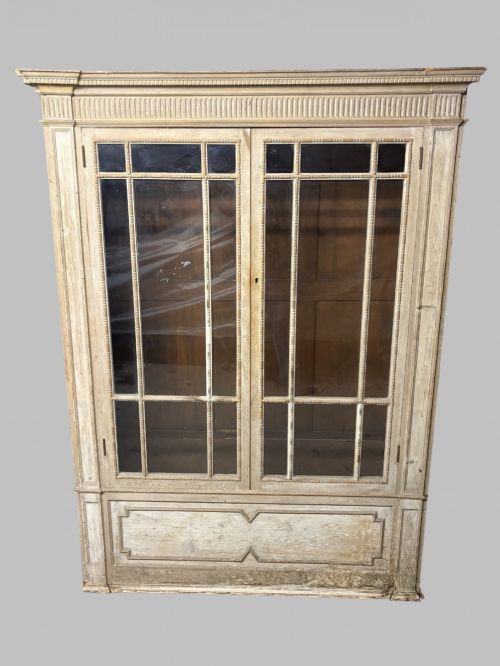
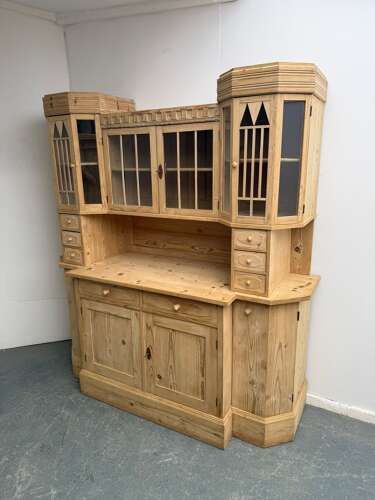
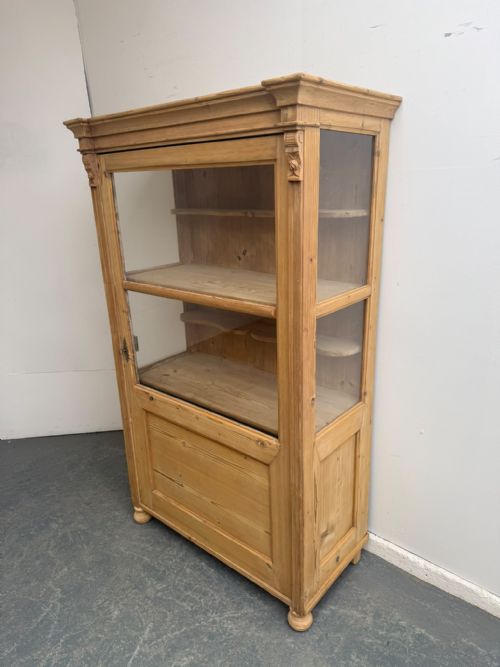
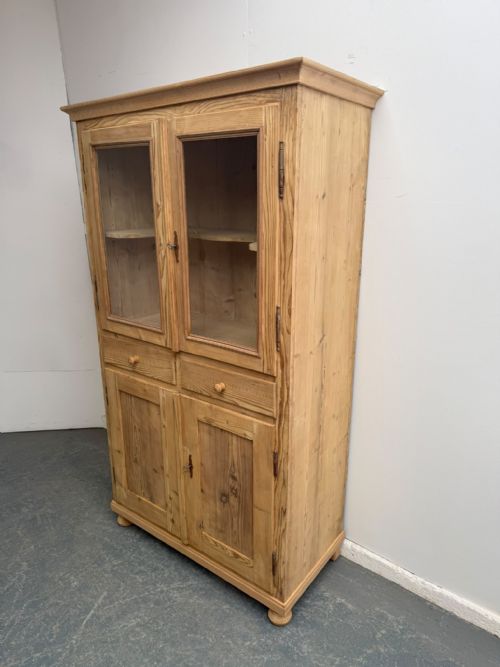
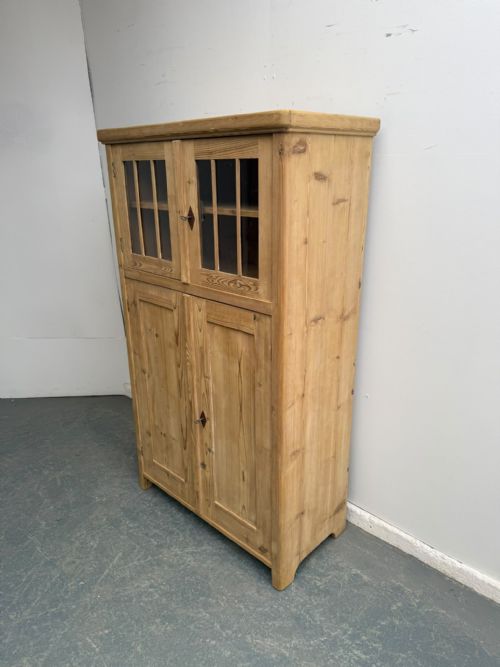
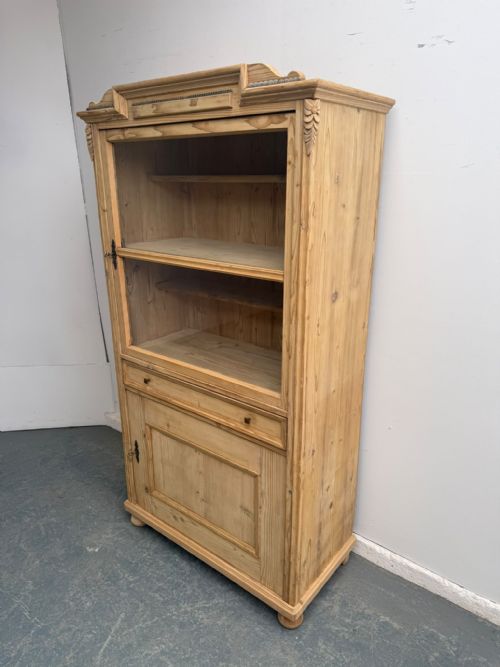
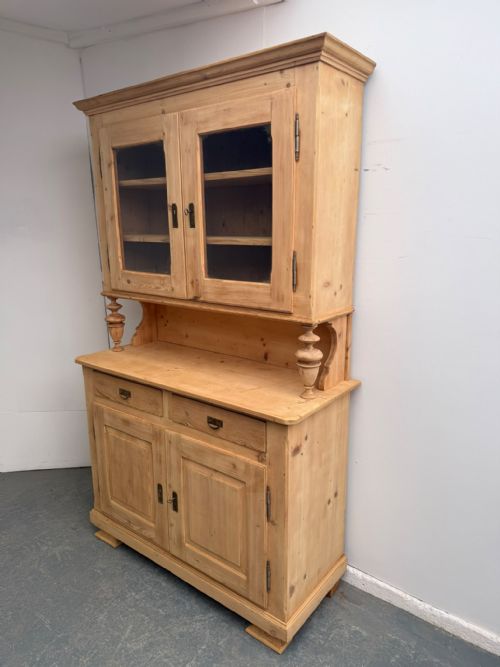
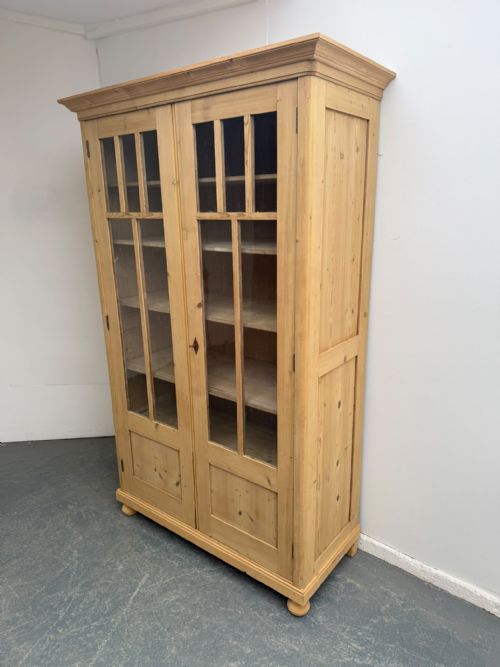
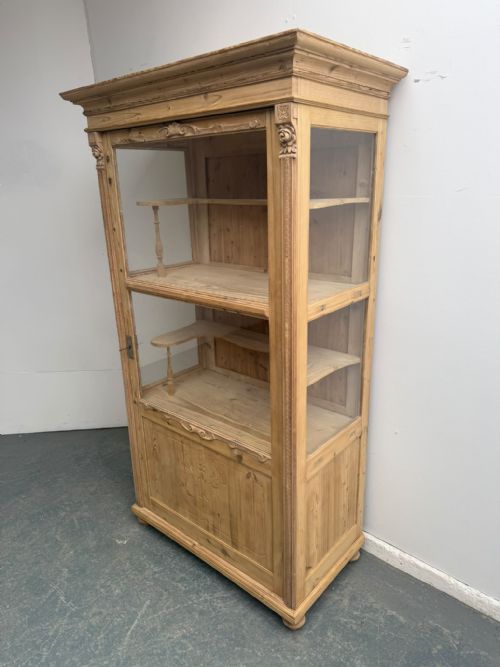
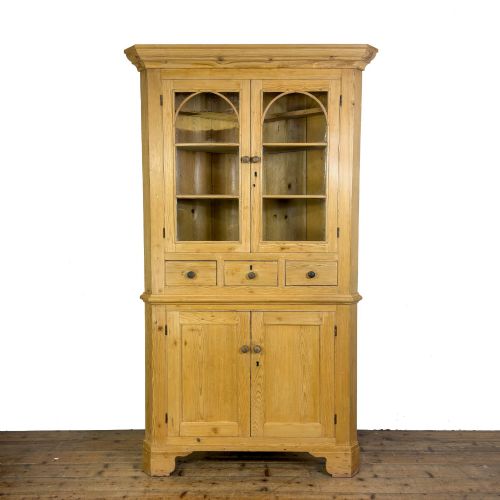


Stripped Pine Display Cabinet
These stripped pine display cabinets bring practical storage and rustic charm to a room, offering a versatile home for glassware and crockery.
Stripped Pine Display Cabinet
A stripped pine display cabinet is a utilitarian storage piece typically dating from the nineteenth century, including the Victorian period and around nineteen ten. These items encompass display cabinets, corner cabinets, and kitchen dressers finished in pine or pitch pine.
Buyers on this page are most likely to encounter Victorian glazed cupboards and corner cabinets with glass doors. Many pieces feature a two part construction, combining base storage with upper glazed sections for showing china.
Styles range from Victorian country and rustic farmhouse to Arts and Crafts and French country influences. Pieces such as the English West Country dresser show regional vernacular traditions adapted for domestic service.
Materials and construction methods
Construction relies on solid pine and pitch pine timbers, often stripped of later paint layers to reveal the grain beneath. Glazed doors incorporate glass panels, supported by iron or brass hardware.
Interior fittings sometimes retain original painted surfaces alongside ceramic elements. Larger items utilise a two piece modular build to ease transport and placement within domestic interiors.
Stripped Pine Display Cabinet Retail Price Guide 2026
Typical asking prices for stripped pine display cabinet among the pieces listed under this phrase on Sellingantiques today, from the lower quarter to the upper quarter. They describe what is for sale here now, not the wider market.
Listings span the nineteenth century, including early Victorian examples and items dated to nineteen ten, constructed primarily from pine and pitch pine.
Distinguishing quality in timber furniture
Quality separates larger architectural four door storage cabinets and two piece dressers from smaller corner cupboards. Proportion and the presence of original painted interiors elevate certain examples above standard utility pieces.
The choice between standard pine and pitch pine alters the grain density and weight of the structure. Finer items balance robust farmhouse utility with refined proportions typical of early Victorian cabinet work.
The Stripped Pine Display Cabinet Glossary
- Pitch pine
- A dense, resinous softwood variety prized for its durability and distinct grain pattern. It often appears in later nineteenth century utilitarian furniture.
- Glazed cupboard
- A storage unit featuring glass panes fitted into the doors to display contents while protecting them from dust. These form the majority of display pieces here.
- Corner cabinet
- A space saving storage form designed to fit neatly into ninety degree room angles. They occur in both single door and glazed variants.
- Kitchen dresser
- A dual purpose item combining lower cupboards or drawers with upper shelving or display space. They represent larger scale vernacular furniture.
- Arts and Crafts
- A design movement valuing honest construction and plain materials. Pieces from this style emphasise simple utility over applied ornamentation.
Stripped Pine Display Cabinet: Frequently Asked Questions
How do I clean a stripped pine cabinet?
Dust the surfaces regularly with a dry cloth and apply bees wax occasionally to nourish the exposed timber. Avoid excessive moisture.
Keep the cabinet away from direct heat sources to prevent the pine from drying out or splitting over time.
Can I paint these cabinets?
Many examples are offered ready to wax or paint, allowing custom finishes to suit domestic interiors. Original surfaces should be assessed before applying new coatings.
Preparation involves light sanding and sealing the pine knots to prevent resin bleed through subsequent paint layers.
Where do corner cabinets work best?
Corner cabinets utilise neglected angles in dining rooms, hallways, or kitchens to provide useful display space without dominating floor area. They make effective storage in compact rooms.
Pairing a corner cupboard with freestanding dressers helps balance vernacular room schemes.
What is the difference between pine and pitch pine?
Standard pine offers a softer, lighter timber commonly found in nineteenth century country furniture. Pitch pine contains higher resin content, providing a heavier and darker appearance.
Both timbers respond well to stripping and wax finishes.