

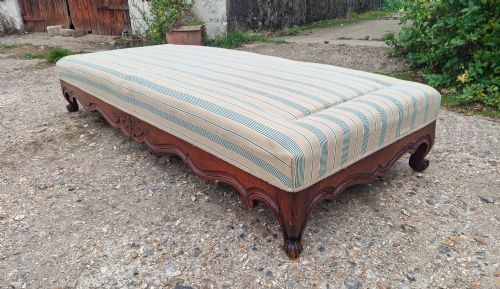
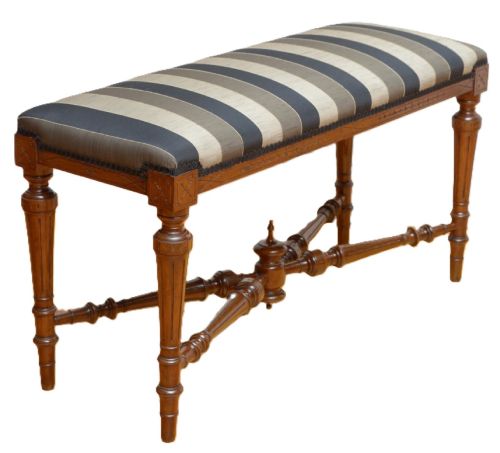
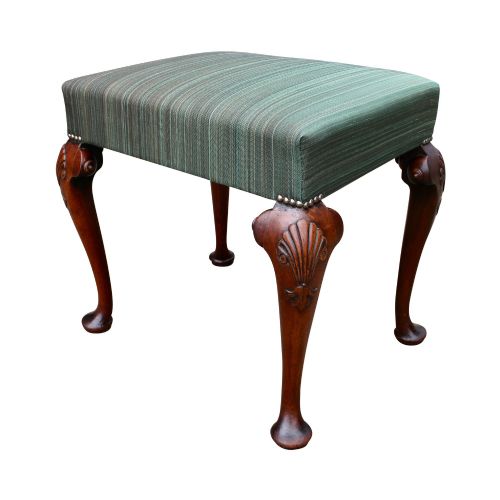
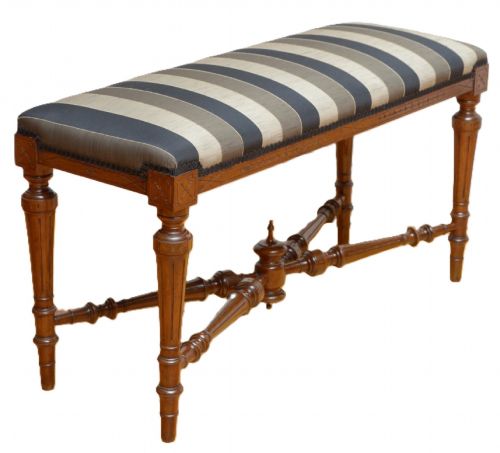
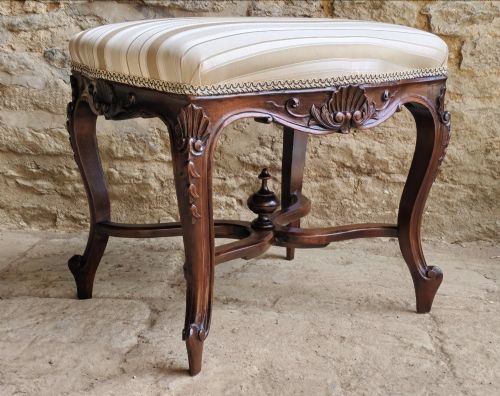
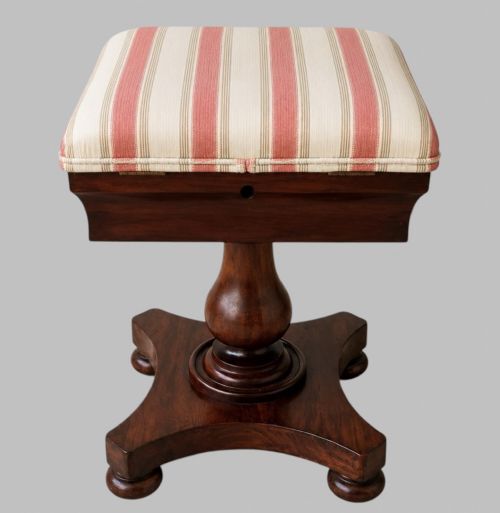


Stripes Upholstered Stool
These stripes upholstered stool pieces bring enduring character to a room, offering both practical seating and traditional craft.
Stripes Upholstered Stool
When you search for a stripes upholstered stool, you encounter low seating designed for domestic comfort across several centuries. These pieces encompass various forms including long stools, piano stools, footstools, and window seats.
The selections span distinct periods ranging from the eighteenth century through to the Edwardian era and nineteen hundred. Walnut and mahogany frames frequently appear alongside satinwood, burr maple, and birch.
Makers and designers applied diverse stylistic influences to these supports, from George III and Regency to Victorian, Edwardian, and Aesthetic Movement designs. Upholstery treatments involve standard textiles and ticking fabric.
Materials and construction
Craftsmen utilised sturdy hardwoods such as mahogany, walnut, and satinwood to build the structural frames of these seats. These timbers provided the necessary strength for daily use while supporting detailed carving and shaping.
Textiles and ticking fabric form the upholstered top sections, secured over padding to create comfortable seating surfaces. Artisans incorporated techniques suited to specific eras, from Georgian tapering legs to Victorian buttoning and Edwardian woodwork.
Stripes Upholstered Stool Retail Price Guide 2026
Typical asking prices for stripes upholstered stool among the pieces listed under this phrase on Sellingantiques today, from the lower quarter to the upper quarter. They describe what is for sale here now, not the wider market.
Several sewing box stools secretly house tiny wooden compartments once intended for elusive spools and thimbles.
Judging quality in construction and material
The distinction between tiers rests upon the selection of timber and the precision of the joinery within the frame. Dense hardwoods and carefully matched veneers demonstrate superior initial workshop standards.
Upholstery execution and the retention of original structural integrity dictate the overall calibre of a piece. Finer examples display meticulous attention to detail in both the woodwork and the fabric application.
Hampton & Sons of Pall Mall·Mathew Gregson
The Stripes Upholstered Stool Glossary
- Ticking fabric
- A tightly woven cotton or linen material traditionally used to cover mattresses and upholstery. Its durable nature makes it suitable for heavy-use seating.
- Satinwood
- A yellowish hardwood prized for its lustrous grain and smooth finish. Cabinet makers utilised it extensively for fine eighteenth and nineteenth-century furniture.
- Duet stool
- An extended seating form designed to accommodate two people simultaneously, frequently associated with musical instruments.
- Burr maple
- A wood featuring distorted grain patterns formed around tree growths. It provides highly decorative surfaces for specialist cabinet work.
- Aesthetic Movement
- A late nineteenth-century design current promoting art for art's sake. It influenced the decorative arts with simplified lines and Japanese-inspired motifs.
Stripes Upholstered Stool: Frequently Asked Questions
What is a duet stool used for?
A duet stool serves primarily as seating for two individuals, most commonly placed before a piano for paired musical practice. Their extended length also suits placement at the foot of a bed or beneath a window.
Craftsmen built these wider frames with the same sturdy timbers and upholstery treatments found in smaller single seats, ensuring stability across the wider span.
How do I identify a Georgian stool?
Georgian stools typically feature dense mahogany frames with characteristic leg forms such as square tapering or cabriole supports. The joinery reflects eighteenth-century construction methods without modern hardware.
Proportions remain balanced and classical, drawing upon the prevailing design vocabularies of Chippendale, Sheraton, or Hepplewhite influences of the period.
Are ticking fabric stools authentic?
Ticking fabric appears on utility and work pieces from the nineteenth century onward, valued for its durable herringbone or striped weave. Its presence reflects practical historical domestic applications.
While some pieces retain early upholstery, many have undergone reupholstery to preserve usability while maintaining traditional aesthetic standards.
Where should I place a window seat stool?
Window seats function well in living spaces or bedrooms where low furniture avoids blocking natural light. Their shallow profile fits narrow alcoves and circulation spaces efficiently.
These pieces provide casual seating without dominating the room's layout, maintaining an open feel while adding textile warmth through their upholstered surfaces.