


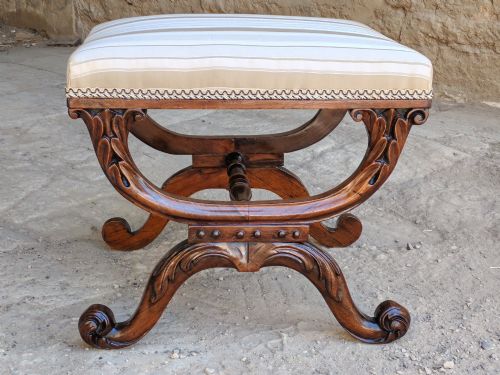
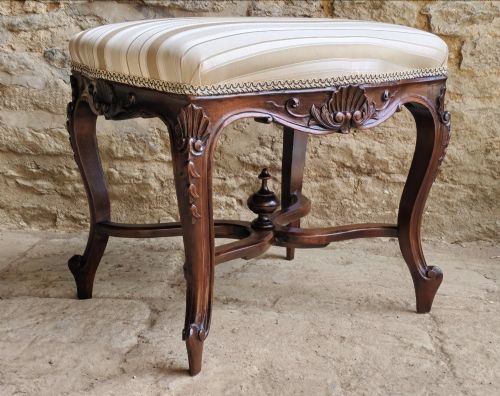


Striped Upholstered Footstool
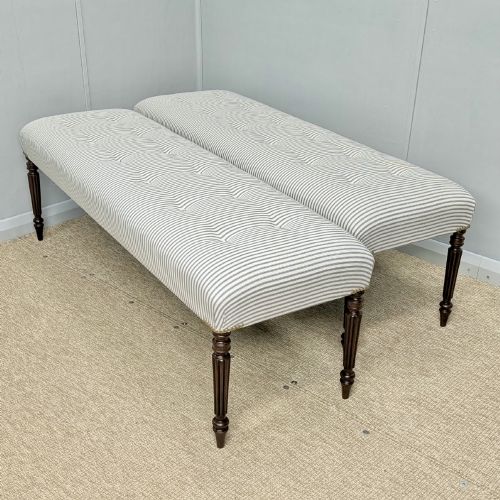
These striped upholstered footstool examples bring period seating into a room, combining traditional timbers with practical low forms.
Striped Upholstered Footstool
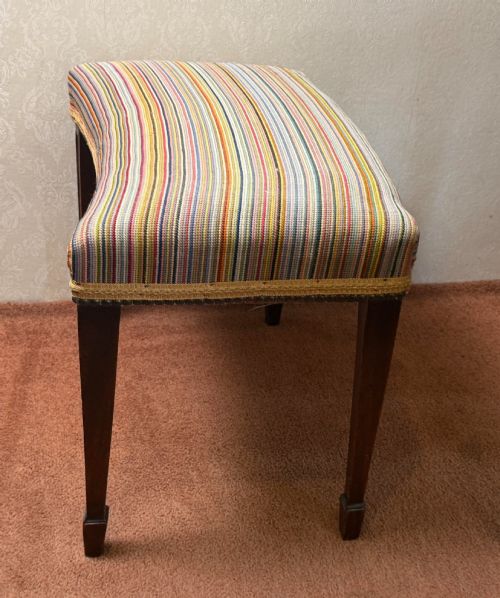
A striped upholstered footstool sits low to the floor, designed to support the feet or serve as a low seat near a dressing table or chair. These pieces appear in forms ranging from simple rectangular frames to serpentine and concave shapes.
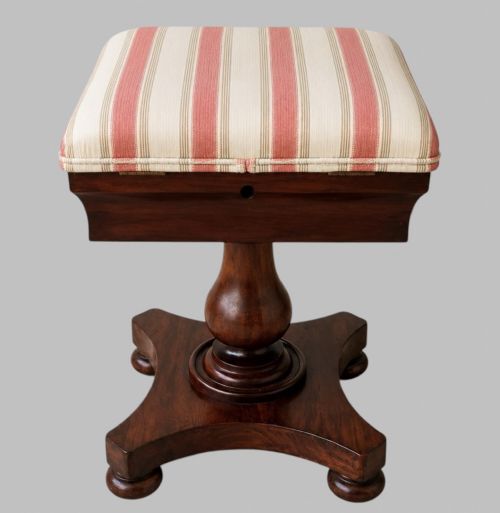
The selection on this page draws primarily from the 18th century, 19th century, Regency, Georgian, and Edwardian periods. Buyers encounter variations such as dressing stools, sewing box stools, and ottomans alongside standard footstools.
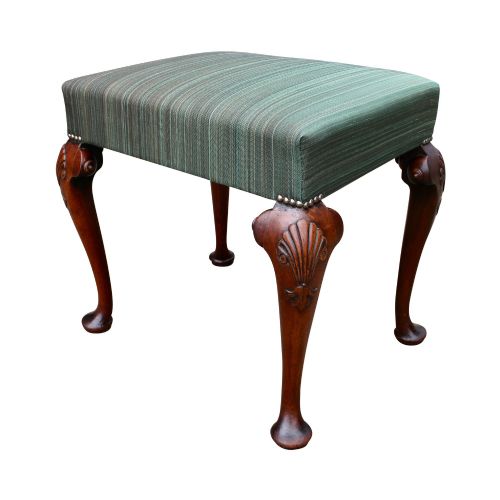
Makers and craftsmen of the past produced these items in styles that include Queen Anne, George III, William IV, Rococo Revival, and Regency. Walnut, mahogany, rosewood, burr maple, and giltwood form the structural foundations for the textile tops.
How they were made
Cabinetmakers shaped solid timbers like mahogany, walnut, and rosewood into frames with square tapering legs, scroll tops, or serpentine outlines. Joinery techniques relied on traditional framing methods to support the weight placed upon the seat.
Upholstery fabrics and textiles cover the upper sections, often secured with brass tacks along the edges of the wooden rails. Woods were polished or left with natural finishes, while specific examples incorporated giltwood or specialised sewing box compartments.
Striped Upholstered Footstool Retail Price Guide 2026
Typical asking prices for striped upholstered footstool among the pieces listed under this phrase on Sellingantiques today, from the lower quarter to the upper quarter. They describe what is for sale here now, not the wider market.
Some Victorian examples doubled as sewing boxes, hiding thread and needles beneath the footrest.
What varies in quality
The distinction between standard examples and finer pieces lies in the crispness of the wood carving and the selection of timber veneers, such as figured mahogany or burr maple. Superior framing shows refined proportions, especially in complex outlines like serpentine sides or concave ottoman bodies.
The execution of period style elements, from Queen Anne cabriole influences to Regency scroll arms, dictates the visual authority of the piece. High-grade construction remains evident in the integrity of the timber frame beneath the fabric.
The Striped Upholstered Footstool Glossary
- Serpentine
- A curved shape curving inward centrally and outward at the ends. This contour appears on mid-18th century mahogany stool frames.
- Giltwood
- Wood carved and coated with gold leaf or a gold-coloured finish. It provides a decorative surface on 19th-century luxury seating.
- Ottoman
- A low upholstered seat or box without arms or a back. Larger versions often double as blanket boxes.
- Rosewood
- A dense, dark timber featuring distinct grain patterns used in cabinetmaking. It lends weight and rich colour to early 19th-century pieces.
- Scroll top
- A decorative terminal shaped like a rolled scroll. This detail characterises certain Regency mahogany foot stools.
Striped Upholstered Footstool: Frequently Asked Questions
Where were footstools used?
These low seats found placement beside armchairs in reception rooms or in front of dressing tables in bedrooms. They provided practical foot support or auxiliary seating.
In larger houses, specialised forms like sewing box stools also served domestic work functions near windows or firesides.
How do I identify a Regency stool?
Regency pieces often display classical influences, using dark timbers such as mahogany or rosewood alongside specific details like scroll tops. Proportions tend to reflect early 19th-century design books.
Makers of this era favoured clean structural lines paired with decorative elements like brass tacks or giltwood accents.
Are these stools sturdy enough for daily use?
Traditional frames constructed from solid mahogany, walnut, or rosewood offer inherent structural strength. Their enduring survival demonstrates the resilience of period joinery.
Placing them in modern interiors requires the same care given to any antique wooden furniture.
What is the difference between an ottoman and a footstool?
Ottomans typically offer a larger surface area and frequently incorporate internal storage space beneath the upholstered lid. Footstools are smaller, lighter, and designed primarily for foot support or low seating.
Both forms utilise similar textile coverings and wooden frames across the 18th and 19th centuries.