

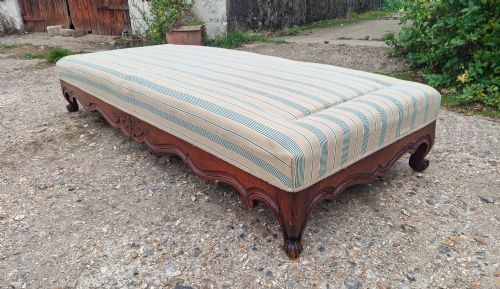
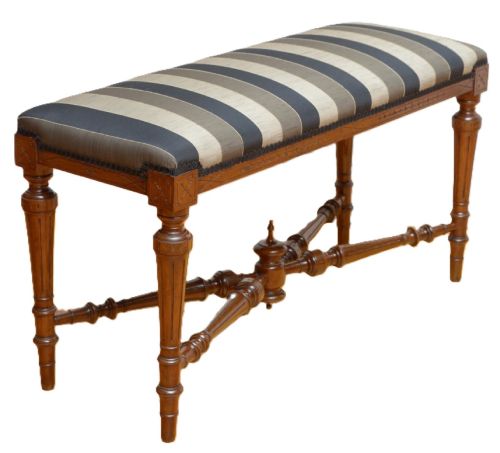
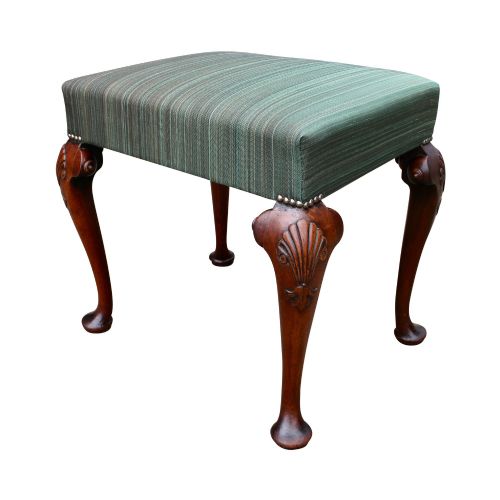
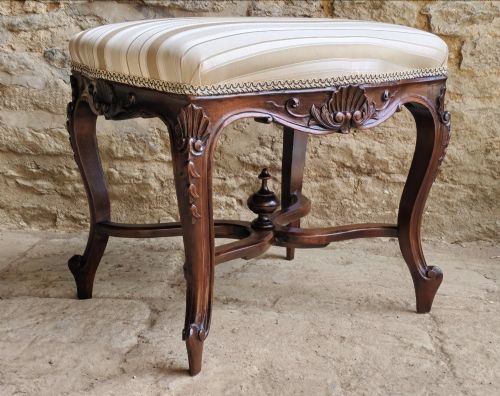
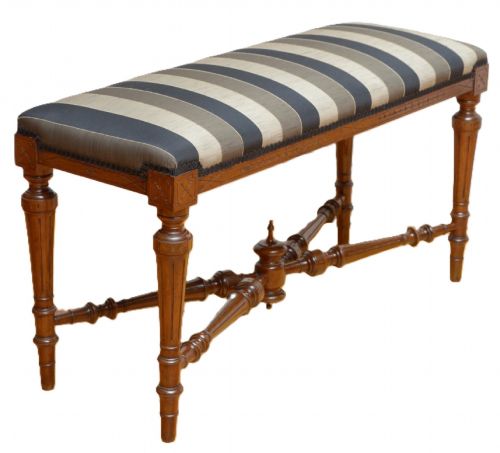
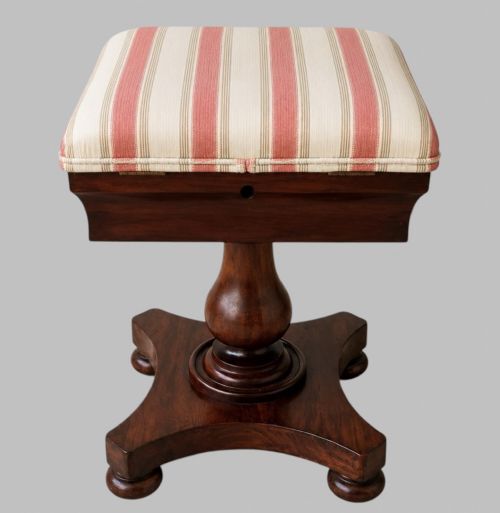


Striped Stool
A striped stool brings pattern and proportion to a room, offering the charm of period timber combined with striking upholstered textile.
Striped Stool
A striped stool serves various domestic functions, appearing on this page as long bedroom stools, piano benches, window seats, and dressing table footstools. These pieces span several distinct eras, incorporating Georgian, Regency, Victorian, and Edwardian design sensibilities.
The most frequent examples you encounter combine mahogany, walnut, or satinwood frames with traditional fabric or ticking upholstery. Forms range from simple square footstools to serpentine shapes and long duet seats designed for two.
Origins stretch across the eighteenth, nineteenth, and early twentieth centuries, reflecting changing domestic habits from formal reception rooms to private chambers and music parlours.
What varies in quality
Quality rests primarily in the timber selection and the precision of the frame's construction, where finely figured grain and clean joinery elevate a piece above standard domestic seating. The articulation of period details, such as square tapering legs, serpentine rails, or carved giltwood, determines the sophistication of the design.
The integrity of the original form and the harmony between timber and upholstery dictate the overall standing of an example. Finer pieces demonstrate careful proportion and disciplined craftsmanship that survive intact through successive updates to their fabric coverings.
Striped Stool Retail Price Guide 2026
Typical asking prices for striped stool among the pieces listed under this phrase on Sellingantiques today, from the lower quarter to the upper quarter. They describe what is for sale here now, not the wider market.
The listings on this site span from the 18th century through to 1900, incorporating timber frames of mahogany, walnut, satinwood, and burr maple.
Hampton & Sons of Pall Mall·Mathew Gregson
The Striped Stool Glossary
- Ticking fabric
- A durable, tightly woven cotton or linen material traditionally used to cover mattresses and simple upholstery, characterised by characteristic woven stripes.
- Duet stool
- An elongated seat designed for two people to sit side by side, frequently utilised at piano desks or in window recesses.
- Serpentine shape
- A curved outline featuring a convex centre flanked by concave ends, often seen on the rails of eighteenth-century seating.
- Giltwood
- Timber that has been coated with a thin layer of gold leaf, creating a bright decorative surface popular in formal nineteenth-century interiors.
- Satinwood
- A hard, yellowish timber sourced from tropical trees, prized for its smooth, lustrous grain and used extensively in refined cabinet work.
Striped Stool: Frequently Asked Questions
What periods do these stools come from?
The pieces span the eighteenth century through to the early twentieth century, taking in Georgian, Regency, Victorian, and Edwardian eras. Each period brings distinct timber choices and decorative characteristics.
Cabinet makers of different decades favoured specific woods like mahogany, walnut, and satinwood, alongside distinct leg shapes and upholstery styles.
How were long stools used originally?
Long stools served multiple purposes in period homes, functioning as window seats, bed ends, or duet piano seating. Their generous proportions allowed multiple people to sit.
They often complemented the formal decor of reception rooms or provided practical seating in dressing chambers and music rooms.
Are ticking fabric stools authentic?
Ticking fabric appears on functional eighteenth and nineteenth-century seating, providing a robust and simple textile finish. Many stools retain or have been reinvited with striped ticking to echo utilitarian period textiles.
This upholstery choice suits both rustic farmhouse forms and cleaner, striped aesthetic movement designs.
How do I identify a Regency stool?
Regency examples frequently display classical revival motifs, scroll ends, and rich mahogany timbers. Detail work often reflects design book patterns of the early nineteenth century.
Proportions tend to be architectural, with attention given to turned legs, SABRE supports, or carved scrollwork.