



Striped Footstool
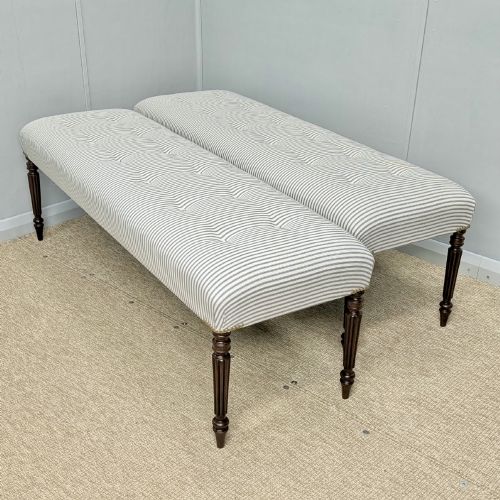
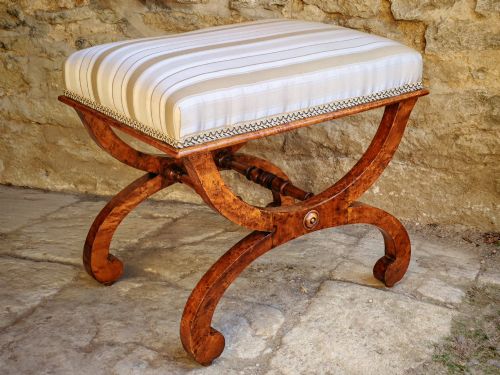
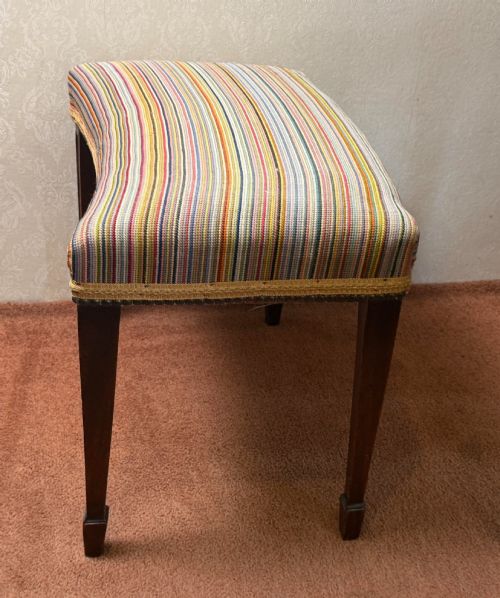
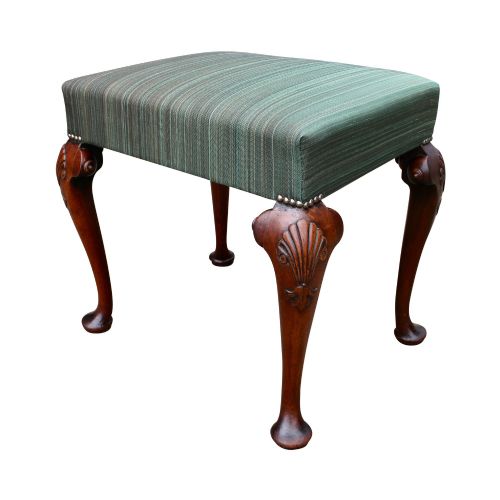
These striped footstool examples bring period timber and upholstery together in practical forms that ground a room.
Striped Footstool
A striped footstool offers a compact seat or rest, drawing on periods from the 18th century through to the Edwardian era. You will frequently encounter mahogany and walnut frames alongside various upholstery fabrics and textile coverings.
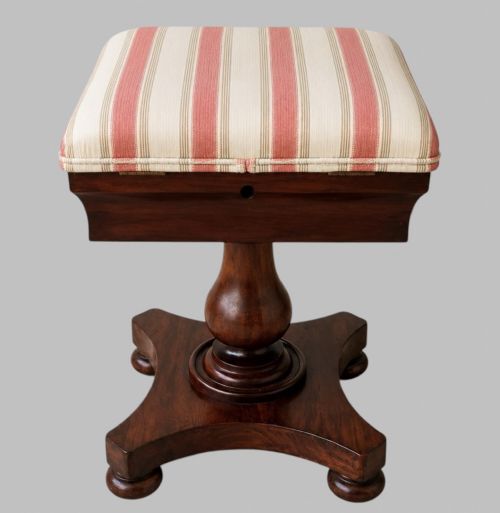
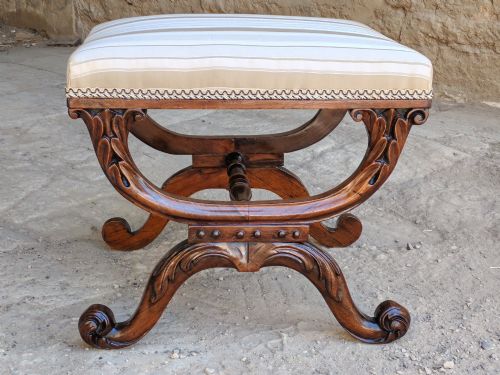
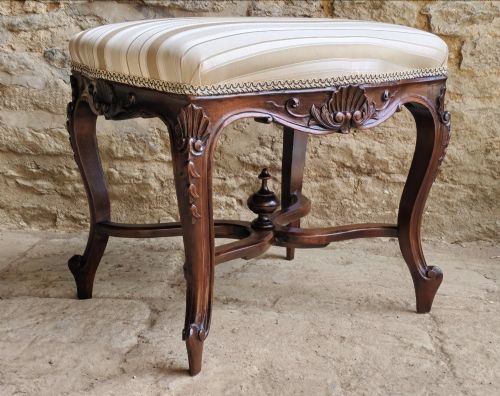
Forms on this page range from simple square tapering leg designs to serpentine shapes, scroll top foot stools, and concave ottoman blanket boxes. These pieces function equally well as dressing stools or low seats by the fireside.
How they were made
Frames rely on solid timbers such as mahogany, walnut, burr maple, and giltwood, shaped to match prevailing tastes from George III to Victorian revivals. Joinery methods include traditional corner blocks and pegged joints suited to supporting regular weight.
Upholstery uses textile fabric secured with brass tacks, often following revival styles like Queen Anne or Rococo. Wood surfaces show hand-applied finishes that highlight the grain of the underlying timber.
Striped Footstool Retail Price Guide 2026
Typical asking prices for striped footstool among the pieces listed under this phrase on Sellingantiques today, from the lower quarter to the upper quarter. They describe what is for sale here now, not the wider market.
Some Victorian footstools double as hidden sewing boxes, proving that even our ancestors liked their seating to multitask.
What varies in quality
Upholstery execution and the retention of original brass tacks affect the integrity of the piece. Crisp lines in scroll tops and crisp mouldings indicate a higher standard of craftsmanship.
The Striped Footstool Glossary
- Serpentine
- A curved line that flows inward and outward, often seen on the frame rails of 18th-century stools. This shape requires precise woodworking to achieve a balanced silhouette.
- Giltwood
- Timber coated with a thin layer of gold leaf or gilt powder. It appears on decorative frames intended for formal reception rooms.
- Scroll top
- A terminal end curved like a scroll, frequently found on early 19th-century Regency foot stools. This detail mimics larger scroll end couches and daybeds.
- Burr maple
- Wood taken from a growth deformity on a maple tree, yielding highly figured patterns. It was used on high-end 19th-century furniture for decorative impact.
Striped Footstool: Frequently Asked Questions
What periods do these footstools come from?
The pieces span the Georgian, Regency, and Victorian eras, extending into Edwardian times. You will find distinct stylistic revivals mixed with pieces built in the 18th and 19th centuries.
Each period brings specific leg shapes and timber choices, from mahogany tapered legs to ornate walnut frames.
How were these stools originally used?
They served as foot rests for seated guests or as low seats near dressing tables and fireplaces. Some larger variants functioned as sewing box stools or small ottomans.
Their portable size allowed them to be moved easily around reception rooms and bed chambers as needed.
How do I care for antique timber and fabric?
Keep wooden frames away from direct sunlight and strong heat sources to prevent the timber from drying out. Dust regularly with a dry cloth and maintain stable indoor humidity.
For the upholstery fabrics, gentle surface cleaning preserves the textile without damaging the underlying stuffing or brass tacks.
How can I tell a Regency stool from a Georgian one?
Georgian pieces often feature restrained lines, straight or square tapering legs, and dense mahogany. Regency examples introduce classical revival motifs, scroll ends, and giltwood highlights.
Checking the joinery and secondary woods helps confirm the era of construction.