




Striped Fabric Chairs
Striped fabric chairs span centuries of seating, bringing pattern and timeless comfort to a room.
Striped Fabric Chairs
Striped fabric chairs encompass a broad selection of seating from the Georgian, Victorian, and Edwardian periods, alongside later revival styles. These pieces range from dining chairs and side chairs to larger armchairs, slipper chairs, and chaise longues.
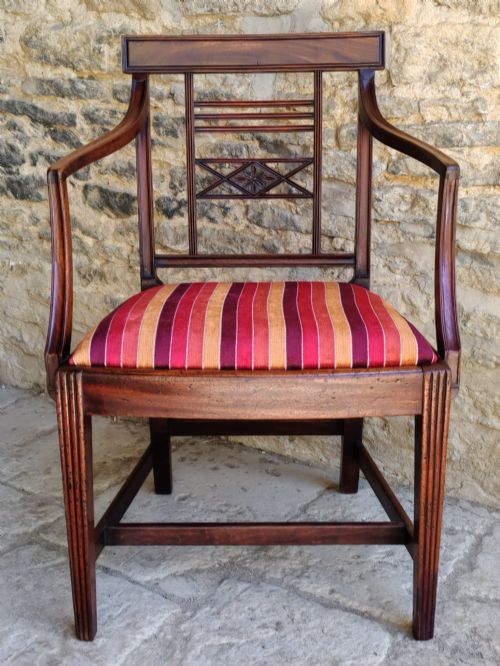
The assortment includes mahogany carvers, walnut library chairs, and oak frames paired with various upholstery fabrics and textiles. Buyers frequently encounter nineteenth-century open armchairs, Edwardian pieces, and sets of dining chairs.
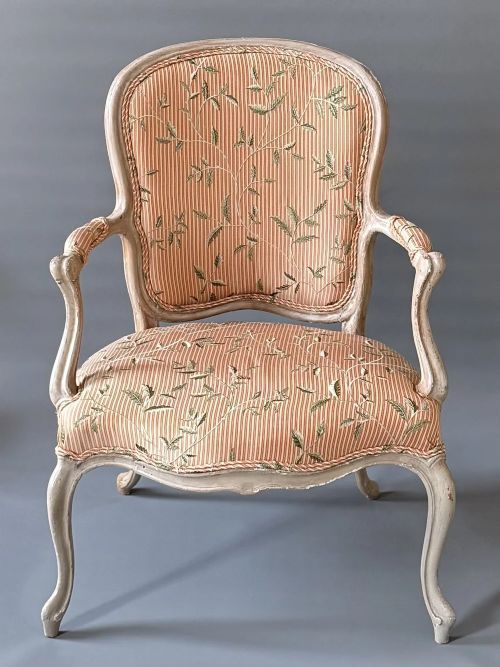
Origin variations include English workshops alongside French painted armchairs and Portuguese elbow chairs. Many retain traditional timber frames made of mahogany, walnut, or oak.
Construction and Materials
Frames are constructed from solid hardwoods such as mahogany, walnut, oak, and faux birds eye maple, shaped with carved details and scroll work. Joinery relies on traditional carpentry methods suited to each period.
Upholstery involves fabric, textile, and specialised upholstery fabric secured over supporting structures, sometimes featuring button backs or concealed storage compartments.
Additional decorative elements include brass accents, painted finishes, and fluted legs, depending on the specific style and era of manufacture.
Listings feature timber frames in mahogany, walnut, and oak, paired with textiles across Victorian, Edwardian, and Georgian styles.
Evaluating Quality
The integrity of the timber frame sets the baseline, with dense hardwoods, crisp carving, and robust joinery indicating superior craft. Frames that retain their original structural stability without excessive timber replacement hold greater merit.
Upholstery choices and execution define the visual success of the piece, where sympathetic fabric selection complements the period of the chair. The refinement of secondary details, such as carved cabriole legs or brass fittings, distinguishes standard production from finer examples.
The Striped Fabric Chairs Glossary
- Carver
- An armchair designed with arms, often matching a set of smaller dining chairs. These were traditionally placed at the ends of a dining table.
- Chaise Longue
- An upholstered long chair intended for reclining, popular during the Victorian period. It combines the functions of a chair and a day bed.
- Cabriole leg
- A furniture leg that curves out and then in, resembling the leg of an animal. This form appears frequently on chairs from the Georgian era onwards.
- Slipper chair
- A low-sitting upholstered bedroom chair without arms, originally designed to assist ladies with putting on shoes. They sit close to the floor for ease of use.
- Ribbon back
- A chair back design featuring carved woodwork resembling intertwined ribbons. This ornamental style is characteristic of finer Georgian seating.
Striped Fabric Chairs: Frequently Asked Questions
How do I identify a Victorian armchair?
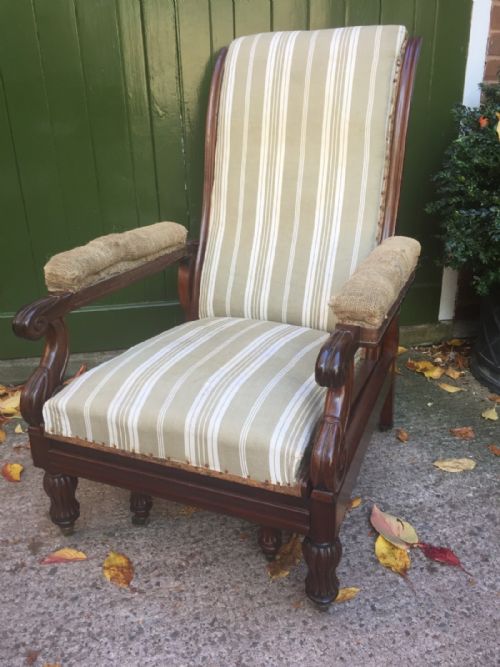
Victorian armchairs often feature dark hardwoods like walnut or mahogany with deep carving, button tufting, and sprung upholstery. Their silhouettes tend to be robust and heavily padded compared to lighter eighteenth-century designs.
Look for evidence of period construction techniques, such as hand-tied springs and traditional stuffing materials beneath the fabric layer.
What is a Gainsborough armchair?
A Gainsborough armchair is a wide, upholstered seat with open padded arms, short cabriole or straight legs, and a square back. Originating in the mid-eighteenth century, they were typically used in libraries and studies.
Later revival versions from the early twentieth century continue this classic, formal silhouette in walnut and mahogany frames.
Can I use these chairs in a modern interior?
Antique and vintage chairs integrate successfully into contemporary rooms by adding textural contrast and historical character. Many Edwardian and Victorian pieces adapt well when placed alongside minimalist furniture.
Consider the scale of the chair and the surrounding space to ensure comfortable placement in your room layout.
What distinguishes Edwardian seating?
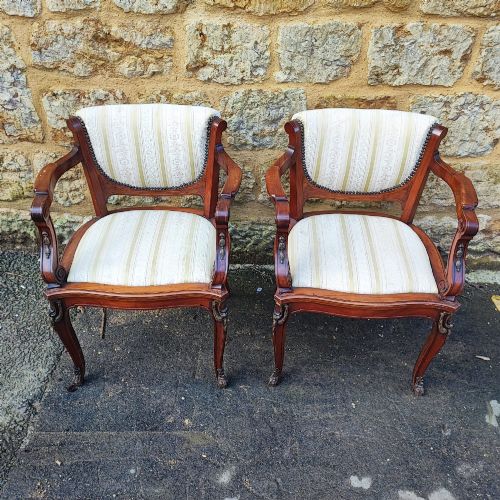
Edwardian chairs generally display lighter proportions and brighter woods than their Victorian predecessors. They often draw inspiration from earlier Georgian and Louis XVI styles, incorporating painted finishes or subtle inlay work.
Upholstery from this era frequently utilises softer tones and lighter fabrics, reflecting a shift towards airier domestic interiors.