

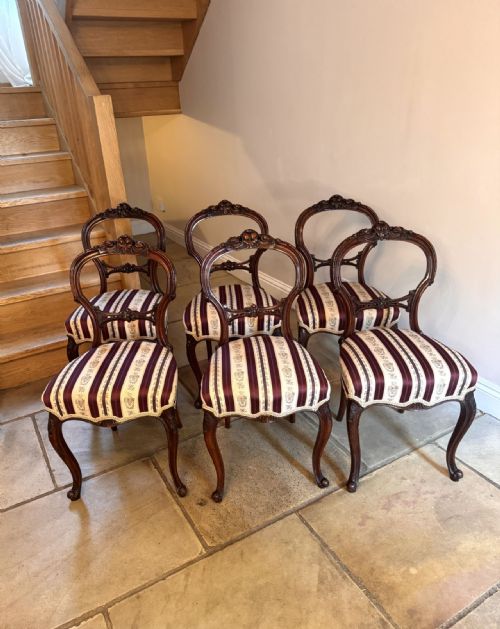
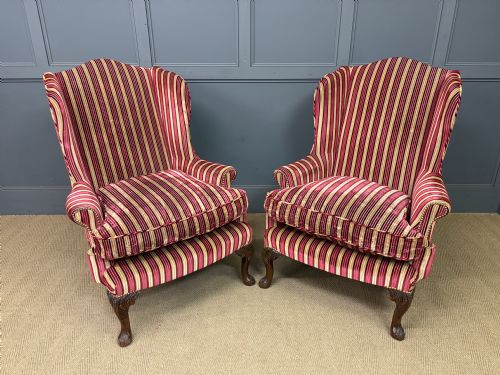
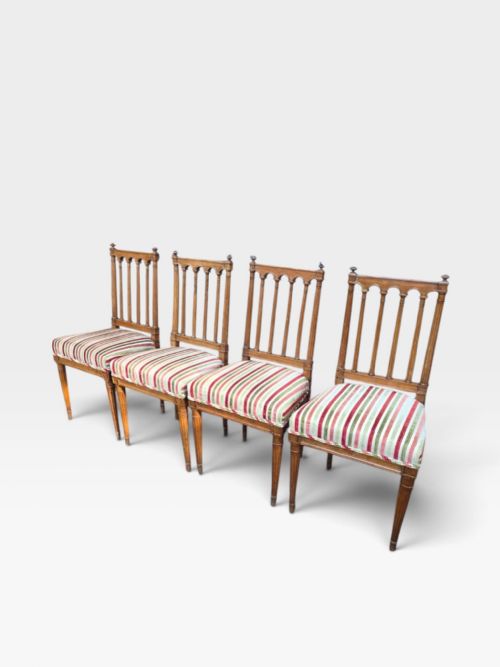
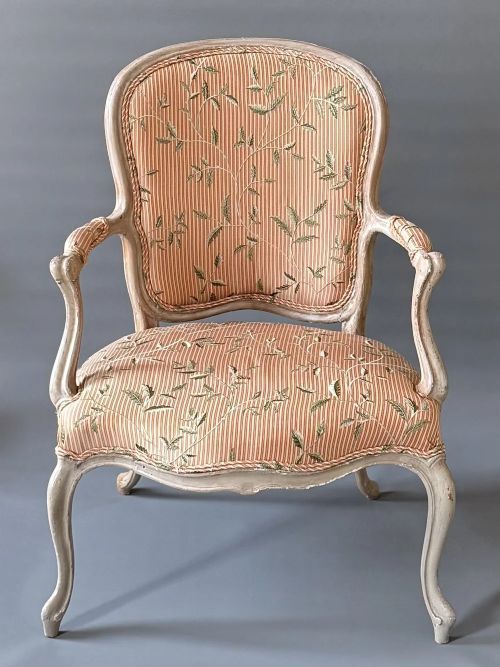
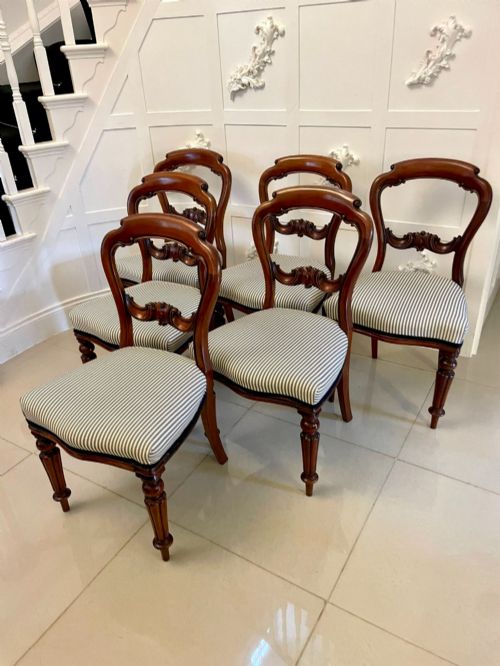
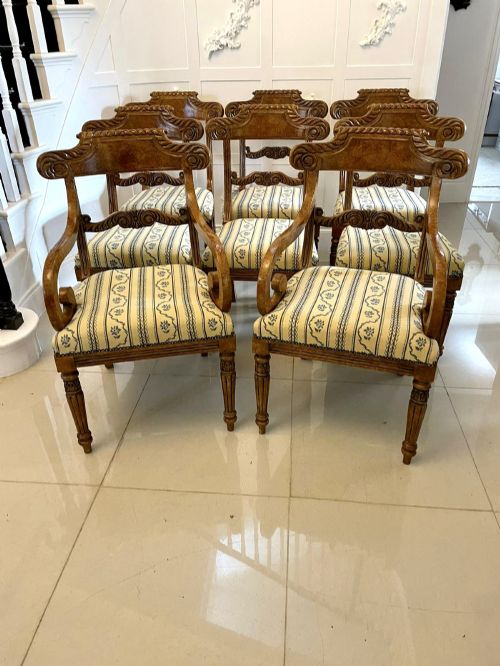
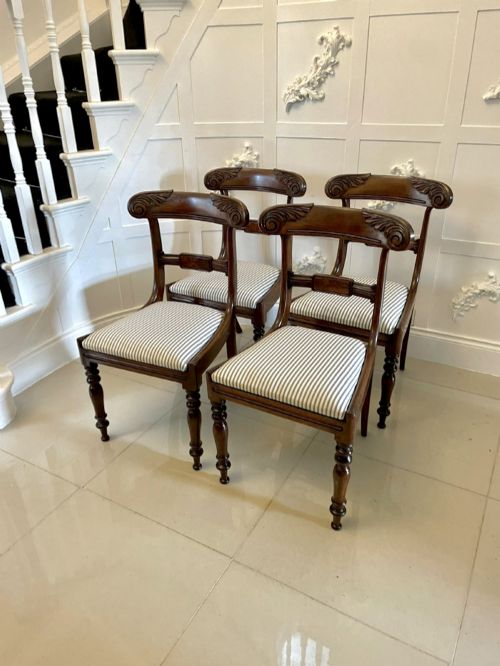
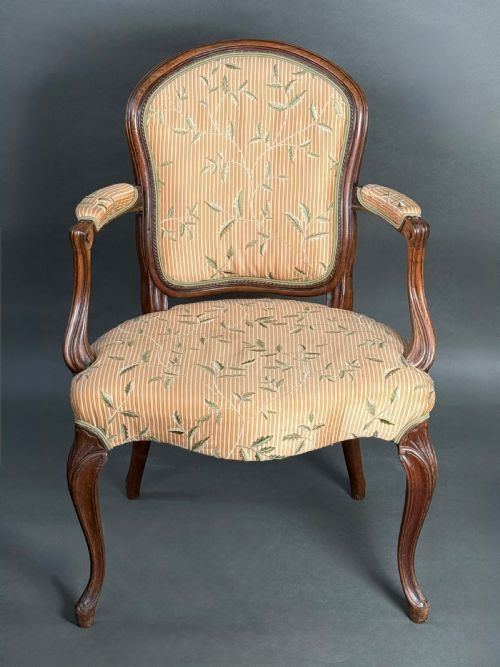
Stripe Upholstered Chairs
Stripe upholstered chairs bring pattern and formal structure to a room, spanning dining sets, library armchairs, and salon seating across the nineteenth and early twentieth centuries.
Stripe Upholstered Chairs
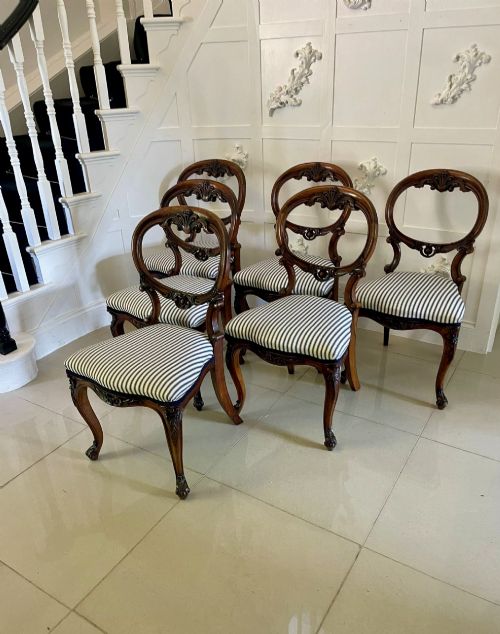
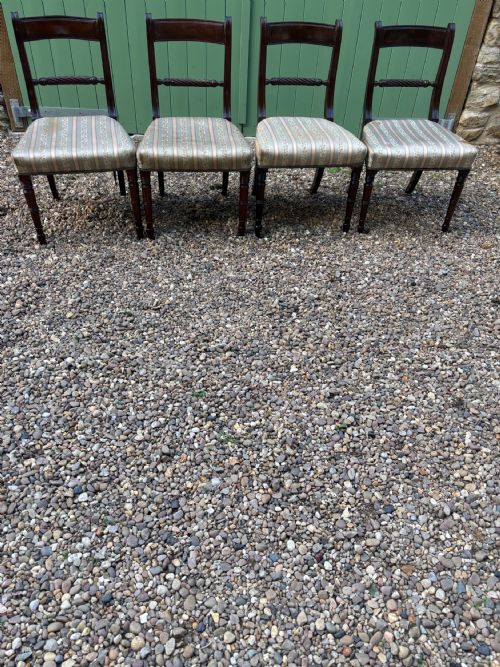
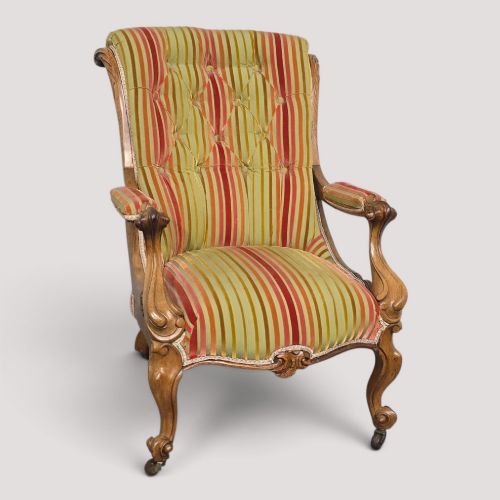
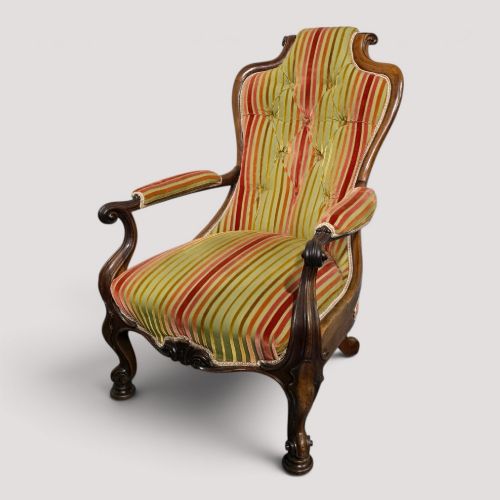
Stripe upholstered chairs encompass a diverse selection of seating forms, ranging from dining suites and desk chairs to open armchairs and chaise longues. You will frequently encounter nineteenth-century walnut and mahogany dining chairs alongside Edwardian and Regency examples.
The materials span sturdy hardwoods like oak and mahogany to softer painted finishes, paired with traditional textiles including velvet, silk, and patterned upholstery fabric. These pieces often reflect revivalist aesthetics such as Chippendale and Sheraton influences.
Originating largely from British and French workshops, the selection bridges formal dining arrangements and comfortable parlour seating. The common thread across these objects is the integration of linear textile patterns upon traditional wooden frames.
Construction and Materials
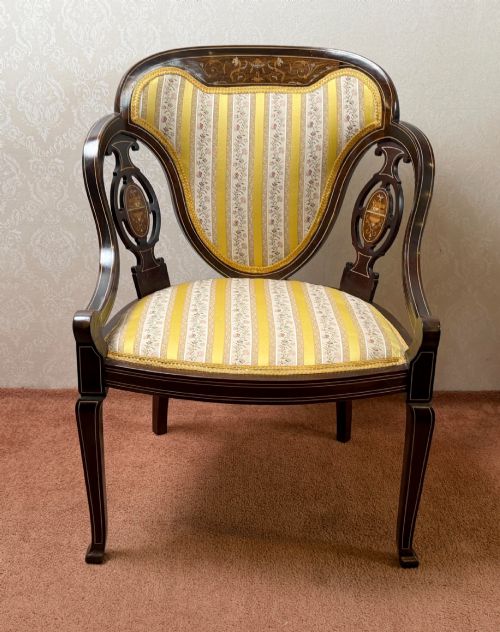
Makers utilised dense timbers such as mahogany, walnut, rosewood, and oak to construct durable frames, often incorporating intricate hand-carved details or inlay work in bone and boxwood. Structural integrity relies on traditional joinery techniques suited to the specific demands of dining and lounge seating.
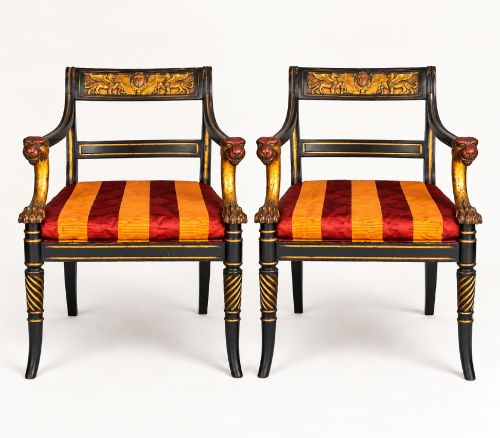
Surface decoration frequently involves painted and parcel-gilt finishes, faux bird's-eye maple, or polished wood grains. Upholstery is secured over traditional stuffing methods, using textile fabrics, velvet, and silk to display the characteristic vertical patterns.
Stripe Upholstered Chairs Retail Price Guide 2026
Typical asking prices for stripe upholstered chairs among the pieces listed under this phrase on Sellingantiques today, from the lower quarter to the upper quarter. They describe what is for sale here now, not the wider market.
Several dining chairs hide faux bird's-eye maple beneath their polished surfaces.
Assessing Quality
The standard of a piece depends heavily on the crispness of the timber carving and the fidelity of revival styles, such as Regency or Chippendale influences. Higher-grade examples display refined proportions, superior joinery, and carefully selected wood veneers.
The execution of the upholstery work and the choice of textile contribute significantly to the overall presence of the chair. Attention to detail in secondary woods, inlay work, and painted or gilded surfaces distinguishes superior workshop production from standard output.
COLEFAX AND FOWLER
The Stripe Upholstered Chairs Glossary
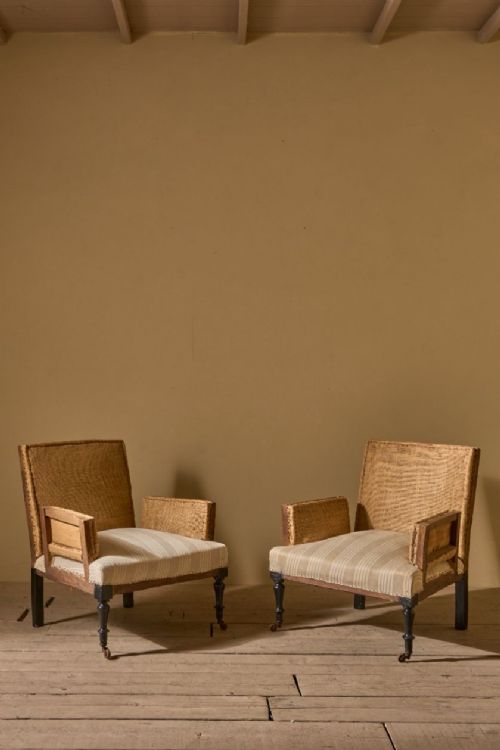
- Bergere
- An enclosed upholstered armchair with wooden framing exposed around the sides and back. These French-inspired seats often feature cane work or tight fabric panels.
- Showwood
- Furniture framing where the polished timber is intentionally left visible around the upholstered portions. This technique highlights the quality of the underlying walnut or mahogany.
- Parcel-gilt
- A decorative treatment where specific carved details or highlights are partially gilded with gold leaf over a painted or polished ground. It is frequently seen on Regency and French-influenced seating.
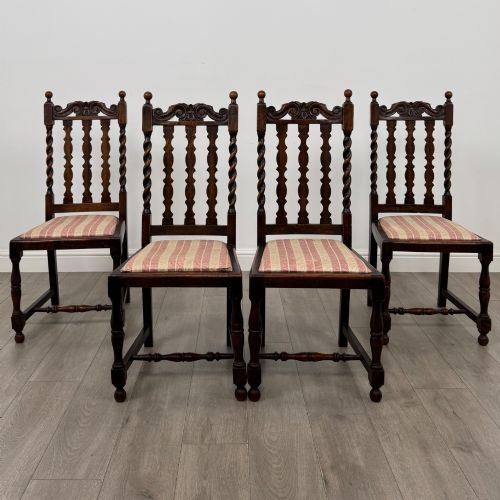
- Barley twist
- A type of turning shaped to resemble a twisted rope, carved into wooden furniture legs and stretchers. This decorative motif appears frequently on oak and walnut frames from the nineteenth and early twentieth centuries.
Stripe Upholstered Chairs: Frequently Asked Questions
What periods do these chairs come from?
The selection spans the nineteenth and early twentieth centuries, encompassing Victorian, Edwardian, and Regency periods alongside earlier stylistic influences.
Craftsmanship from these eras typically employs traditional timber construction combined with various revival aesthetics.
Are these chairs suitable for daily dining?
Dining sets and side chairs provide sturdy seating configurations designed specifically for daily domestic use around a table.
Their robust hardwood frames and supportive upholstery make them practical for contemporary dining spaces.
How do I identify a Regency style chair?
Regency style chairs often feature classical motifs, sweeping arm designs, and dark woods like mahogany or rosewood.
They frequently incorporate painted finishes, parcel-gilt details, or understated brass elements characteristic of the early nineteenth century.
How should I care for antique upholstery?
Protect the fabric from direct sunlight to prevent fading and maintain the integrity of silk, velvet, or standard textile upholstery.
Regular gentle vacuuming with a soft brush attachment helps remove dust without disturbing the underlying stuffing and frame.