

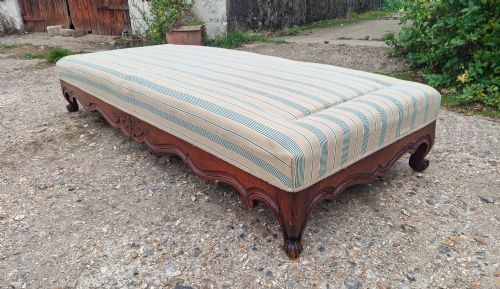
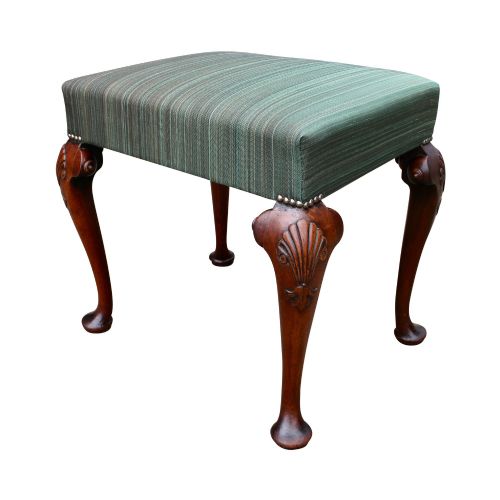
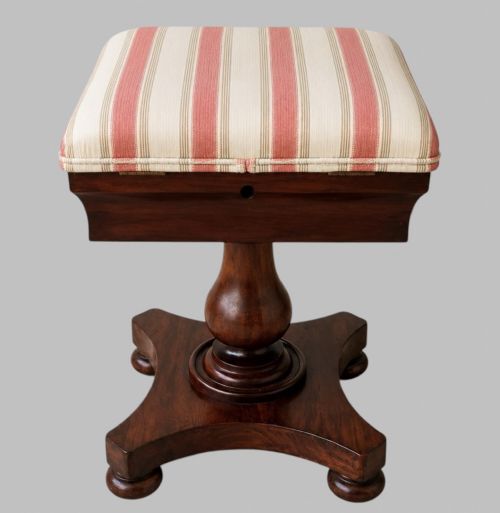
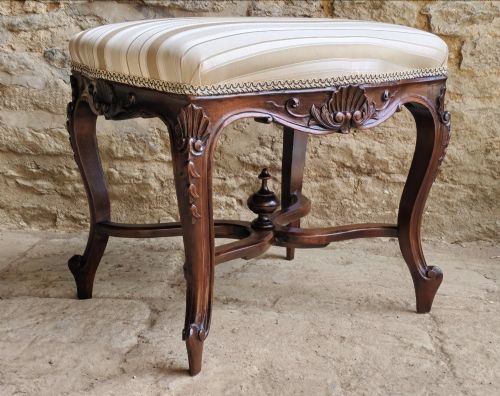


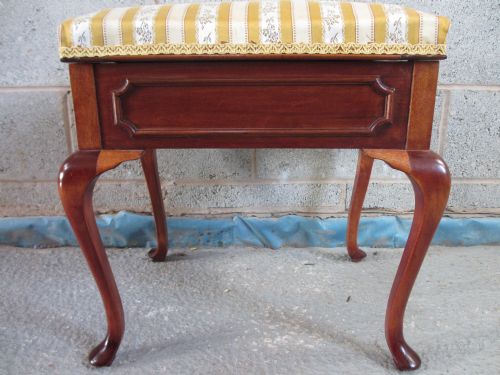
Stripe Footstool
A stripe footstool brings pattern and low seating into a room, spanning periods from the 18th century to the Edwardian era.
Stripe Footstool
When you search for a stripe footstool, you encounter low seating designed to support the feet or serve as compact occasional seats. The forms span long stools, benches, ottomans, and dressing stools built across multiple centuries.
Stylistic influences range widely through Georgian, Regency, Queen Anne Revival, and Rococo Revival designs. You find pieces resting on square tapering legs, Georgian legs, or scroll top forms.
How they were made
Cabinetmakers constructed the frames using hardwoods like mahogany, solid walnut, and burr maple. Joinery supported structural integrity in pieces such as sewing box stools and serpentine shapes.
Upholstery completed the forms, utilising ticking fabric, upholstery fabric, and various textiles stretched over padded foundations. Buttoning added texture and tension to the seating surfaces.
Stripe Footstool Retail Price Guide 2026
Typical asking prices for stripe footstool among the pieces listed under this phrase on Sellingantiques today, from the lower quarter to the upper quarter. They describe what is for sale here now, not the wider market.
Listings feature mahogany, solid walnut, and burr maple across 18th century, Regency, and Edwardian periods.
What varies in quality
The distinction in quality lies in the execution of the timber frame and the refinement of the carved details. Finer examples display carefully chosen wood grains, such as burr maple or figured mahogany, paired with precise joinery.
Upholstery execution also defines the standard, where disciplined buttoning and appropriate fabric selection complement the period aesthetic of the frame without obscuring its proportions.
Mathew Gregson
The Stripe Footstool Glossary
- Burr maple
- A wood derived from maple tree growths that produces highly figured, swirling grain patterns. Cabinetmakers utilised it for decorative veneer and solid sections.
- Giltwood
- Timber coated with a thin layer of gold leaf or metallic powder. This finish appeared frequently on decorative furniture from the 19th century.
- Serpentine shape
- A line that curves outward then inward in a continuous undulating wave. This profile often appeared on the rails of 18th-century stools.
Stripe Footstool: Frequently Asked Questions
What periods do these footstools come from?
The listings span the 18th and 19th centuries, including Georgian, Regency, and Edwardian eras.
Specific examples reflect the cabinetmaking styles popular during those distinct periods.
How were sewing box stools used?
These pieces combined a low seat with internal storage compartments for sewing supplies and needlework.
They functioned as dual-purpose furnishings for sitting and holding domestic crafts.
What woods appear in these frames?
Cabinetmakers utilised timbers such as mahogany, solid walnut, and burr maple.
Some pieces also incorporated giltwood finishes depending on the stylistic period.
What distinguishes Queen Anne style stools?
Queen Anne pieces often display characteristic cabriole legs and shaped walnut frames.
Revival versions from the 19th century recreated these earlier architectural forms.