



Stormy Maritime Oil Painting
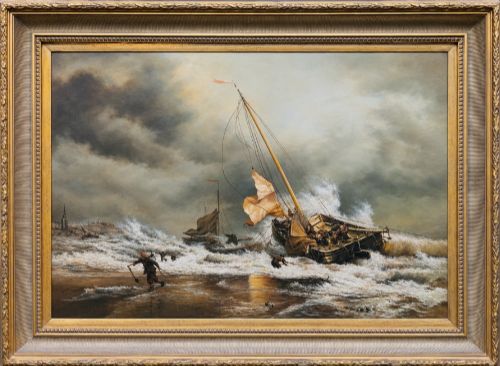
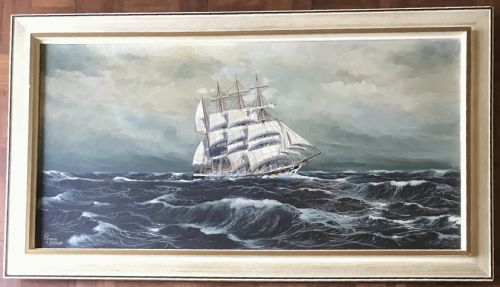
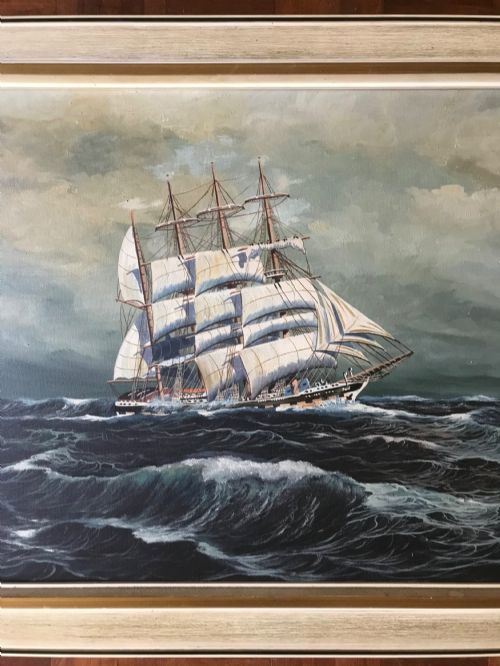
A stormy maritime oil painting captures the raw power of the sea through dramatic brushwork and turbulent waters, offering a striking focal point for any interior.
Stormy Maritime Oil Painting
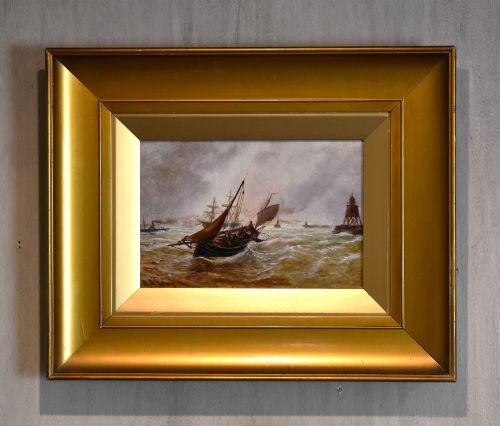
A stormy maritime oil painting depicts vessels battling heavy gales, rough coastal seas, and dramatic skies. These works range from seventeenth-century Dutch scenes to nineteenth-century British school canvases and later interpretations.
Buyers frequently encounter nineteenth-century examples on canvas and board, often featuring named British and European artists working in marine realist and Victorian marine styles. Common subjects include merchant ships off coasts, lighthouses, and fishing boats in heavy weather.
Earlier seventeenth-century works present Dutch boats in gales, executed with fine detail and dark palettes. Edwardian and mid-twentieth-century pieces continue the tradition with depictions of famous sailing ships and coastal views like St Michael's Mount.
Materials and construction
These works are painted in oil paint on supports such as woven canvas, wooden board, and occasionally cardboard. Canvases are typically stretched over wooden frames and secured with gesso grounds.
Frames play a significant role in presentation, frequently constructed from wood with gilt or giltwood finishes that complement the dark, dramatic tones of the stormy seas.
Stormy Maritime Oil Painting Retail Price Guide 2026
Typical asking prices for stormy maritime oil painting among the pieces listed under this phrase on Sellingantiques today, from the lower quarter to the upper quarter. They describe what is for sale here now, not the wider market.
Current listings span from the seventeenth century to the twentieth century, featuring oil paints on canvas, board, and cardboard with giltwood framing.
Evaluating quality and execution
Quality rests in the artist's ability to render the weight of water, the play of light through stormy clouds, and the rigging of vessels under stress. Stronger works demonstrate confident brushwork and accurate nautical detail.
The sophistication of the palette and the preservation of the pigment layers distinguish superior pieces. Original frames matching the period also contribute to the integrity of the work.
John Rose Miles·BONAVENTURA PEETERS·Bernard Benedict Hemy·john callow·Walter Williams
The Stormy Maritime Oil Painting Glossary
- Oil on Canvas
- A painting technique where oil paint is applied to a woven fabric surface stretched across a wooden frame. This medium allows for rich blending and textured impasto suited to churning seas.
- Gesso
- A plaster-like mixture applied to wood or canvas to prepare a smooth surface for painting or gilding. It provides a stable base for the oil pigments.
- Giltwood
- Wood carved and coated with gold leaf or a gold-coloured finish. These frames surround many marine paintings from the nineteenth century.
- Maritime Realism
- An artistic style focused on accurate depiction of ships, seas, and coastal topography. Artists in this tradition paid close attention to maritime architecture and weather conditions.
Stormy Maritime Oil Painting: Frequently Asked Questions
What subjects appear in these paintings?
These works typically show sailing ships, merchant vessels, and fishing boats caught in gales or navigating rough coastal waters near lighthouses and landmarks.
Scenes range from historical Dutch coastal views to nineteenth-century British seascapes and twentieth-century depictions of famous vessels.
How do I hang a marine painting?
Hang these works at eye level on a wall with stable humidity and away from direct sunlight to protect the oil paint and gilt frames.
Consider the heavy, dramatic tones of the stormy water when pairing the piece with surrounding wall colours and interior lighting.
How are different periods identified?
Periods are identified through canvas preparation, framing styles, stretcher construction, and the specific handling of the oil paint by the artist.
Signatures, dates, and historical records of makers provide further context for dating seventeenth-century and nineteenth-century works.
What is the Dutch Golden Age style?
This style reflects seventeenth-century maritime art focusing on realism, dramatic skies, and detailed rendering of sailing vessels in heavy seas.
Works from this tradition often utilise a restrained, moody palette to emphasise the atmosphere of a gale.