

Storage Drawers Unit
A storage drawers unit brings order to a room, offering practical compartments shaped by centuries of cabinet-making in mahogany, oak, pine, and walnut.
Storage Drawers Unit
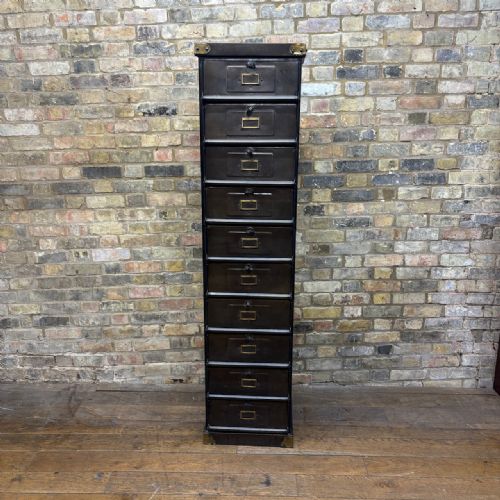
A storage drawers unit encompasses domestic chests of drawers, industrial banks of drawers, filing cabinets, and specialised trade furniture. These pieces provide multiple compartments for organising household items or work materials.
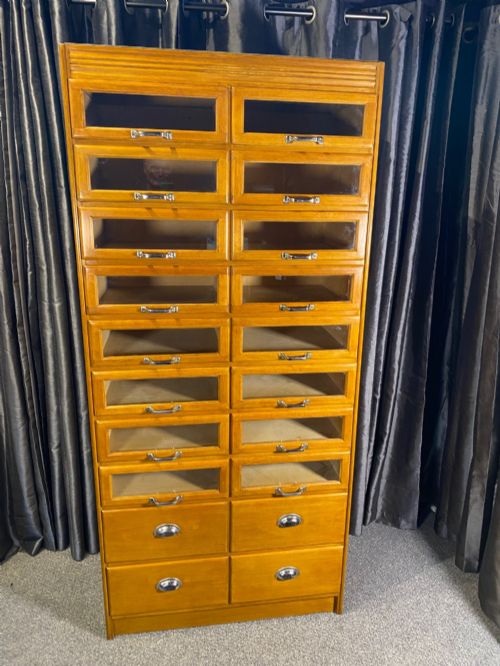
The selections span periods from the 17th century through the Georgian, Victorian, and Edwardian eras, extending into early 20th century industrial designs. Domestic forms sit alongside haberdashers' counters, dental cabinets, and watch repairer chests.
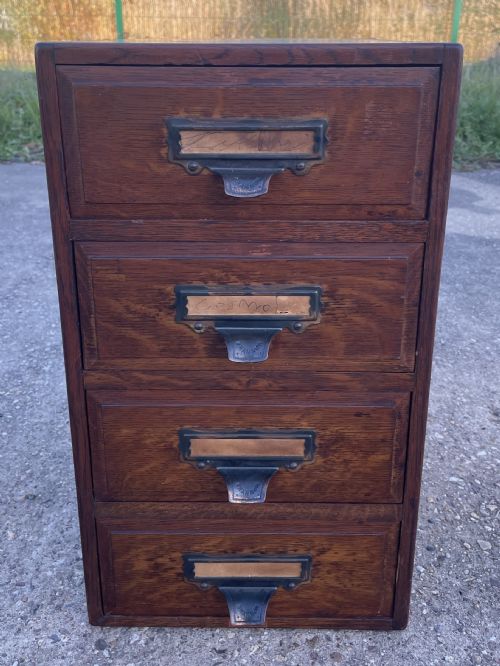
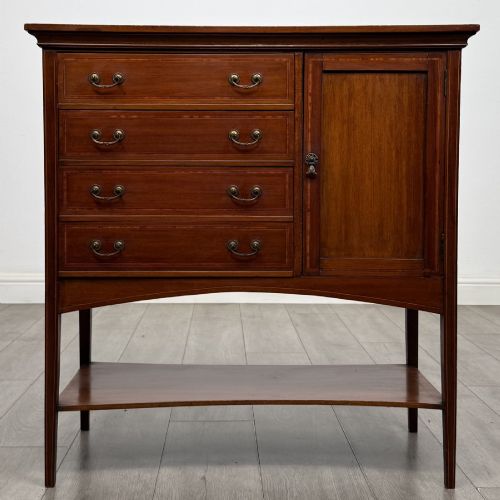
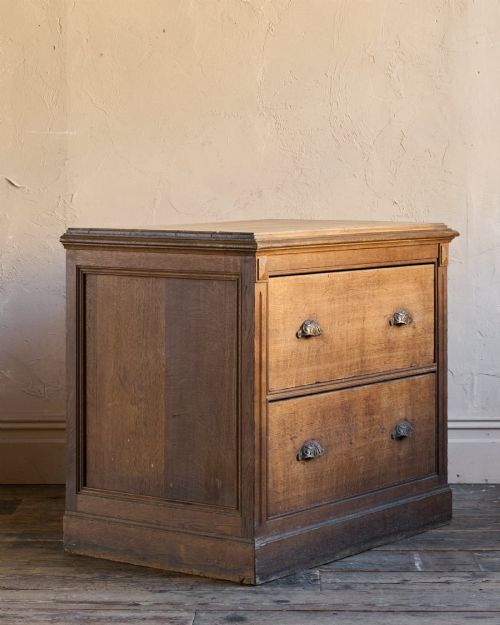
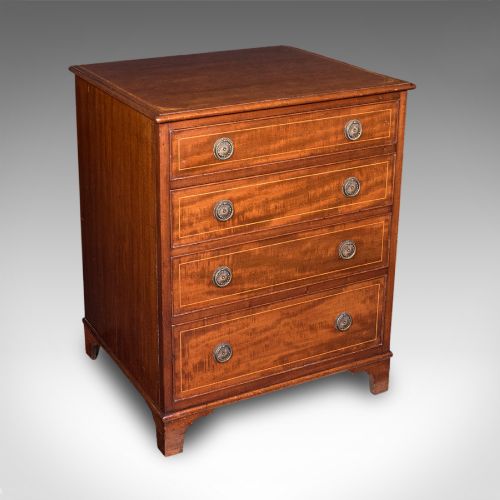
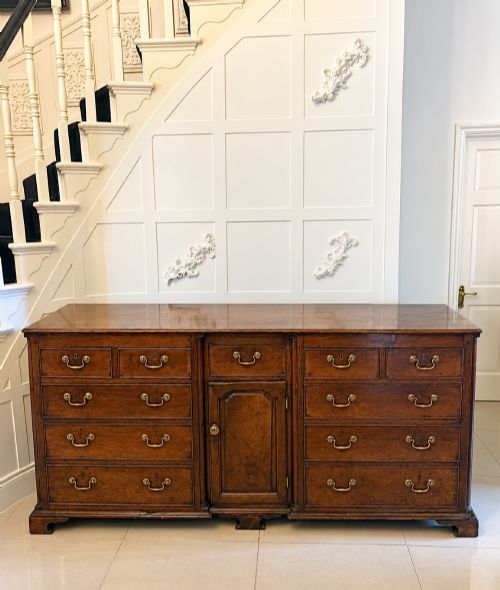
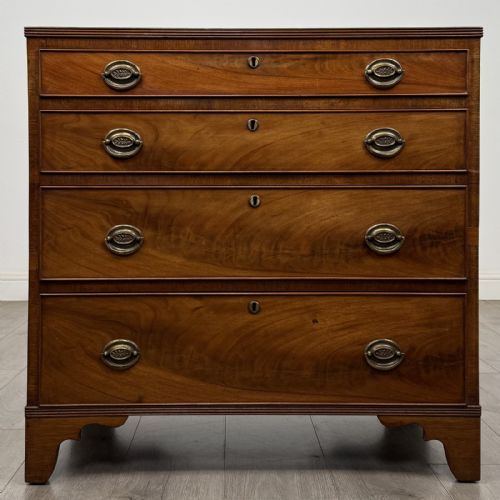
Woods such as mahogany, oak, pine, and walnut dominate the construction, often enhanced by flame mahogany veneer or painted finishes. Brass handles, shell pulls, and label holders frequently complete the utilitarian and domestic designs.
Materials and construction methods
Cabinet-makers relied on solid hardwoods like mahogany and oak for structural integrity, utilising pine for secondary framing and drawer linings. Flame mahogany veneer appeared on decorative surfaces to add visual depth to drawer fronts and tops.
Hardware details such as original brass acorn handles, shell pulls, and label holders indicate the functional purpose of each piece. Milk glass linings and raised galleries also feature in specific dental and bedroom configurations.
Storage Drawers Unit Retail Price Guide 2026
Typical asking prices for storage drawers unit among the pieces listed under this phrase on Sellingantiques today, from the lower quarter to the upper quarter. They describe what is for sale here now, not the wider market.
Watch and clock repairers once stored their tiny gears and springs in specialised multi-drawer chests.
Distinctions in quality
The distinction between standard utility furniture and finer pieces rests on the selection of timber and the precision of the joinery. Figured grains like burr walnut and flame mahogany elevate the visual presence of a chest.
Original hardware, including specialised label holders and maker-stamped pulls, preserves the historical integrity of industrial and trade pieces. Proportions also govern value, with smaller proportions and graduated drawer configurations demanding particular attention.
Shapland & Petter·Luxmore's of Ilfracombe
The Storage Drawers Unit Glossary
- Bank of drawers
- A multi-drawer unit typically originating from a shop, office, or workshop environment. These pieces feature numerous small or medium compartments for sorting goods or documents.
- Bracket feet
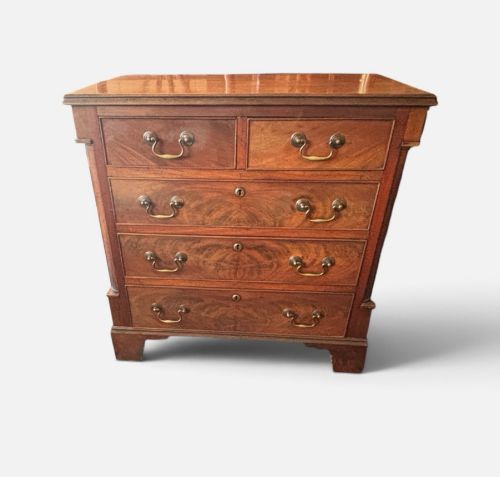
- Support feet shaped like small brackets projecting from the bottom corners of a cabinet. Splayed bracket feet angle outward for stability and visual lightness.
- Wellington chest
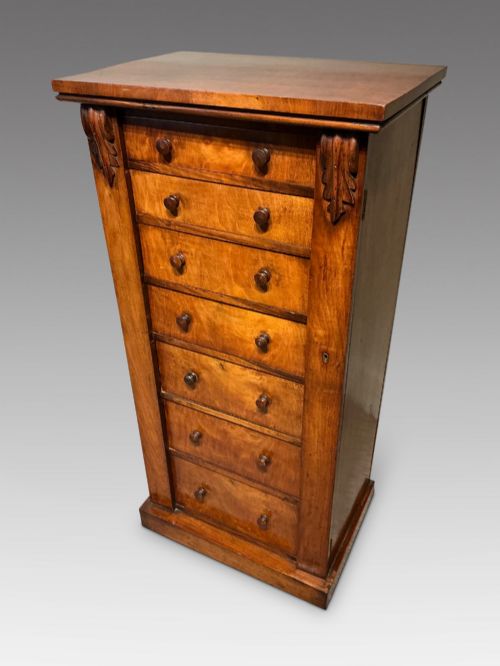
- A tall, slender locking chest of drawers secured by a hinged vertical side flap. This locking mechanism bars access to the drawer fronts.
- Raised gallery
- A low decorative upstand running along the back and side edges of a top surface. This feature prevents items from sliding off the edge.
Storage Drawers Unit: Frequently Asked Questions
What is a bank of drawers?
A bank of drawers is a multi-compartment unit originally built for commercial, industrial, or trade use. These pieces often feature numerous uniform drawers designed for sorting small items.
Such units range from haberdashers' counters to dental cabinets and filing systems. Their robust construction suits utilitarian storage needs in modern interiors.
How do I date a wooden chest?
Dating relies on timber choices, handle styles, and construction techniques characteristic of specific periods. Georgian pieces often display bracket feet and mahogany, while Victorian examples frequently utilise pine or heavier mahogany frames.
Hardware details like brass acorn handles or shell pulls provide further chronological clues. Examining secondary woods inside the drawers also clarifies the period of manufacture.
Where should I place a storage unit?
These units fit bedrooms, living spaces, and home offices depending on their specific form. Smaller chests and trinket boxes suit tabletops, whereas large banks of drawers serve as focal storage points.
Industrial pieces and filing cabinets provide structured organisation in working environments. Domestic chests offer surface display areas alongside concealed compartment space.
What distinguishes a Wellington chest?
A Wellington chest is a tall, narrow cabinet featuring a vertical locking bar on one side. This hinged flap secures all the drawers simultaneously when locked in place.
The design originated in the 19th century to securely store papers, linen, or valuables. Their vertical proportions allow them to fit into tight wall spaces.