



Stone Occasional Table
These stone occasional table examples bring solid tops and varied period frames together for practical display, and understanding their build helps find the right one.
Stone Occasional Table
A stone occasional table brings together a sturdy mineral surface and a supportive timber or metal frame, functioning as a compact surface for lamps or display items. Collectors seek these pieces for their varied geological tops, which range from plain white marble to intricate specimen mosaics.
The versions most commonly met on this page span from Victorian and Edwardian iterations to later Art Deco and twentieth-century designs. Formats include side tables, low stands, and octagonal occasional tables suited for principal rooms or studies.
Makers paired durable stone with a diverse selection of structural woods, including mahogany, hardwood, cherry wood, and exotic thuya wood. Each combination reflects the prevailing aesthetic of its period, from Classical Revival severity to French Rococo and Aesthetic Movement detailing.
How they were made
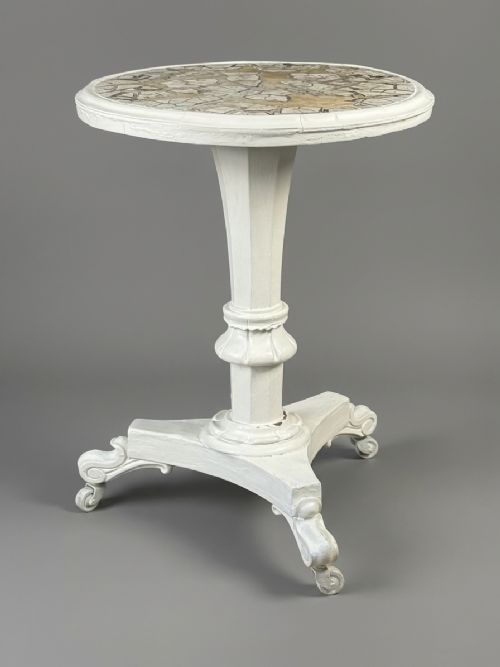
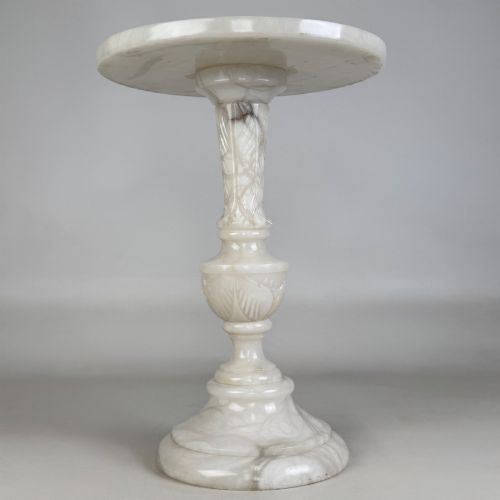
The top surfaces rely on heavy mineral slabs such as marble, alabaster, Derbyshire fossil marble, and deep quartz, often shaped into circular or octagonal forms. Artisans then polished these stones to a smooth finish to highlight natural veining and fossil inclusions.
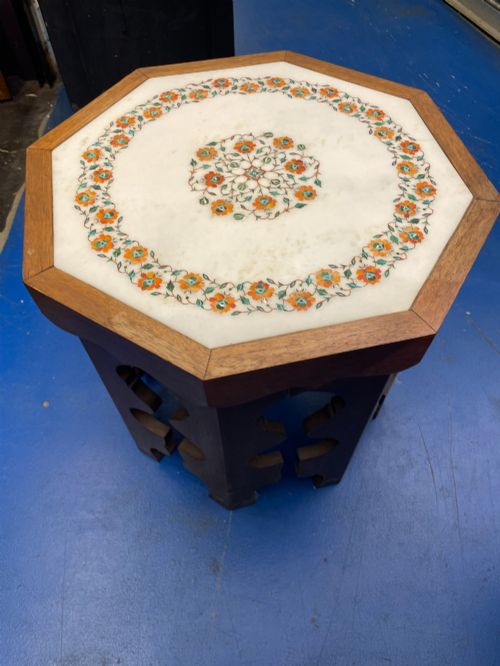
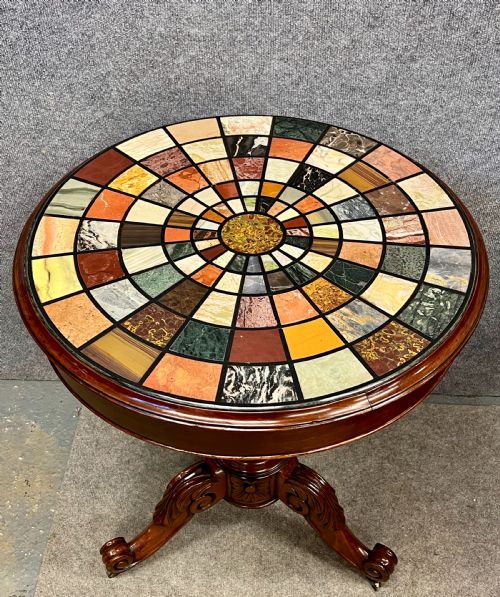
Pietra dura and specimen techniques demanded exceptional skill, employing fitted sections of semi-precious stones to create pictorial or geometric designs across the tabletop. These stone inlays were meticulously set flush into a solid base before final smoothing.
Supporting frames utilise timber frameworks like mahogany, hardwood, and carved rootwood, occasionally enhanced with silvered bronze mounts or engraved pillars. Joinery and turned supports provided the necessary rigidity to bear the substantial weight of the stone tops.
Stone Occasional Table Retail Price Guide 2026
Typical asking prices for stone occasional table among the pieces listed under this phrase on Sellingantiques today, from the lower quarter to the upper quarter. They describe what is for sale here now, not the wider market.
Current listings demonstrate a broad chronological span, moving from Victorian and Edwardian periods through to Art Deco designs.
What varies in quality
Quality rests primarily in the ambition of the geological top and the precision of its assembly. Simple white marble slabs sit at the accessible end of the spectrum, while intricate pietra dura mosaics and multi-mineral specimen tops represent far greater craftsmanship.
The selection of the supporting frame dictates the overall distinction of the piece. Standard turned timber legs support many basic variants, whereas carved rootwood, engraved pillars, and French thuya wood with bronze mounts elevate the piece into a more ambitious decorative object.
The Stone Occasional Table Glossary
- Pietra dura
- An Italian term for an artistic technique using cut and fitted polished coloured stones to create images. This method appears on elaborate tabletop surfaces.
- Specimen marble
- A tabletop composed of numerous small, geometric or sample fragments of different coloured marbles. These pieces often relate to nineteenth-century travel souvenir traditions.
- Derbyshire fossil marble
- A dark limestone native to Derbyshire containing prehistoric fossil fragments that show white against a dark ground. It was frequently used for nineteenth-century decorative tabletops.
- Thuya wood
- A fragrant wood derived from a species of conifer, prized for its swirling grain patterns. It is seen in French occasional table frames.
- Rootwood
- Wood taken from the root system of a tree, displaying tangled and irregular grain patterns. Chinese stands occasionally employ this material for rustic effect.
Stone Occasional Table: Frequently Asked Questions
How do I date a stone occasional table?
Dating relies on examining the timber frame, carving styles, and the specific type of stone work used on the top. Victorian and Edwardian examples often feature classical revival motifs or engraved pillars.
Later twentieth-century pieces, such as those from the Art Deco period, show cleaner geometric lines and simpler supporting structures. Comparing the secondary wood and joinery techniques provides further clues to the exact decade of manufacture.
How were these tables used originally?
In nineteenth and early twentieth-century interiors, these tables served specific roles as lamp stands, display surfaces for curiosities, or parlour furniture. Their sturdy stone tops made them resistant to heat from oil lamps and candles.
They were typically positioned beside seating areas or in hallways where a durable, decorative surface was required. Today, they continue to serve similar functional roles in contemporary living spaces.
Are stone tables heavy to move?
Yes, the presence of solid marble, alabaster, or quartz makes the upper section significantly heavier than an all-wood table of the same size. Care must be taken when lifting to support both the top and the frame.
Because the stone is often heavy-set rather than permanently fixed to the base in some historical designs, dismantling the top from the frame is recommended prior to transport.