



Stone Base Light
A stone base light brings solid geological weight and soft illumination to a room, turning dense mineral pillars into functional domestic sculpture.
Stone Base Light
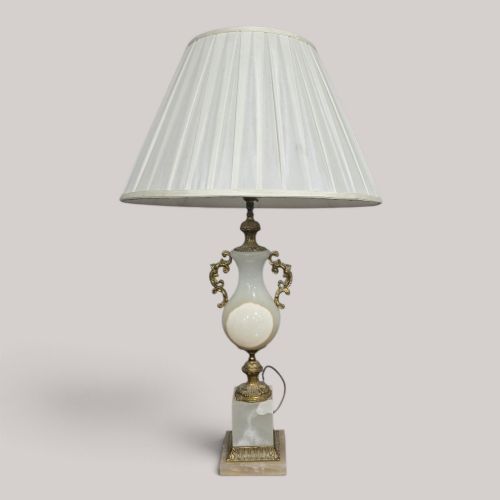
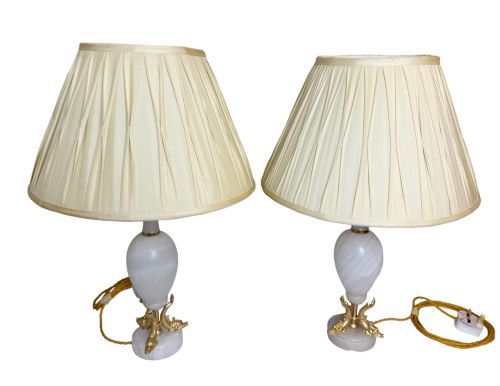
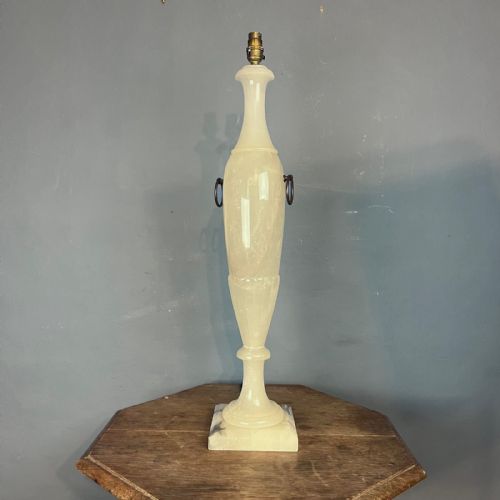
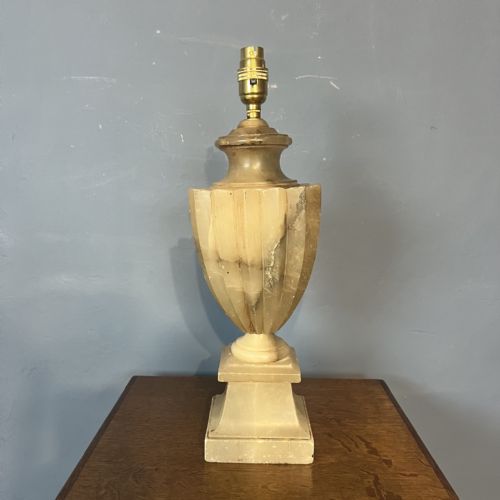
When you search for a stone base light, you encounter substantial table lamps and converted candlesticks that anchor their illumination in carved mineral blocks. These pieces utilise natural materials to provide a heavy, grounded foundation for interior lighting.
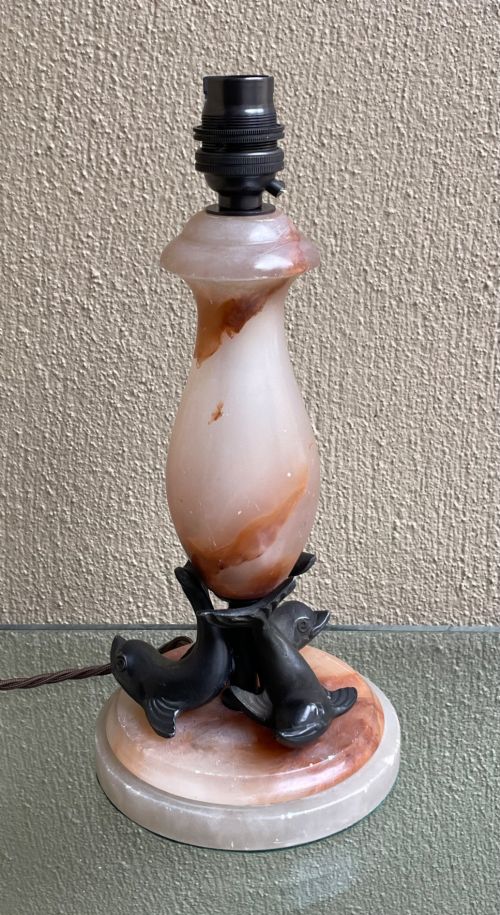
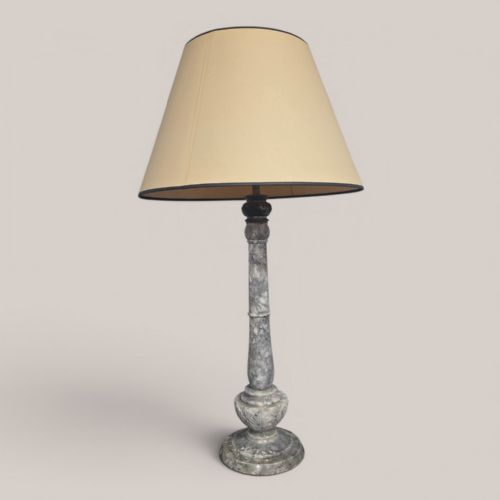
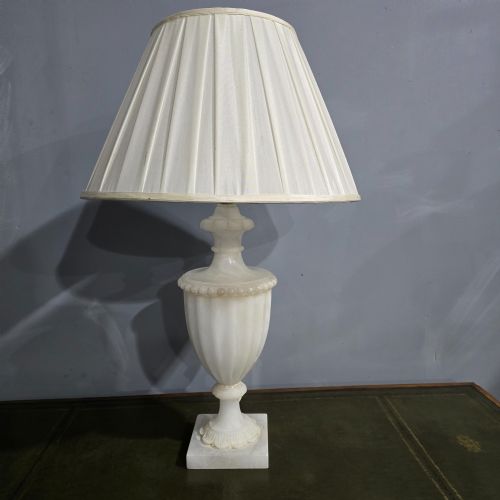
The versions most frequently met on this page date from the Victorian era through the Art Deco period, spanning styles from classical revival to French neoclassical. Makers often turned solid blocks of alabaster, onyx, and grey or white marble into monumental columns, dolphin forms, and classical shafts.
Object types alternate between dedicated table lamps and repurposed antique mantelpiece candlesticks fitted with modern wiring. Such pieces combine structural stone bodies with metal mounts, fabric shades, and patinated bronze details.
Materials and construction methods
Makers shaped translucent alabaster and banded onyx on lathes or carved them by hand to create smooth columns and figurative forms like dolphins. These pale mineral blocks allow light to diffuse partially through the upper portions of the body when illuminated from within or above.
Heavy marble bases frequently incorporate cast brass, gilt bronze, or ormolu mounts to secure the stone sections and provide decorative capitals or stepped feet. Craftsmen then mounted electrical fittings or candle sconces to the top, anchoring them firmly through the central stone core.
Stone Base Light Retail Price Guide 2026
Typical asking prices for stone base light among the pieces listed under this phrase on Sellingantiques today, from the lower quarter to the upper quarter. They describe what is for sale here now, not the wider market.
Listings incorporate items spanning from the late Victorian period through 1930, utilising alabaster, onyx, and marble paired with brass and gilt bronze.
Distinctions in quality
Superior examples of a stone base light display an exceptional selection of natural mineral patterning, such as tightly banded onyx or evenly translucent alabaster without distracting dark inclusions. The execution of the carved detail, from Corinthian fluting to sculptural animal forms, dictates the artistic ambition of the piece.
The integration of the metal mounts defines the upper tier of manufacture, where heavy gilt bronze, brass, or ormolu fits flush against the polished stone rather than relying on visible mechanical fasteners. Proportion also governs quality, with finer pieces maintaining a balanced weight distribution between the heavy mineral plinth and the upper lighting fixture.
The Stone Base Light Glossary
- Alabaster
- A fine-grained, translucent stone that ranges from pure white to warm honey tones, frequently utilised in the creation of sculptural table lamps and classical columns.
- Onyx
- A banded variety of chalcedony quartz showing parallel layers of contrasting colours, favoured by turn-of-the-century makers for decorative lighting bases.
- Ormolu
- Gilded bronze produced through a mercury-gilding technique, applied as mounts and decorative trim on nineteenth-century stone lamp bodies.
- Corinthian column
- A classical architectural order featuring an ornate capital decorated with acanthus leaves, often adapted for tall Victorian and Edwardian lamp standards.
Stone Base Light: Frequently Asked Questions
What periods do these lamps cover?
The pieces span from the late Victorian era and Edwardian period through the 1920s and 1930s. This includes earlier classical revival designs alongside later Art Deco forms.
Materials and decorative motifs shift across these decades, moving from ornate ormolu-mounted Corinthian columns to streamlined alabaster dolphin lamp carvings.
How were these stone pieces used?
They served as principal domestic table lamps and heavy mantelpiece lighting to illuminate formal rooms. Many started life as heavy candlesticks before conversion to electricity.
The substantial weight of the mineral base provided a stable foundation for large fabric shades on side tables and desks.
How do I identify marble versus onyx?
Marble presents a crystalline structure with cloudy veining and a more opaque finish across grey and white colourways. Onyx exhibits distinct linear banding and semi-translucent properties that catch direct light.
Both materials share a dense, cold touch that separates natural stone from later synthetic cast resins.
Are these lamps French or English?
Many of the finer ormolu-mounted and gilt bronze pieces originate from French workshops adhering to classical revival and Art Deco canons. Other examples reflect domestic English Victorian production.
French makers frequently combined variegated marble with chased metal mounts to achieve a highly decorative finish.