




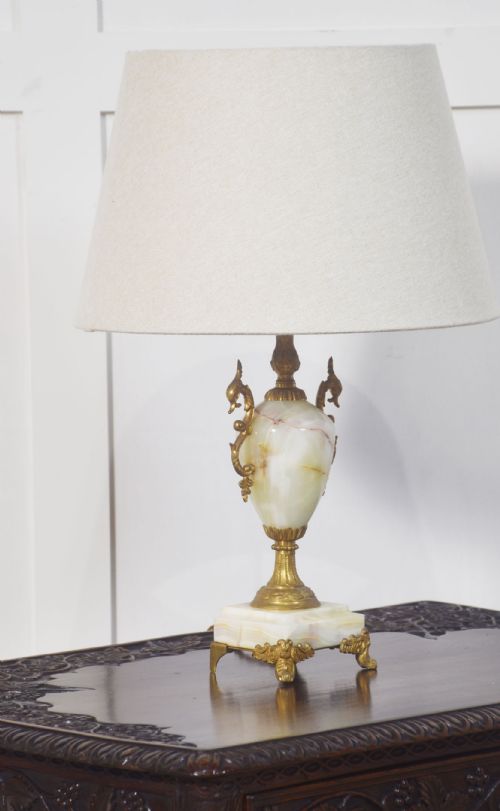
Stone Accent Lamp
A stone accent lamp brings weight and carved texture to a room, offering warm light through alabaster, onyx, and marble.
Stone Accent Lamp
A stone accent lamp combines carved mineral bodies with metal mounts, illuminating interiors from the early twentieth century onwards. Collectors seek these pieces for their natural veining and sculptural forms, which range from simple cylindrical columns to elaborate figural designs.
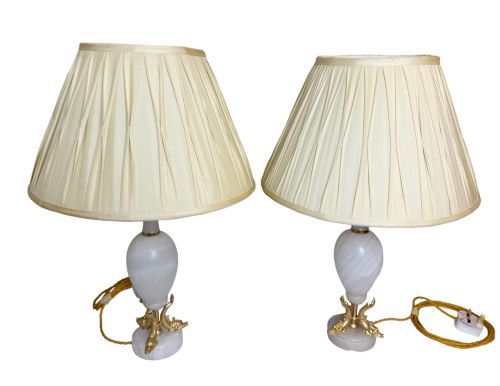
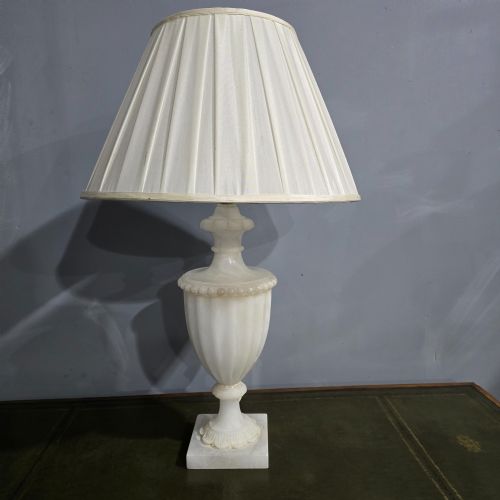
The stone accent lamp most frequently encountered on this page takes the form of a carved alabaster table lamp from the 1920s or 1930s. These often feature Neoclassical or Art Deco styling, occasionally accompanied by pairs of matching side tables or gilt bronze trim.
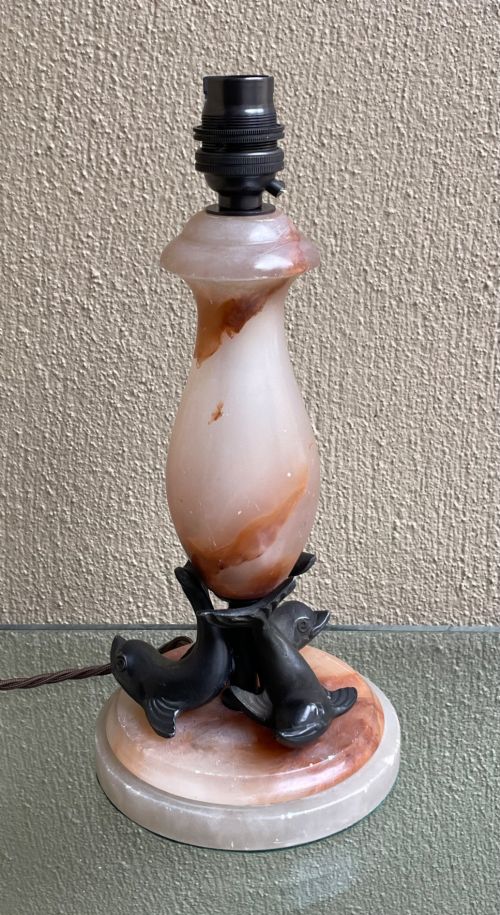
Origins span from French workshops to Italian studios, reflecting continental tastes in domestic lighting during the 1900 to 1930 period. Buyers encounter various forms including carved dolphins, fluted columns, and polished two-tone marble cylinders mounted in brass or patinated metal.
How they were made
Makers shaped translucent stones such as alabaster and dense minerals like onyx and marble on lathes or by hand carving. These mineral bodies were then combined with cast metal components, utilising brass, gilt bronze, and patinated metal for bases, collars, and mounts.
Fabric shades completed the construction, pairing with wired electrical fittings to diffuse the light cast through the carved stone. Artisans polished the exterior surfaces to highlight the natural banding and grain inherent in each block of raw material.
Stone Accent Lamp Retail Price Guide 2026
Typical asking prices for stone accent lamp among the pieces listed under this phrase on Sellingantiques today, from the lower quarter to the upper quarter. They describe what is for sale here now, not the wider market.
Listings feature pieces spanning four decades from 1900 to 1930, predominantly utilising alabaster, marble, and onyx alongside fabric, brass, and gilt bronze.
What varies in quality
The refinement of the carving dictates the distinction between standard production and superior examples, particularly in figural details like carved dolphins or classical motifs. Crisp execution in the stone work and balanced proportions elevate the presence of the piece.
The quality of the secondary materials, such as finely chased gilt bronze mounts or heavy brass fittings, separates simpler utilitarian pieces from ambitious decorative works. Integrated designs where the stone and metal mounts complement each other command greater visual authority.
The Stone Accent Lamp Glossary
- Alabaster
- A fine-grained, translucent stone prized for its ability to diffuse light softly. It appears frequently in carved lighting fixtures from the early twentieth century.
- Onyx
- A banded variety of chalcedony showing distinct parallel layers of colour. This material provides rich visual texture and high polish to decorative bases.
- Neoclassical
- A decorative style drawing inspiration from classical antiquity, featuring symmetrical forms and traditional architectural motifs. It frequently influences the silhouette of early twentieth-century lighting.
- Gilt Bronze
- Bronze treated with a layer of gold or gold-coloured alloy to impart a rich metallic sheen. This technique highlights mounts and decorative trims on luxury pieces.
- Patinated Metal
- Metal surfaces altered by age or chemical treatment to display a darkened or aged finish. It contrasts with the pale tones of carved marble and alabaster.
Stone Accent Lamp: Frequently Asked Questions
What is a stone accent lamp?
A stone accent lamp is a domestic light fixture utilising a carved mineral body made from materials such as alabaster, onyx, or marble.
These pieces use the natural translucency or rich grain of the stone to create decorative illumination in interior spaces.
How do I date a stone lamp?
Dating relies on stylistic clues such as Neoclassical or Art Deco motifs, alongside the type of metal mounts and wiring evidence.
Porter marks, material choices like patinated metal or gilt bronze, and the specific decade of manufacture help establish the period.
Where were these lamps made?
Many examples originate from European workshops in Italy and France, reflecting regional traditions in stone carving.
These continental makers produced diverse forms ranging from simple cylindrical columns to elaborate figural sculptures.
How do I live with alabaster?
Alabaster requires careful placement away from moisture and direct water contact to preserve its delicate surface polish.
Gentle dusting with a dry cloth keeps the stone clean without risking the soft mineral composition.