

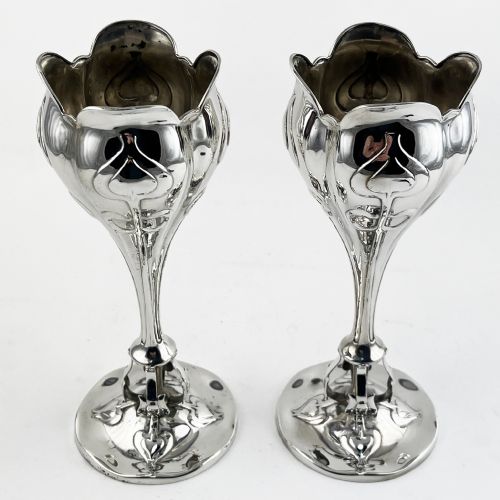


Sterling Silver Trumpet
These sterling silver trumpet pieces bring slender elegance and bright metallic presence to a room, offering refined decorative charm.
Sterling Silver Trumpet
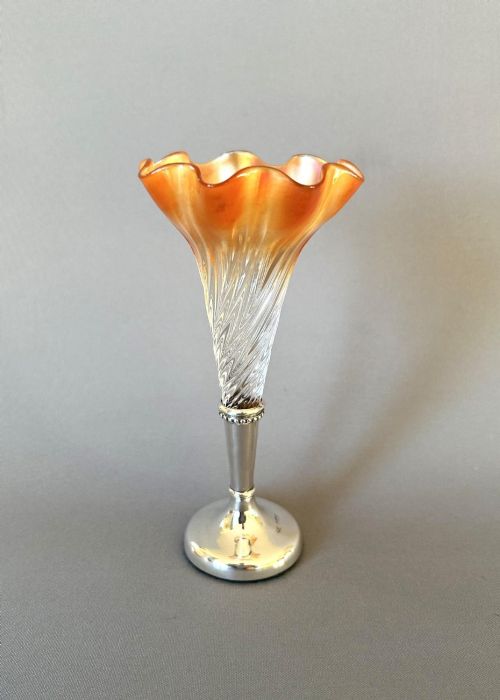
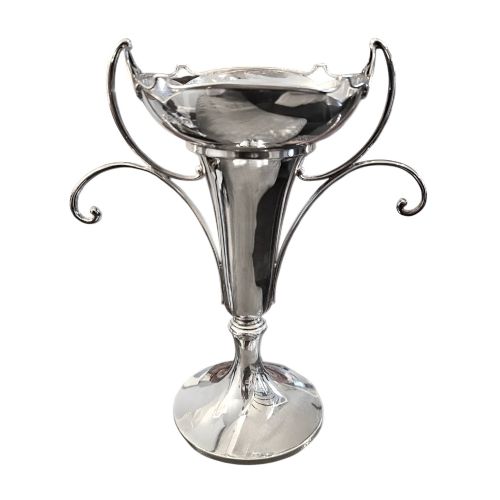
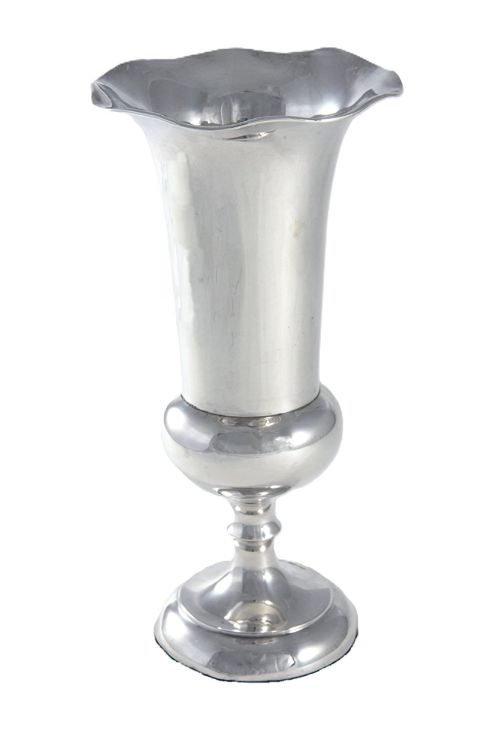
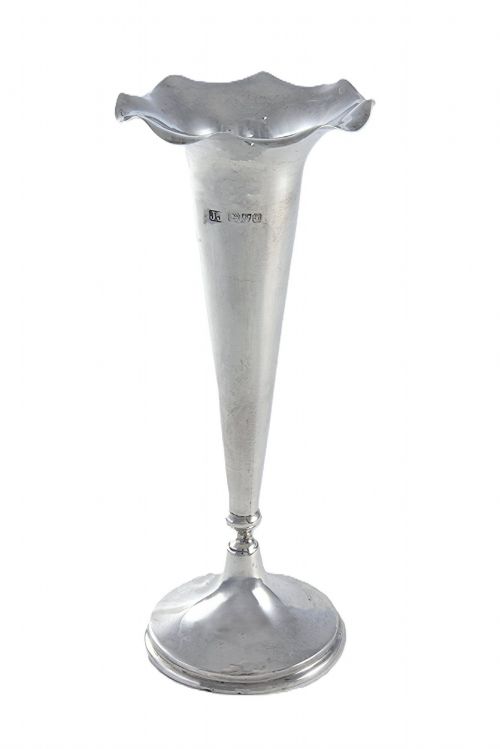
When you search for a sterling silver trumpet, you encounter slender, flared vessels designed primarily as table ornaments and floral displays. The selection on this page consists predominantly of Edwardian and Victorian posy vases, bud vases, and epergnes shaped with characteristic flared mouths.
The forms span from single slender flutes to paired vessels and multi-stemmed epergnes, alongside occasional novelty table lighters. Production dates stretch from the late nineteenth century through the Edwardian era into the nineteen-thirties, reflecting both Victorian elaboration and later geometric lines.
Makers and silversmiths utilised classic floral shapes, sometimes combining the silver with glass inserts or gemstone accents. Art Nouveau curves and Celtic Revival motifs appear frequently among the Edwardian examples, giving variety to the flared silhouettes.
Materials and construction methods
Silversmiths constructed these pieces using solid sterling silver, frequently shaping the metal through spinning, hammering, and piercing techniques. Pierced openwork designs often required fitted glass liners to hold water and blooms securely within the flared frame.
Makers combined the silver with blown glass for flute inserts and wrythen glass bodies, creating tactile contrast between smooth metal and rippled or textured transparency. Gemstone details occasionally adorn the silver framework on specific decorative items.
Sterling Silver Trumpet Retail Price Guide 2026
Typical asking prices for sterling silver trumpet among the pieces listed under this phrase on Sellingantiques today, from the lower quarter to the upper quarter. They describe what is for sale here now, not the wider market.
Listings span from the late Victorian period through the Edwardian era into the nineteen-thirties, featuring sterling silver combined with glass and gemstone materials.
Distinctions in craftsmanship and design
The quality of a sterling silver trumpet lies in the crispness of its chasing, the weight of the metal utilised in the flared body, and the harmony of its proportions. Finer examples display meticulous piercing, crisp hallmark stamps, and unblemished structural integrity across the slender neck.
Decorative ambition also separates standard items from exceptional ones, with hand-wrought Art Nouveau tendrils or intricate Celtic Revival patterns demanding greater skill from the silversmith. Pieces retaining original matched glass liners or paired formats demonstrate superior preservation and completeness.
Edward Souter Barnsley·Josiah Williams and Co
The Sterling Silver Trumpet Glossary
- Sterling silver
- A standard alloy consisting of ninety-two point five percent silver and seven point five percent other metals, chosen for durability and lustre. This metal forms the primary structural and decorative body of these pieces.
- Posy vase
- A small vessel designed to hold a short arrangement of flowers or a single small posy. These compact pieces form a large portion of the trumpet-shaped items.
- Epergne
- A centrepiece stand featuring a central dish or basket surrounded by multiple smaller hanging or fixed vases. Edwardian examples often incorporate twin fluted trumpet arms.
- Wrythen glass
- Glass blown with a twisted, spiral fluting pattern that catches the light. This technique frequently complements the silver bases of period bud vases.
- Hallmark
- An official stamp applied to precious metals indicating the standard of purity, the assay office, and the date letter. These marks allow precise dating of Victorian and Edwardian items.
Sterling Silver Trumpet: Frequently Asked Questions
How were these trumpet vases used?
Victorian and Edwardian households placed these vessels on dining tables, mantelpieces, and sideboards to display fresh flowers during meals and social gatherings.
Multi-stemmed epergnes and paired vases allowed hosts to create symmetrical floral centrepieces that matched the formal decor of the period.
How do I care for sterling silver?
Maintaining sterling silver involves gentle cleaning with a soft cloth and specialist silver polish to remove natural tarnishing without wearing away the underlying metal.
Keeping the pieces away from damp environments and rubber compounds helps preserve the bright finish on pierced and chased surfaces.
How do I identify an Edwardian silver trumpet?
Edwardian silver trumpets often display characteristic Art Nouveau whiplash curves, organic floral motifs, or lighter structural forms compared to heavier Victorian pieces.
Examining the stamped hallmarks reveals the exact assay office and year of manufacture, confirming the Edwardian production period.