


Sterling Silver Serving Slice
These sterling silver serving slice pieces are historic implements of silver and bone, prized for bringing elegance to the dining table.
Sterling Silver Serving Slice
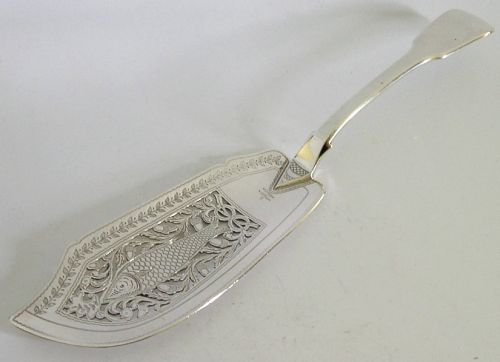
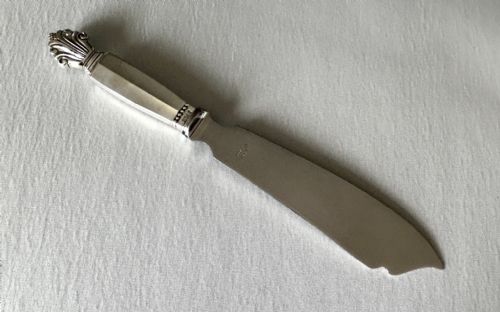
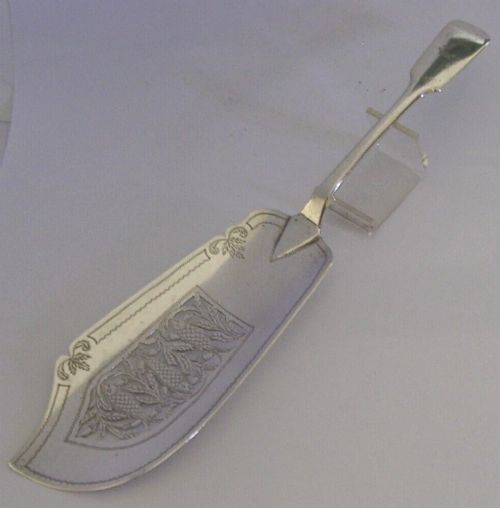
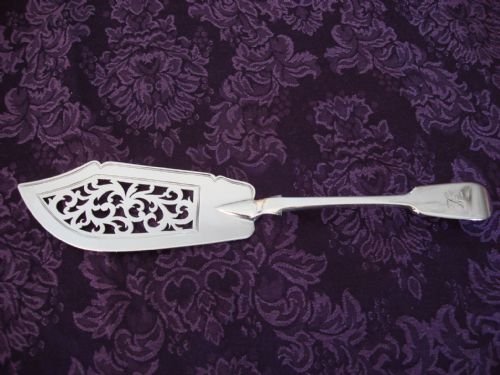
A sterling silver serving slice is primarily encountered in the form of fish slices and ice cream servers spanning the Georgian, Victorian, and mid-century periods. These utensils serve specialised dining functions, particularly for presenting fish or desserts with formal ceremony.
The pieces on this page originate from diverse eras, including eighteenth-century France and Britain, alongside nineteenth-century workshops. Buyers encounter both individual blades and paired fish servers housed within fitted presentation cases.
Forms range from traditional pierced flatware patterns to mid-century modern variations with alternative handle materials. Each object reflects the prevailing dining customs of its specific decade.
Materials and construction methods
Makers utilised solid sterling silver and high-purity silver, frequently piercing the blades into intricate geometric or naturalistic patterns. This piercing reduced the weight of the utensil while allowing liquid to drain from the food.
Handles incorporate contrasting materials such as bone and ebony, secured to the silver blades with pins or integrated sockets. Silk and velvet frequently line the interior of the fitted cases that accompany nineteenth-century sets.
Current listings feature sterling silver alongside bone, silk, velvet, and ebony, spanning the eighteenth century to the mid-twentieth century.
Distinguishing quality and craftsmanship
Quality rests in the crispness of the pierced blade decoration and the depth of the engraved crests or scrollwork. Superior examples maintain structural integrity at the junction where the blade meets the handle.
The presence of clear hallmarks indicating the London assay office and specific silversmiths elevates an object. The condition of secondary materials like bone or fitted velvet cases also informs the standing of the piece.
Thomas Daniell·George Adams·Charles Boyton·Georg Jensen
The Sterling Silver Serving Slice Glossary
- Pierced
- A technique where metal is cut through to create decorative openwork patterns. This method lightened the utensil and adorned the blade.
- Hallmark
- Official stamps struck into precious metals indicating purity, origin, and maker. These marks provide historical documentation for the piece.
- Fiddle pattern
- A nineteenth-century flatware handle design featuring a distinctive broadened shoulder resembling a stringed instrument. It remains a standard of British silver design.
- Crest
- An engraved family heraldic symbol displayed upon the silver surface. It personalises the utensil for the original owner.
Sterling Silver Serving Slice: Frequently Asked Questions
What is a sterling silver serving slice used for?
These utensils were created for portioning and serving specific foods at the dining table, most notably fish courses and ice cream desserts. The broad blade design supported delicate items during transfer from platter to plate.
Over time, their roles expanded within formal dining settings, reflecting the evolving culinary habits of the Georgian and Victorian eras.
How do I identify a Georgian serving slice?
Georgian pieces generally exhibit hand-pierced blades, distinct maker marks, and traditional handle formations typical of the late eighteenth and early nineteenth centuries. Stylistic indicators include neoclassical piercing motifs and fiddle pattern handles.
Examining the assay office stamps and date letters provides precise chronological placement for these older items.
Why are some serving slices paired with a fork?
Fish servers were frequently manufactured as matched pairs comprising a slice and a large fork. The pair worked in tandem to lift and steady whole fish portions during formal service.
These paired sets were often housed in dedicated wooden cases lined with silk or velvet for preservation.
What materials are used besides sterling silver?
While the blades are constructed from solid sterling silver or high-purity continental silver, handles incorporate organic elements such as bone and ebony. Fitted presentation boxes utilise textile linings including silk and velvet.
These secondary materials contrast with the metal to provide balance and grip during use.