





Sterling Silver Napkin Bands
Sterling silver napkin bands are solid silver table accessories used to mark individual dining places, offering both practical utility and lasting decorative appeal.
Sterling Silver Napkin Bands
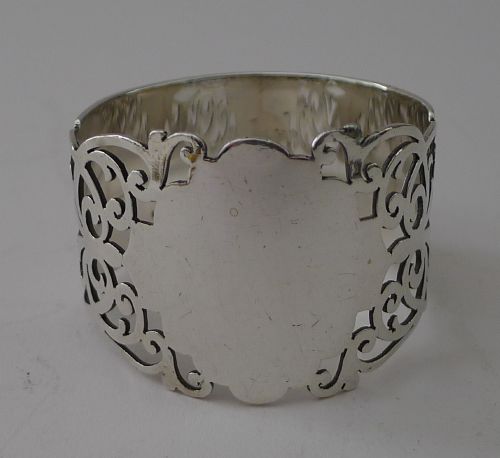
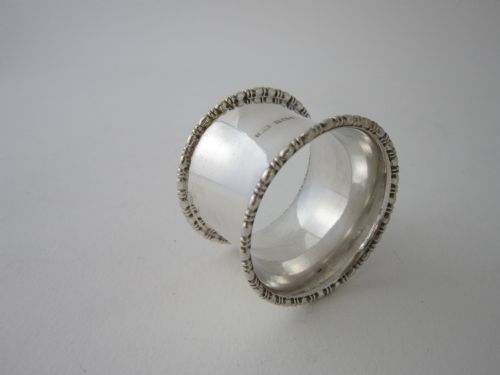
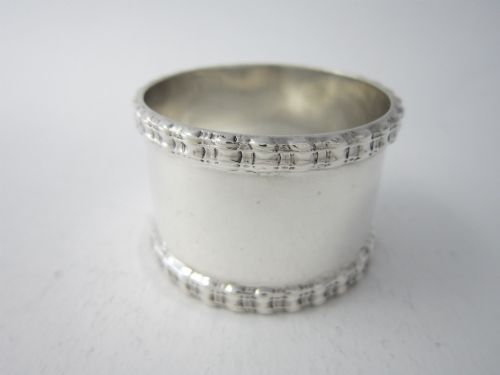
Sterling silver napkin bands, also commonly called napkin rings, serve to identify table linen at formal or family meals. These pieces appear across various periods, with Victorian, Edwardian, and George V examples frequently found alongside later Art Deco and mid-century designs.
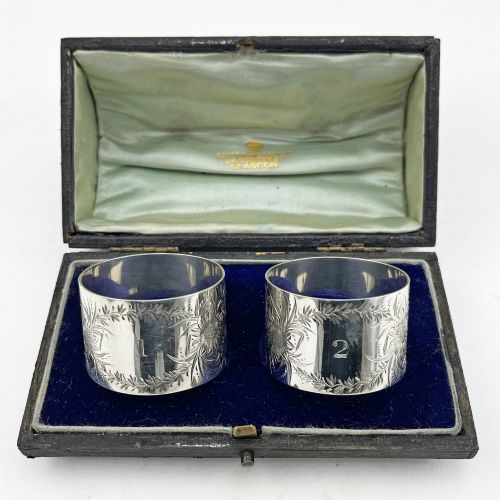
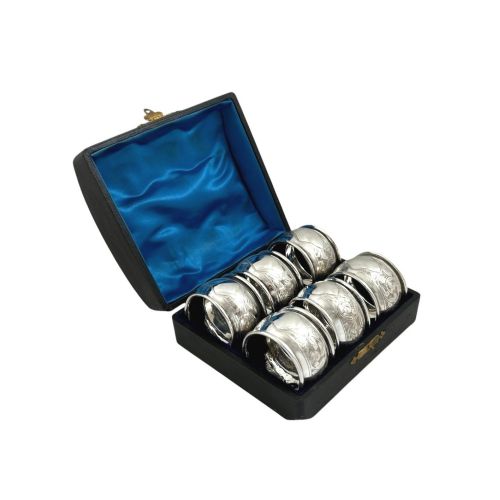
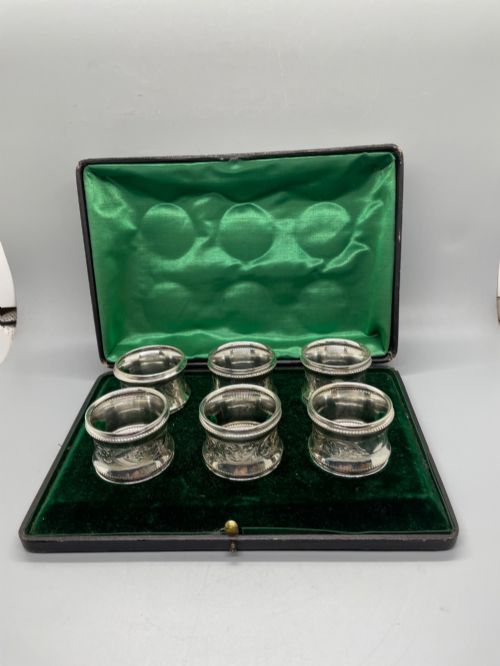
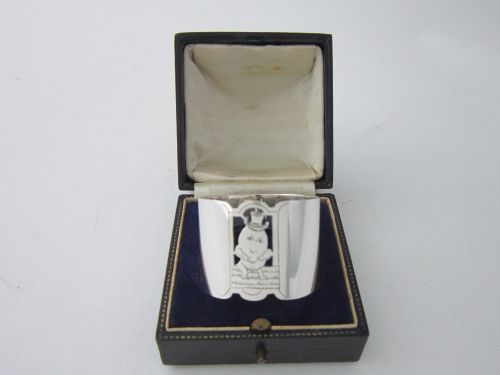
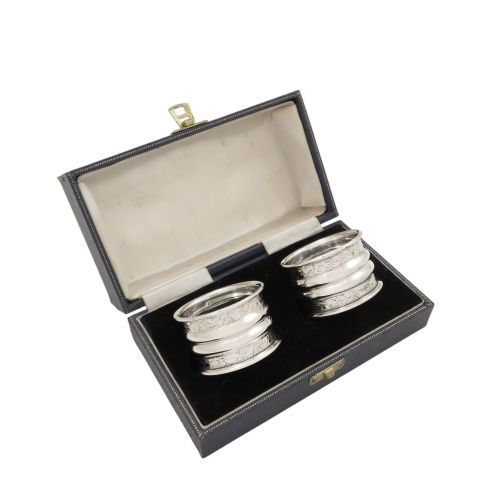
Makers produced these bands in both single items and matched pairs, often housing them in fitted cases lined with silk, velvet, or leatherette. Standard forms range from plain polished bands to novelty shapes and decorative styles including Arts and Crafts and Art Nouveau.
The selection on this page demonstrates the enduring appeal of silver dining accessories through the late nineteenth, twentieth, and mid-century eras. Buyers encounter everything from heavy Edwardian cylinders to enamel-accented pieces originating from notable design houses.
What varies in quality
The distinction between standard commercial pieces and superior examples often lies in the weight of the silver and the crispness of the hallmarks. Heavier gauge metal resists denting and maintains its structural integrity through generations of use.
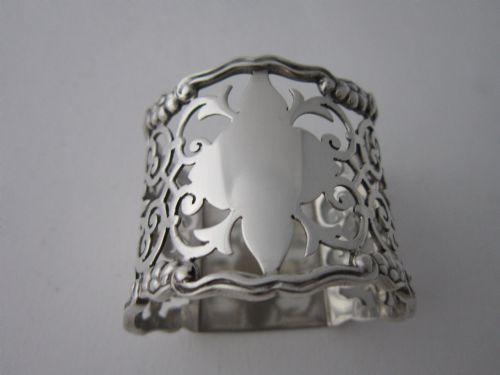
Surface embellishment further differentiates quality, particularly where hand-chased details, applied wirework, or complex guilloche enamel are present. Original fitted cases lined with silk and leatherette also add to the completeness and desirability of a set.
Sterling Silver Napkin Bands Retail Price Guide 2026
Typical asking prices for sterling silver napkin bands among the pieces listed under this phrase on Sellingantiques today, from the lower quarter to the upper quarter. They describe what is for sale here now, not the wider market.
Some Victorian couples marked their dining table with belt-shaped silver napkin rings, literally buckling down for dinner.
Martin Hall & Co·Liberty & Co·Cartier·David Andersen
The Sterling Silver Napkin Bands Glossary
- Sterling silver
- A silver alloy containing 92.5 percent pure silver and 7.5 percent other metals, usually copper, chosen for durability. This standard forms the baseline material for the majority of antique table silver.
- Guilloche enamel
- A decorative technique where translucent enamel is layered over engine-turned metalwork. It creates a repeating geometric pattern visible beneath the colourful glass coating.
- Silver gilt
- Silver that has been coated with a thin layer of gold on its surface. This technique provides the rich appearance of solid gold while utilising a silver base.
- Hallmark
- An official stamp applied to precious metals indicating purity, the assay office, and the year of manufacture. These marks provide definitive evidence for dating and attributing silver items.
- Novelty napkin ring
- A napkin band shaped to represent an animal, object, or specific theme rather than a simple geometric cylinder. These whimsical designs were particularly popular during the Victorian and Edwardian periods.
Sterling Silver Napkin Bands: Frequently Asked Questions
How do I clean antique silver napkin rings?
Use a soft microfibre cloth and a reputable silver polish formulated to remove tarnish without scratching the metal surface. Avoid abrasive materials that might wear down hallmarks or delicate chasing.
Take extra care around enameled or gilded sections, as harsh chemicals can damage decorative coloured surfaces. Store the rings in anti-tarnish cloth or their original fitted cases when not in use.
Are these napkin rings marked with sterling silver hallmarks?
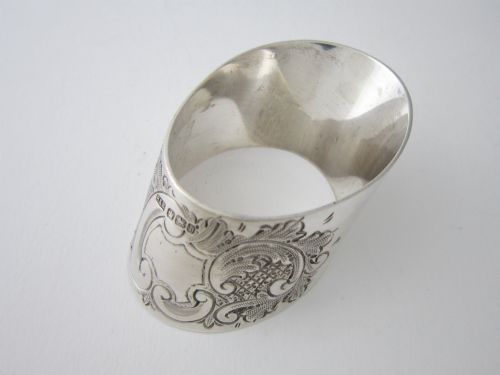
British pieces typically feature a series of stamps indicating the standard of silver, the assay office city, and the year of manufacture. These small stamped marks help verify the exact period of creation.
Foreign pieces or items from specific design houses may carry alternative maker's marks or purity stamps instead of traditional British assay office symbols.
Did napkin rings always come in pairs?
Makers produced both single napkin rings and matched pairs, sometimes expanding them into larger dining sets for family use. Cased pairs were frequently presented as wedding or anniversary gifts.
Single rings often survive independently due to loss or separation from larger dining suites over the course of a century.
What is the difference between Victorian and Edwardian napkin rings?
Victorian examples often display heavier, more ornate decoration such as chased floral motifs, belt designs, or elaborate cartouches. They reflect the ornate tastes of the late nineteenth century.
Edwardian pieces frequently lean towards lighter proportions, geometric forms, or restrained neoclassical styles influenced by the early twentieth century. Both eras relied heavily on solid sterling silver construction.