
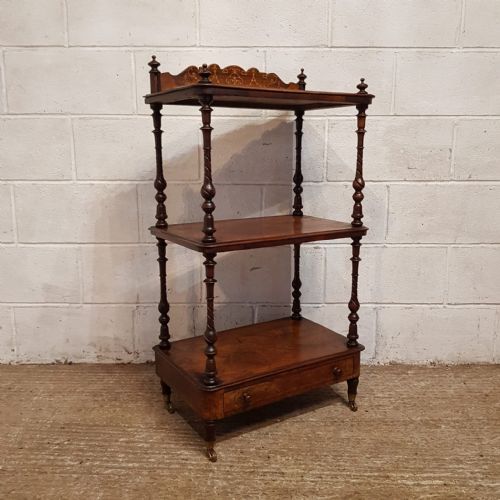

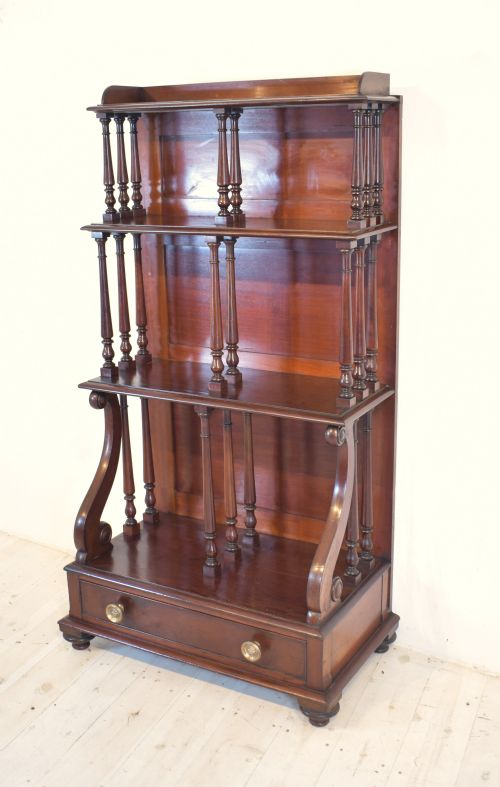

Standing Tiered Rack
A standing tiered rack organises volumes and objects across multiple levels, combining practical display with architectural presence in any interior.
Standing Tiered Rack
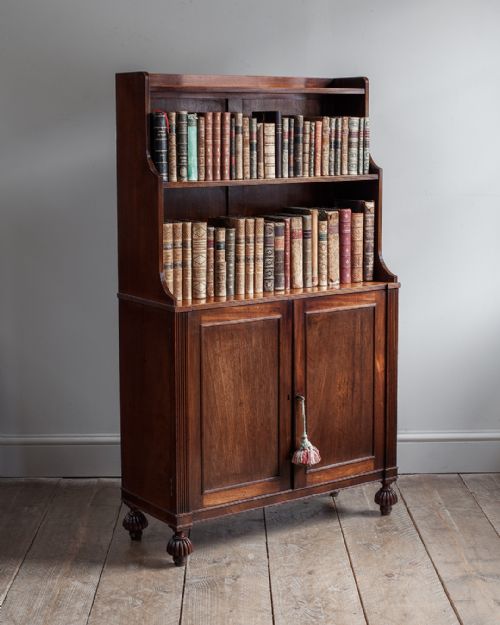
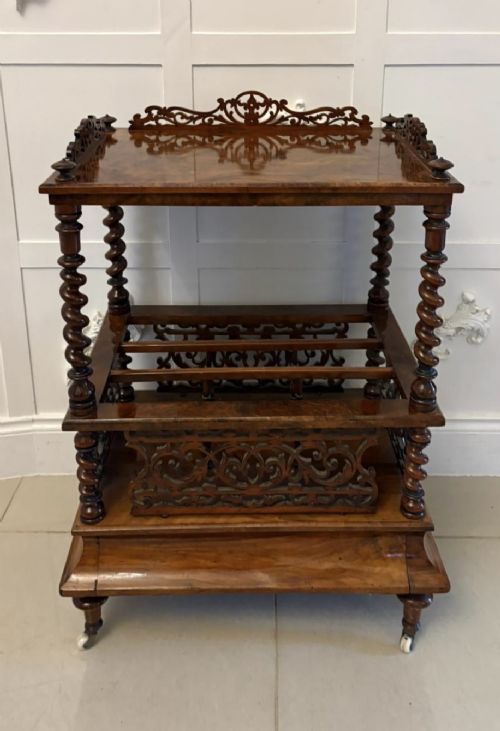
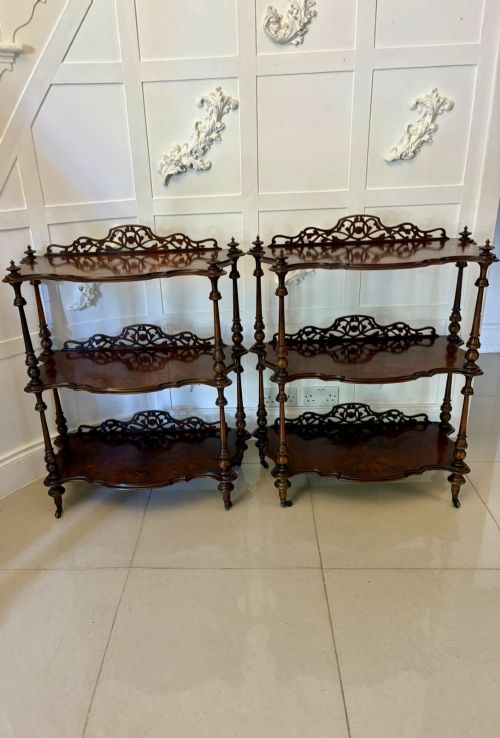
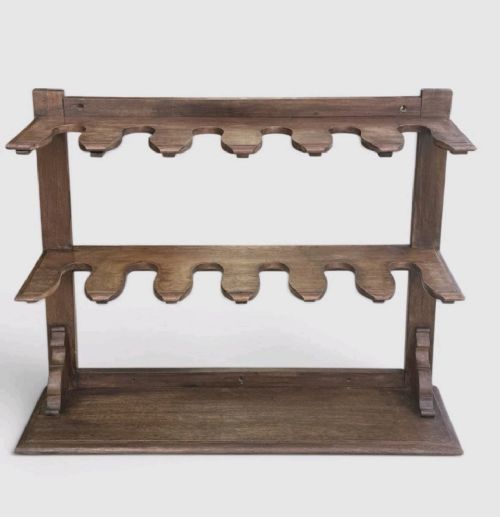
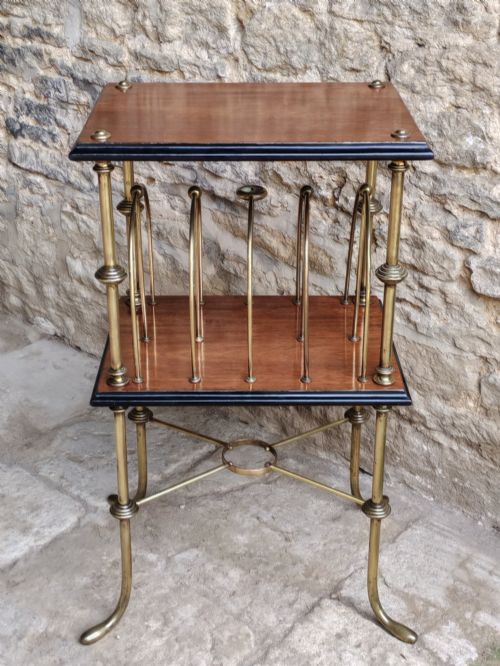
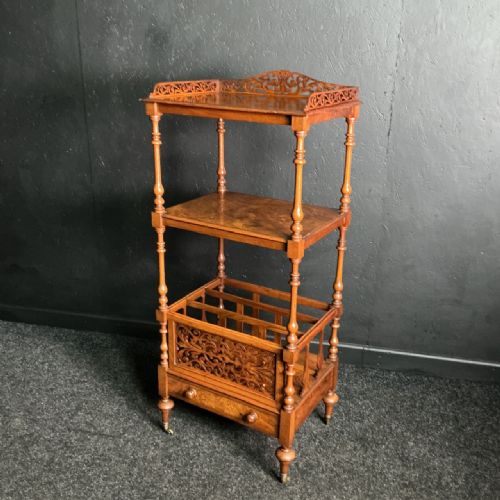
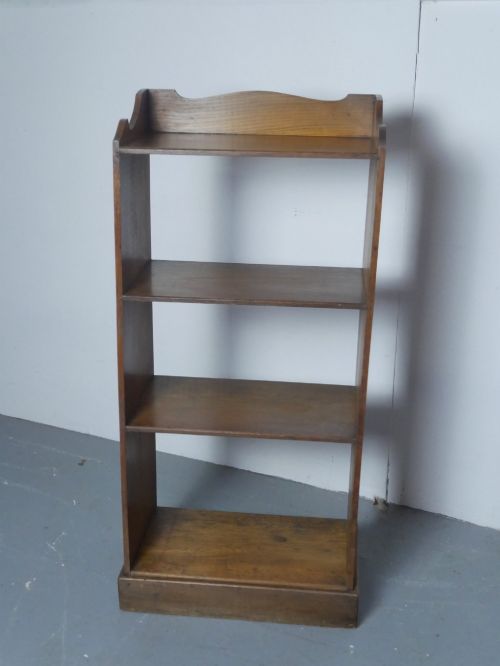
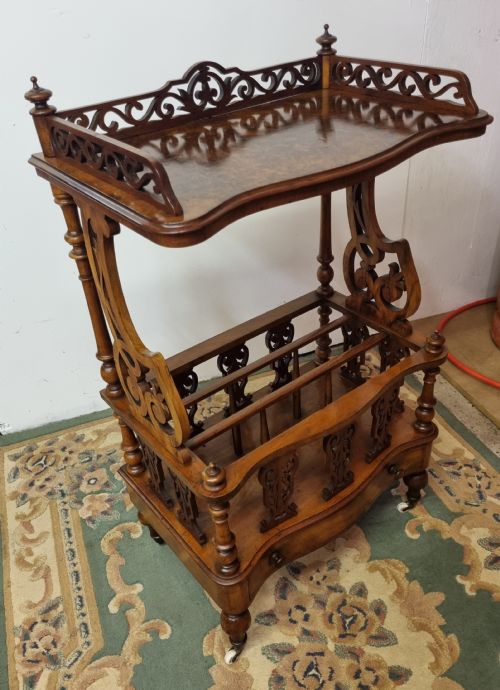
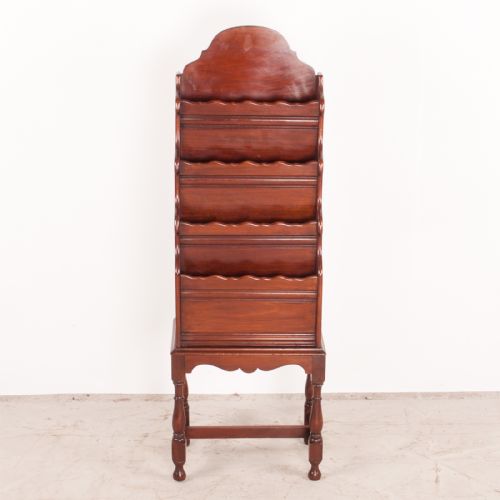
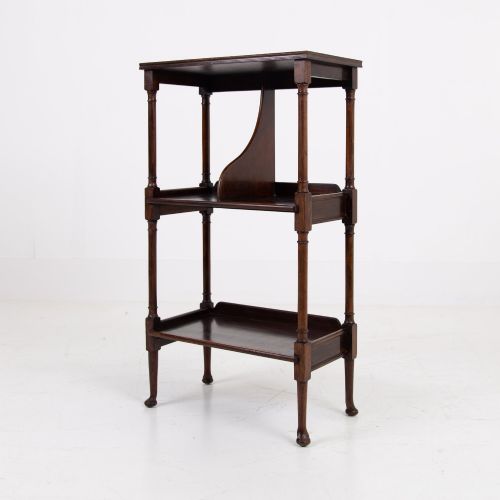
A standing tiered rack comprises multi-level shelving units designed for books, sheet music, magazines, and domestic display. The inventory includes bookcases, whatnots, canterburys, etageres, and pan stands dating from the Regency and Victorian eras through to the 1920s.
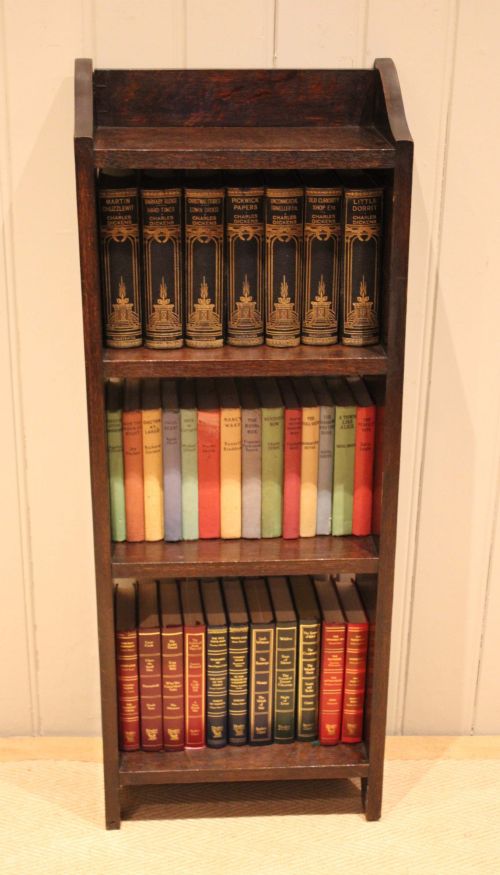
Victorian burr walnut whatnots and canterburys appear frequently alongside mahogany waterfall bookcases and oak magazine racks. Makers and workshops from the Edwardian period also contributed revolving bookstands and library book troughs.
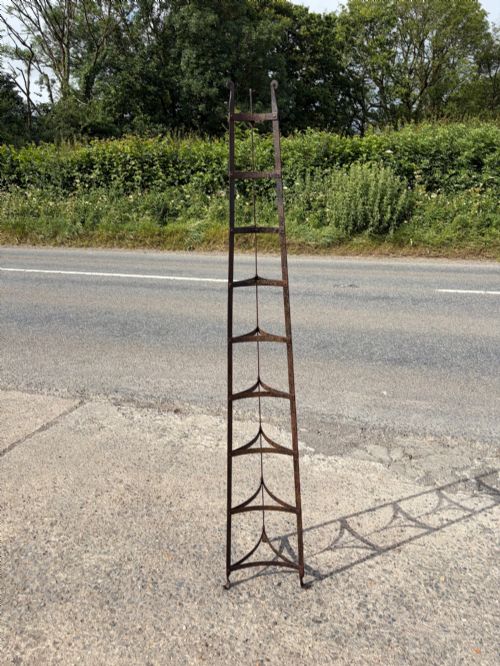
Originating as functional furniture for libraries, parlours, and hallways, these multi-tiered forms adapted to hold sheet music, footwear, and kitchenware. Wrought iron and cast iron versions served utilitarian kitchen and shop roles, while polished hardwoods populated formal rooms.
What varies in quality
The choice of timber grain and veneer selection dictates visual distinction, with figured burr walnut and rich flame mahogany sitting above plain utility pine and standard oak. Timber preparation and cabinetmaker execution determine how cleanly joints meet across multiple stacked tiers.
Hardware integration separates standard items from superior productions. Finely cast brass galleries, inlaid brass strings, and original castors denote workshop competence and material investment.
Footwear storage received architectural dignity when Victorian cabinetmakers turned sturdy pine and mahogany into dedicated hallway shoe racks.
Waring and Gillows
The Standing Tiered Rack Glossary
- Whatnot
- A moveable piece of furniture with shelves placed one above another for displaying ornaments or books. Originating in the late 18th century, it became a staple of Victorian drawing rooms.
- Canterbury
- A low stand with partitions for sheet music, books, or magazines, often featuring a small drawer below. Named after the Archbishop of Canterbury, who commissioned the first design.
- Waterfall bookcase
- A set of open shelves diminishing in depth from bottom to top, creating a tiered profile resembling cascading water. This form gained popularity during the Regency and Victorian periods.
- Etagere
- A piece of furniture consisting of a set of open shelves for knick-knacks, distinct from a whatnot through its lighter, more decorative framing. It functions primarily as a display surface.
- Book trough
- A small open-topped receptacle designed to hold a selection of volumes upright on a table or desktop. Edwardian examples often incorporated carrying handles or revolving bases.
Standing Tiered Rack: Frequently Asked Questions
What fits on a standing tiered rack?
Tiered racks accommodate books, magazines, sheet music, display ceramics, and kitchen cookware depending on their original intended function. Shallower upper tiers suit paperbacks or small ornaments, while deeper lower shelves take heavy folios or storage baskets.
Heavier cast iron and wrought iron variants support saucepan collections in culinary spaces. Library and hallway iterations manage revolving book inventories, tall folios, and footwear.
How do I date a tiered rack?
Dating relies on timber selection, decorative motifs, and construction characteristics tied to documented periods like Regency, Victorian, and Edwardian. Regency pieces display classical mahogany proportions and brass inlay, whereas Victorian examples favour burr walnut veneers and serpentine contours.
Later Edwardian and 1920s items exhibit simplified oak and mahogany framing suited to domestic reading spaces. Patent stamps or maker labels occasionally confirm exact manufacture eras.
Where should I place a whatnot?
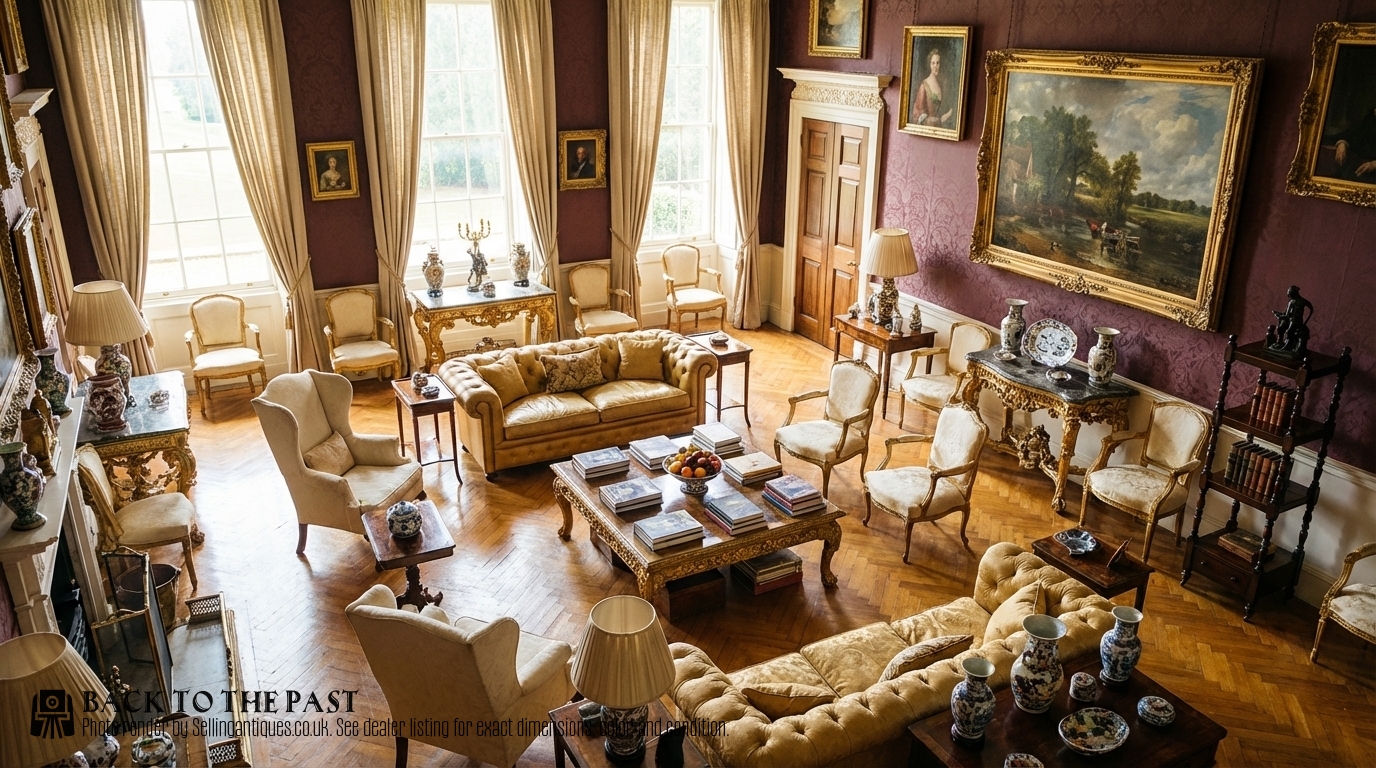
Whatnots suit corners, blank wall spaces, or alongside seating where multi-level display adds vertical interest without consuming large floor areas. Their open shelving prevents rooms from feeling visually blocked.
Parlours, studies, and drawing rooms accommodate mahogany and walnut variations. Kitchens and pantries provide natural settings for iron and pine pan stands.
How do I maintain wood tiered furniture?
Routine maintenance involves dusting with a soft, dry cloth and applying periodic applications of traditional beeswax to nourish polished hardwood surfaces. Avoid placing wooden items near direct heat sources to prevent veneer shrinkage.
Iron stands benefit from occasional light cleaning to preserve painted or forged finishes. Ensure weight distribution remains balanced across tiers to protect joints and upright supports.