



Standing Saddle Stand
These standing saddle stand examples bring practical equestrian history into the room, offering solid timber and iron support for traditional tack.
Standing Saddle Stand
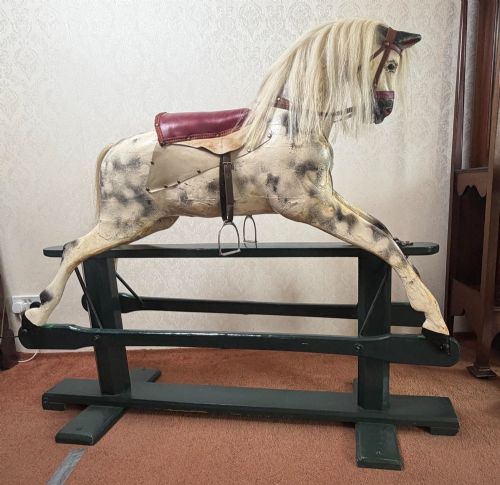
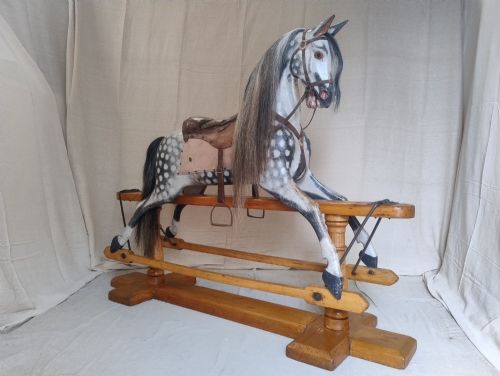
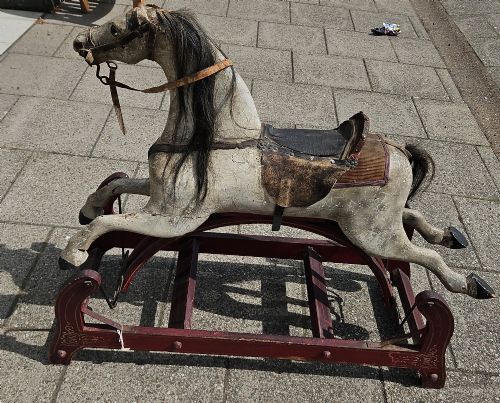
When you search for a standing saddle stand, you are looking at substantial pieces designed to hold equestrian gear off the floor. The selection includes early twentieth-century country house saddle racks alongside related carved wooden rocking horses from the Victorian and interwar periods.
The version you are most likely to meet on this page is the sturdy oak or pine country house saddle rack from the nineteen-tens. These functional objects reflect utilitarian British stable design, shaped by the practical needs of traditional riding establishments.
How they were made
Maker construction relies heavily on solid woods such as oak and pine, shaped to bear the weight of heavy leather gear. Iron and steel components provide robust internal reinforcement and functional brackets.
Makers utilised traditional joinery alongside metalwork to ensure structural stability in busy tack rooms. Natural horsehair and leather frequently appear in the related equestrian pieces recorded in the evidence.
Standing Saddle Stand Retail Price Guide 2026
Typical asking prices for standing saddle stand among the pieces listed under this phrase on Sellingantiques today, from the lower quarter to the upper quarter. They describe what is for sale here now, not the wider market.
Listings on this site span from the Victorian era through the interwar period, utilising pine, oak, leather, and iron.
What varies in quality
The standard of timber selection and joinery execution marks the division between ordinary utility items and superior workshop output. Dense oak framing demonstrates greater durability than softer pine alternatives.
The survival of original surface finishes and structural ironwork preserves the authentic character of each piece. Superior examples retain their original structural integrity without heavy replacement parts.
F.H. Ayres·Collinson
The Standing Saddle Stand Glossary
- Pine
- A softwood commonly utilised for country house furniture and stable fittings. It provides a lighter alternative to oak while maintaining adequate strength for utilitarian objects.
- Oak
- A dense hardwood favoured for durable furniture and tack room fittings. Its natural strength suits weight-bearing items designed for daily stable use.
- Iron
- A metal utilised for structural brackets and reinforcement in traditional stable equipment. It provides the necessary rigidity for supporting heavy leather gear.
- Leather
- An animal hide material used extensively in saddlery and equestrian equipment. It requires proper care to maintain flexibility over decades of use.
Standing Saddle Stand: Frequently Asked Questions
What is a standing saddle stand used for?
These pieces provide a secure and elevated platform for storing heavy leather saddles and tack. They keep equipment off damp floors and maintain the shape of the leather.
In traditional stables and country houses, such stands kept the tack room orderly and ready for use. Today they serve a similar display and storage function in domestic interiors.
How do I date a wooden saddle rack?
Dating relies on examining the timber species, joinery methods, and the type of metal brackets used in the construction. Earlier pieces often display hand-sawn pine or oak timbers.
Comparing the object to dated examples from the early twentieth century helps narrow down the period. Hardware styles also offer reliable clues to the decade of manufacture.
How do I clean and care for the wood?
Maintenance involves dusting with a dry cloth and occasionally applying a suitable beeswax to nourish the timber. Avoid placing these pieces near direct heat sources or damp areas.
Preserving the original surface finish requires gentle cleaning rather than aggressive stripping or modern varnishes. Regular light care protects the historical patina.
Are these stands suitable for modern saddles?
Most traditional stands accommodate standard saddle sizes securely, provided the contour matches the resting bracket. Weight distribution remains the primary consideration for daily use.
Heavier modern saddles fit well on solid oak or iron-reinforced frames from the early twentieth century. Check the dimensions of the rack before placing modern synthetic gear upon it.