
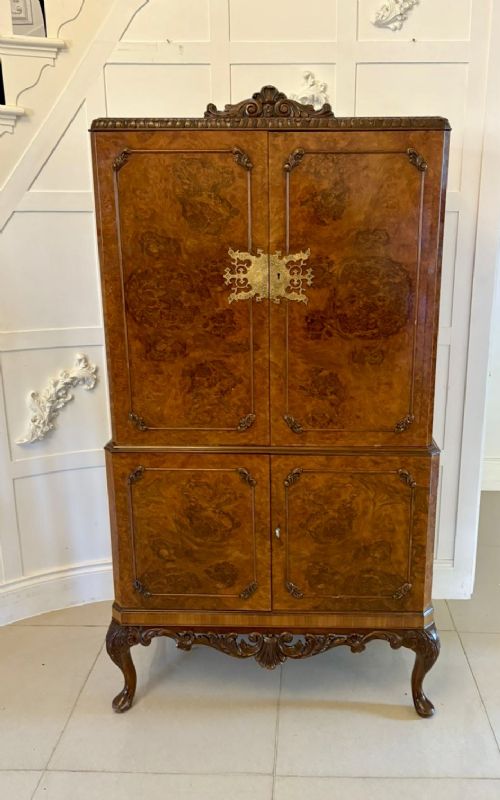

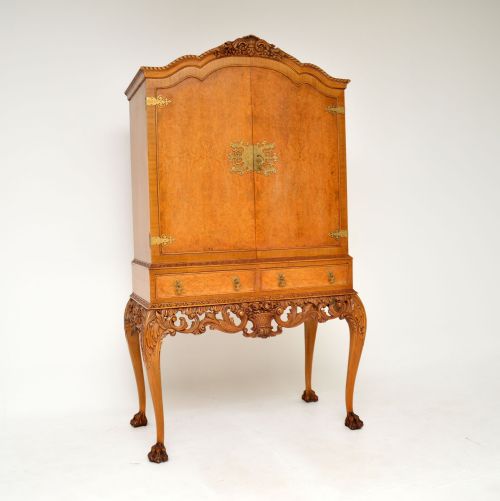
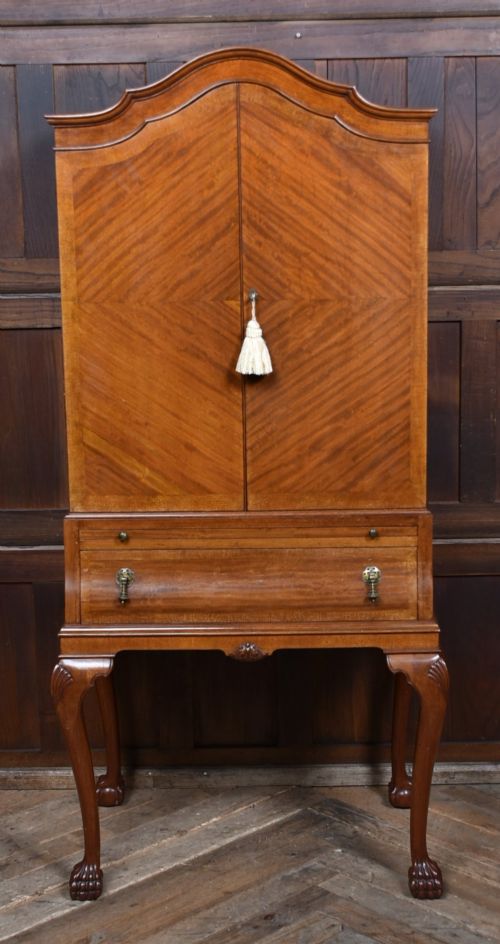
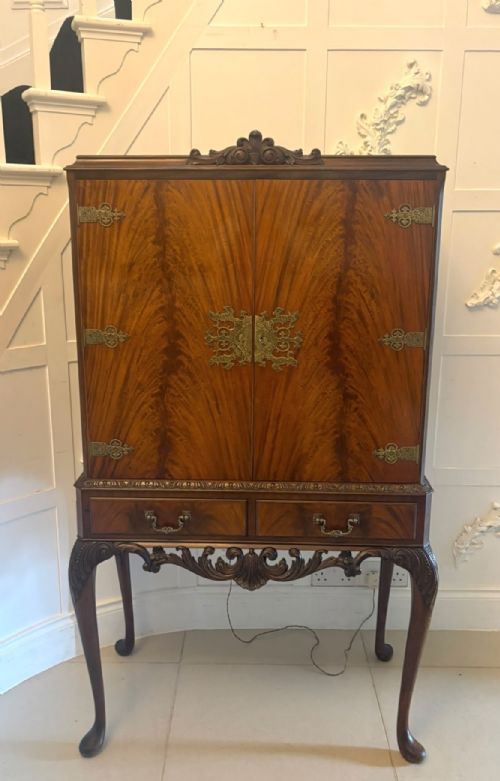


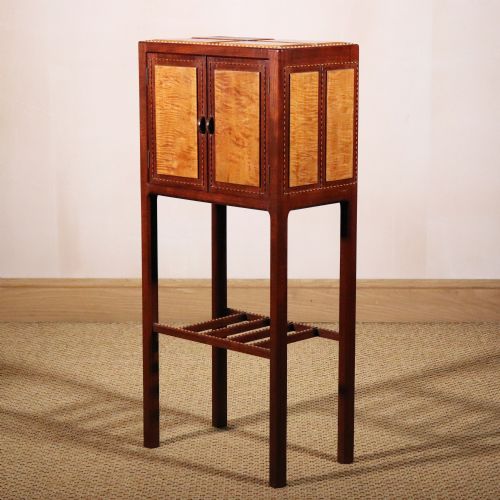


Standing Liquor Cupboard
A standing liquor cupboard is a dedicated piece for holding spirits and glassware, prized for keeping entertaining gear handsomely housed in the drawing room.
Standing Liquor Cupboard
When you search for a standing liquor cupboard, you enter a domain of tall storage built specifically to house bottles, decanters and glassware for entertaining. The selection leans heavily towards twentieth-century forms, with Art Deco burr walnut and mahogany cocktail cabinets dominating the current offerings.
Beyond the standard twentieth-century pieces, the range extends into earlier eras with Georgian cabinets on stand and Edwardian iterations in rich timbers. These taller formats keep everything at a convenient height, often combining a dedicated mixing surface with secure interior storage for your preferred spirits.
How they were made
Cabinet makers utilised choice timbers such as burr walnut, flame mahogany and mulberry wood to provide striking exterior grain patterns. These figured veneers were carefully matched across doors and panels to create symmetrical visual interest.
Internal fittings often involved brass hardware, sliding shelves and mirrored mixing trays designed to withstand regular use. Solid wood frames supported the weight of heavy glass decanters and bottles stored within.
The listings here span from the eighteenth century through to the 1960s, with burr walnut and mahogany being the most common timbers.
What varies in quality
The distinction between ordinary and exceptional work rests on the selection of veneers and the precision of the interior joinery. Finer examples display continuous grain matching across the front and thoughtful integration of specialist fittings like illuminated compartments.
Makers known for high-tier production incorporated superior cabinet work, evident in the smooth movement of sliding shelves and the heft of the brass mounts. Lesser pieces rely on simpler construction methods and plain timber surfaces without the decorative figure.
Hille·Epstein and Co Furniture·Waring & Gillows·Liberty's of London
The Standing Liquor Cupboard Glossary
- Burr walnut
- A timber harvested from the wart-like growths on walnut trees, yielding intricate, swirling grain patterns. It became the definitive choice for twentieth-century cocktail cabinets.
- Cabinet on stand
- A freestanding upper cabinet raised on a separate supporting base or legs. This form allows for a lighter overall silhouette while maintaining generous storage capacity.
- Cellarette
- A specialised storage chest for holding wine bottles and spirits, historically kept near the dining table. They appear in Georgian and later periods as secure repositories for collection bottles.
- Chinoiserie
- A decorative style employing imitation of Chinese artistic motifs, often rendered in lacquer and gilt. It turns a standard drinks cabinet into a colourful, highly ornamental focal point.
- Veneer
- A thin layer of highly figured wood glued over a secondary timber base. This technique allows makers to display costly grain patterns economically without structural compromise.
Standing Liquor Cupboard: Frequently Asked Questions
What is a standing liquor cupboard?
A standing liquor cupboard is a tall, dedicated piece of furniture designed to store bottles, decanters and glassware behind closed doors. They frequently include a pull-out slide or drop-down flap to serve drinks from.
Most examples found in this selection date from the twentieth century, particularly the Art Deco period, though earlier Georgian and Edwardian variants also appear.
How do I identify an Art Deco drinks cabinet?
Art Deco drinks cabinets typically feature bold geometric forms, symmetrical burr walnut or mahogany veneers, and streamlined brass hardware. They emphasise clean architectural lines rather than carved ornamentation.
Inside, you will often find mirrored backs, glass shelves, and specialised racks designed specifically for cocktail equipment and stemware.
Where were standing liquor cupboards placed?
These cupboards were traditionally housed in principal reception spaces like drawing rooms, dining rooms or studies where hosts entertained guests. Their tall format allowed them to sit against a wall while holding an extensive collection of bottles.
Because they combined display with secure storage, they served as both practical hospitality stations and decorative furniture items.
What is the difference between a cocktail cabinet and a cellarette?
A cocktail cabinet is a tall piece designed for mixing drinks, usually featuring a drop-front surface and specialised interior compartments for glasses and bottles. A cellarette is traditionally a lower chest or box intended primarily for holding wine and liquor bottles.
Both serve the purpose of housing spirits, but they occupy very different spatial footprints within a room.