


Standing Book Cabinet
A standing book cabinet offers vertical utility and timeless display, keeping volumes orderly while grounding a room.
Standing Book Cabinet
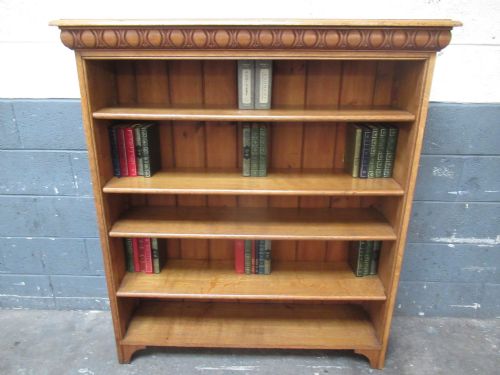
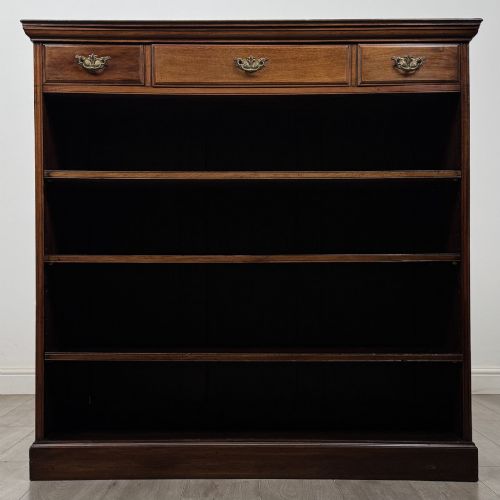
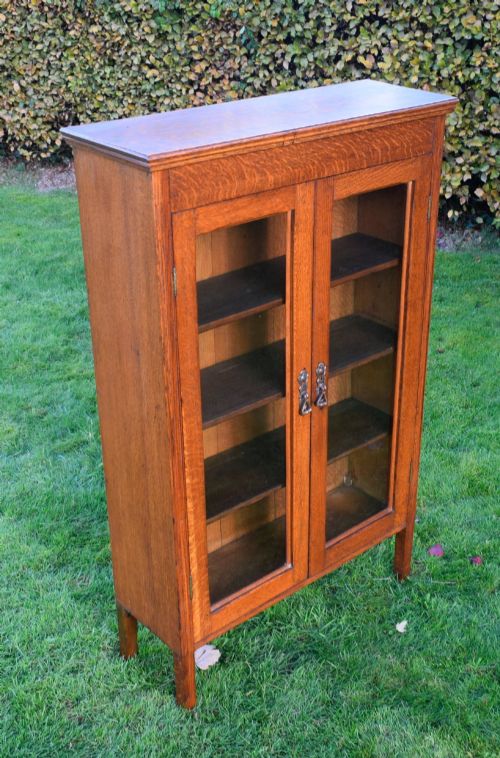
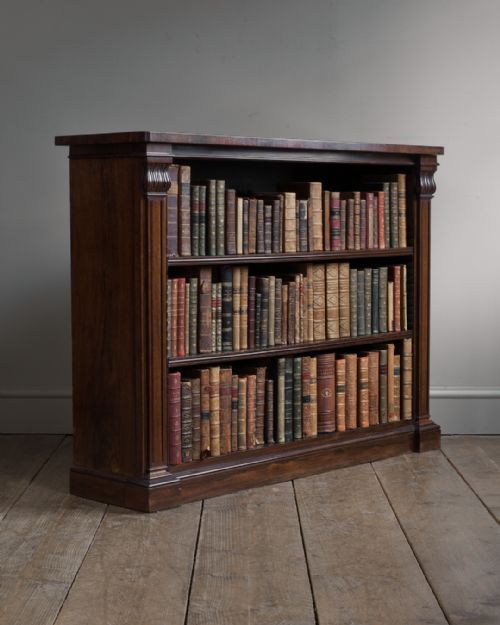
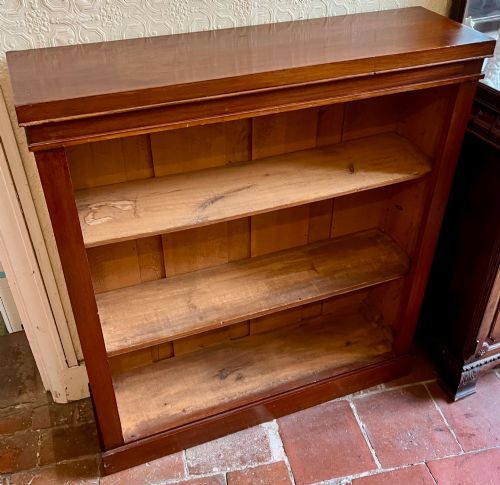
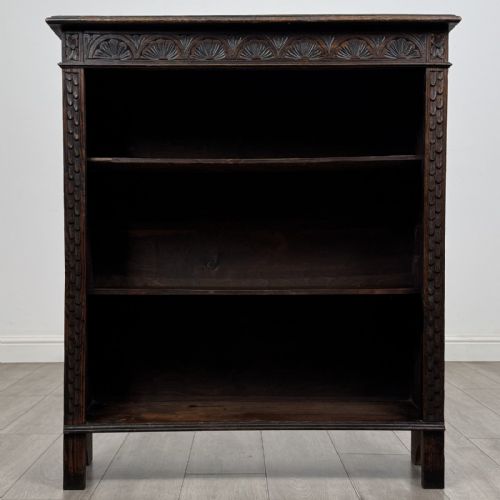
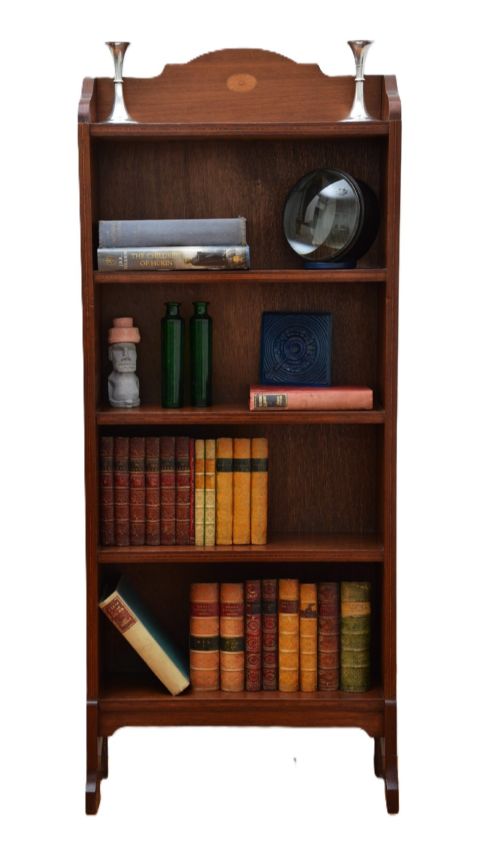
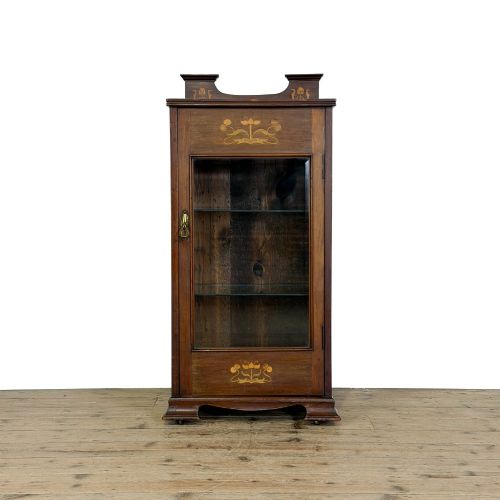
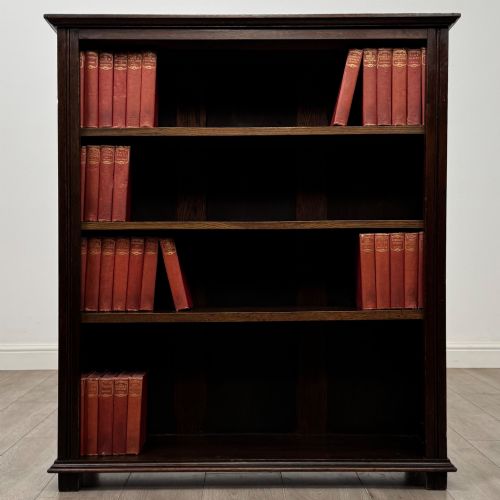
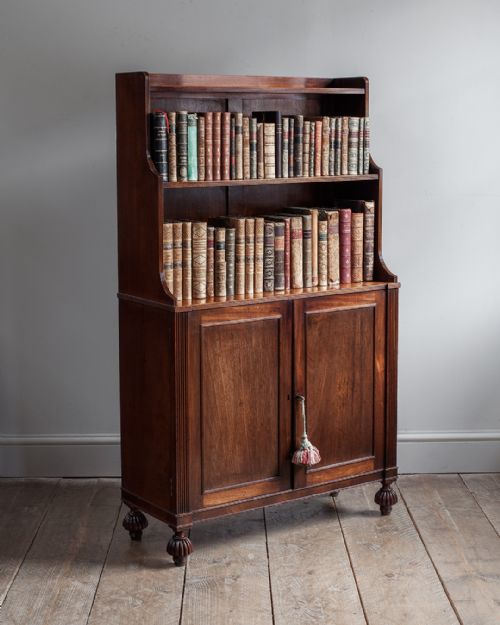
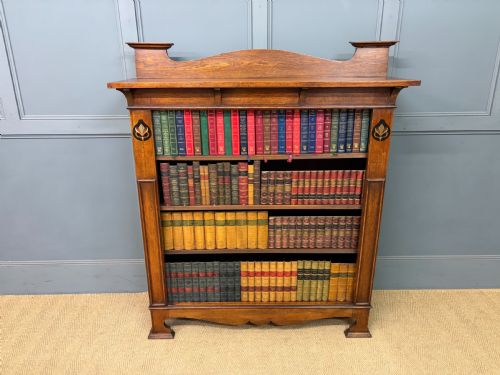
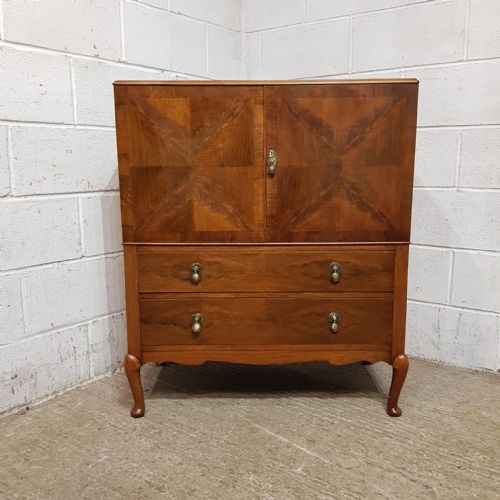
A standing book cabinet brings together open shelving and enclosed storage across periods from the eighteenth century to the twentieth. When searching for a standing book cabinet, buyers encounter open formats alongside glazed doors and raised galleries.
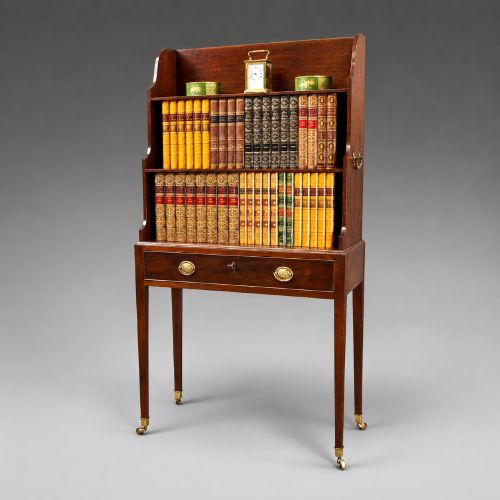
Examples on this page span Georgian, Regency, Victorian, and Edwardian eras, incorporating variations such as waterfall tiers and revolving designs. Woods range from mahogany and rosewood to oak, walnut, and pine.
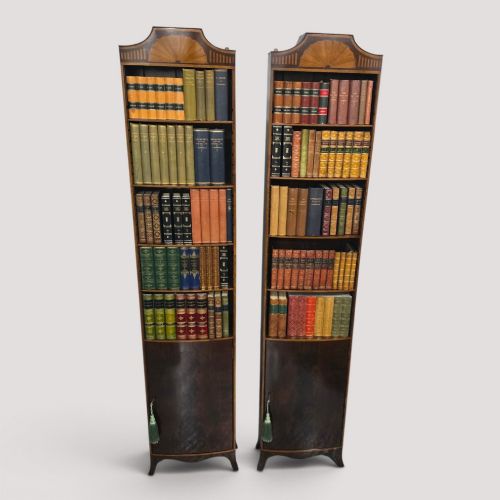
Proportions vary from slim, tall library shelving to low bedside units and broad break-front pieces. Many incorporate adjustable shelves, brass castors, and satinwood inlay.
Materials and Technique
Cabinet makers utilised dense hardwoods like mahogany, rosewood, and walnut for primary structures, often highlighting grain patterns through polished finishes and burr veneers. Oak and pine serve structural and domestic roles, sometimes featuring beaded edges or carved detailing.
Inlay work in satinwood adds contrasting linear detail to mahogany surfaces, whilst brass fittings provide functional hardware on castors and hinges. Glazed doors utilise timber framing to secure glass panes, protecting contents while maintaining visibility.
Standing Book Cabinet Retail Price Guide 2026
Typical asking prices for standing book cabinet among the pieces listed under this phrase on Sellingantiques today, from the lower quarter to the upper quarter. They describe what is for sale here now, not the wider market.
Listings feature oak, mahogany, walnut, rosewood, and satinwood inlay across Edwardian, Victorian, Regency, and Georgian periods.
Evaluating Quality
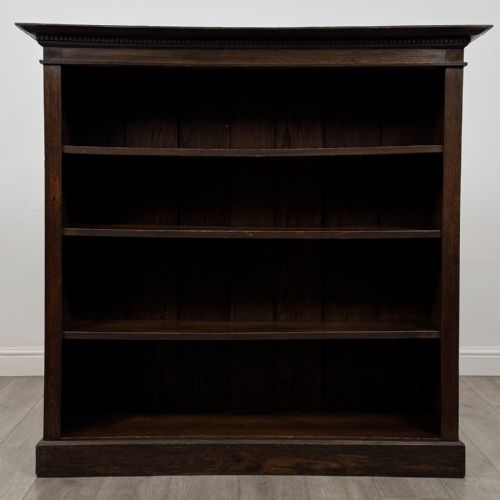
Quality rests upon the selection of timber, where figured veneers and rich grain orientation distinguish finer pieces from plain utility furniture. Cabinet making skill shows in the integration of architectural elements such as dentil cornices and carved friezes.
Hardware choice and mechanical adaptability influence standing quality, from smooth adjustable shelf ratchets to solid brass castors. The precision of joinery and inlay work marks the difference between standard production and workshop excellence.
Ercol
The Standing Book Cabinet Glossary
- Waterfall bookcase
- A standing unit featuring stepped, graduated open shelves diminishing in depth towards the top. This profile creates a cascade effect popular during the Regency and Victorian periods.
- Dentil cornice
- A decorative moulding featuring a series of small, rectangular blocks resembling teeth placed beneath the upper edge of a cabinet. It derives from classical architecture.
- Break-front
- A cabinet design where the central section projects forward from the flanking wings. This architectural arrangement adds depth and shadow to larger library pieces.
- Tallboy
- A tall storage unit combining a set of drawers with upper shelving or cupboard space. Pieces often feature figured walnut or mahogany construction.
- Revolving bookcase
- A compact, rotating standing unit designed for easy access to volumes from any angle. Versions appear in early twentieth-century oak.
Standing Book Cabinet: Frequently Asked Questions
What is a standing book cabinet?
A standing book cabinet is a floor-standing piece of furniture designed to hold and display books and papers. These pieces range from open shelving units to glazed cupboards and rotating designs.
They function as both storage and display, keeping library collections accessible while contributing to interior decoration through wood grain and architectural details.
How do I identify a Regency period bookcase?
Regency bookcases often feature clean classical proportions, dark timbers such as rosewood and mahogany, and sometimes stepped waterfall shelving.
Cabinet makers of this era favoured restrained classical lines, occasionally incorporating brass details and subtle inlay work rather than heavy carving.
Are shelves in antique bookcases adjustable?
Many antique bookcases feature adjustable shelves supported by wooden ratchets, peg systems, or metal pins. This adaptability allowed owners to alter shelf heights for varying book sizes.
Not all older units possess this feature, as simpler or earlier pieces frequently have fixed shelves secured directly into the cabinet walls.
How do I care for a wooden cabinet?
Wooden cabinets require placement away from direct heat sources and strong sunlight to prevent timber warping and veneer cracking. Regular dusting with a dry cloth maintains the finish.
Applying appropriate wax polishes periodically helps nourish hardwood surfaces like mahogany, walnut, and oak without building up sticky residues.