

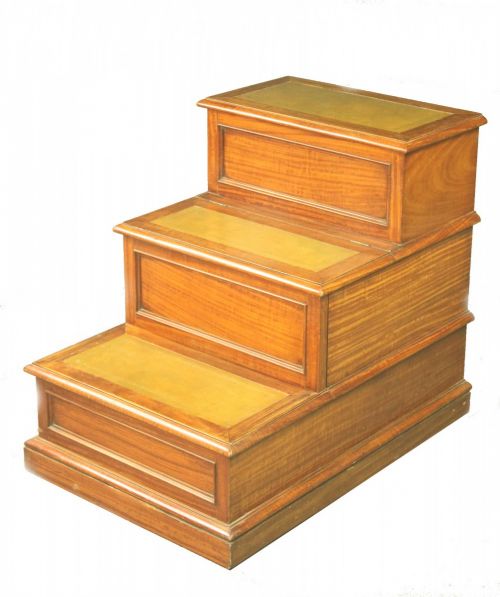


Stair Step Stool
These stair step stool pieces are practical elevations for high shelves and beds, built from mahogany, oak, and pine to bring function and form together.
Stair Step Stool
A stair step stool encompasses functional library steps, bed steps, and library ladders designed for reaching high shelves or tall beds. These pieces appear in forms ranging from compact three-tier flights to spiral designs and sturdy ladders.
The materials and styles span the eighteenth century through the twentieth century, with Victorian and Georgian pieces frequently seen alongside Edwardian and Regency examples. Mahogany and oak dominate the construction, often complemented by leather treads and brass details.
Buyers encounter variations including Gothic Revival pine structures and satinwood steps, reflecting the diverse domestic and institutional needs of their original settings. Each configuration serves the fundamental purpose of vertical access with distinct architectural character.
How they were made
Cabinetmakers constructed these frames primarily from dense hardwoods like mahogany and oak, supplemented by pine and satinwood for specific regional or stylistic requirements. Turned supports and structural joints provided the necessary load-bearing stability for daily climbs.
Treads frequently incorporated inset leather surfaces, adding grip and a refined visual texture to the steps. Brass hardware and fittings appeared on hinges and folding mechanisms, securing multi-tier flights during use.
Stair Step Stool Retail Price Guide 2026
Typical asking prices for stair step stool among the pieces listed under this phrase on Sellingantiques today, from the lower quarter to the upper quarter. They describe what is for sale here now, not the wider market.
Object forms include library ladders, bed steps, and spiral library steps with leather-topped treads.
What varies in quality
The distinction between standard utility items and superior examples rests in the selection of timbers and the sophistication of the joinery. Figured mahogany or quarter-sawn oak displays a richer grain that elevates the visual presence of the furniture.
Execution of turned supports and the integrity of leather treads indicate the level of craftsmanship invested in the piece. Well-balanced spiral mechanisms and robust structural frames retain their alignment and stability far better than utilitarian alternatives.
The Stair Step Stool Glossary
- Library steps
- Portable wooden stairs designed to reach elevated bookshelves in private libraries or studies. These pieces often fold into cabinets or tables when not in use.
- Bed steps
- Short flights of stairs formerly placed beside high historical beds to ease entry. They frequently incorporated storage compartments within the lower steps.
- Tread
- The horizontal surface of a step upon which the foot rests. In finer examples, these are surfaced with tooled leather.
- Spiral library steps
- A vertical configuration of steps winding around a central column to save floor space. Turned supports typically frame the ascending treads.
- Gothic Revival
- An architectural and decorative style drawing on medieval forms. Pieces from this aesthetic often feature pointed arches and heavy timber construction.
Stair Step Stool: Frequently Asked Questions
What are library steps used for today?
These pieces function well in modern homes for reaching high shelving units, tall bookcases, or upper cabinets. They combine practical utility with traditional cabinetmaking.
Beyond functional climbing, they serve as display surfaces for plants or decorative objects in living spaces.
How do I care for leather treads?
Leather surfaces on treads require gentle cleaning with a dry cloth to remove dust and debris. Avoid harsh chemical cleaners that dry out the material.
Periodic application of leather conditioner helps maintain flexibility and prevents cracking over time.
How can I tell Victorian steps apart from Georgian ones?
Georgian pieces often display cleaner classical proportions and fine mahogany timbers dating from the eighteenth century. Their construction prioritises understated elegance.
Victorian examples frequently encompass revival styles like Gothic architecture, utilising heavier oak or pine timbers with more elaborate turning.
Are library ladders stable enough for daily use?
Solid wood construction in oak or pine provides substantial load-bearing capacity for regular climbing tasks. The fixed angle and structural bracing ensure secure footing.
Proper placement against a secure anchor point remains essential for safe operation during retrieval tasks.