


Staffordshire Ceramic Mantel Dog
Staffordshire ceramic mantel dog figures bring Victorian hearths into focus through pairs of spaniels, greyhounds, and poodles.
Staffordshire Ceramic Mantel Dog
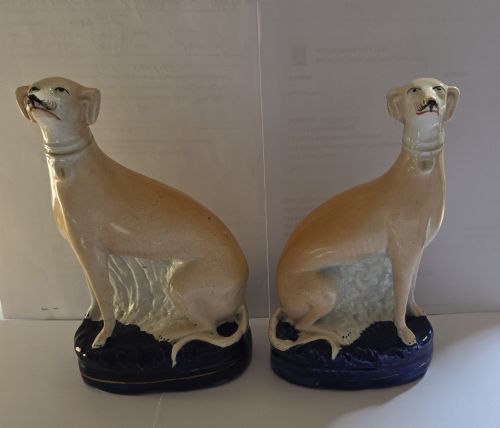
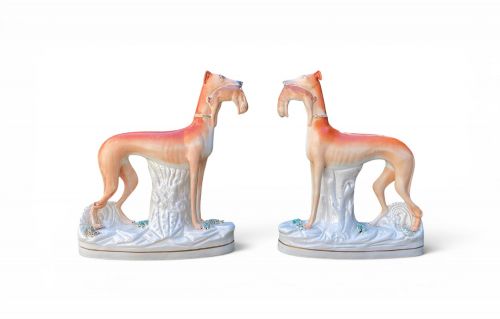
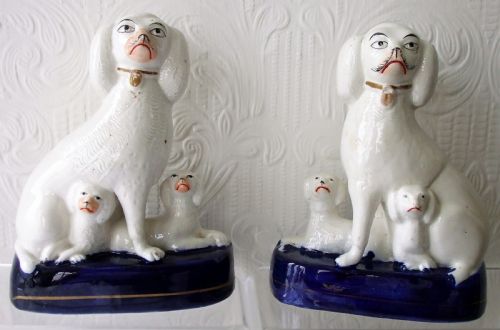
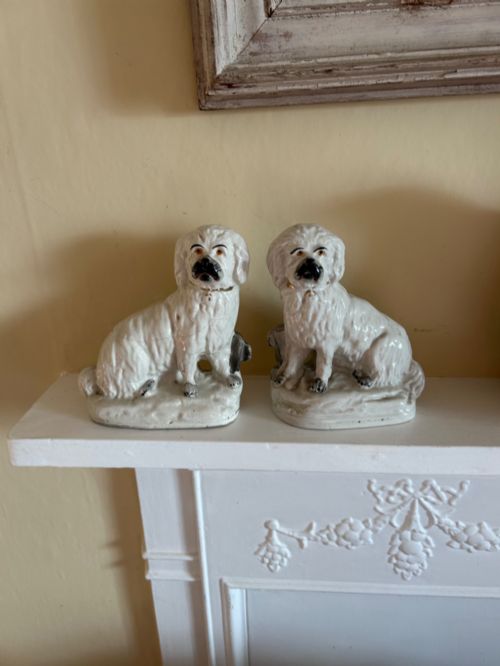
When you search for Staffordshire ceramic mantel dog, you are looking at nineteenth-century earthenware figures made primarily in pairs to sit upon fireplace mantels. The most common examples met on this page are Victorian spaniels, often called comforter spaniels, alongside greyhounds, whippets, poodles, and pugs.
These decorative ornaments span the Victorian era, with dates in the evidence clustering around the mid to late nineteenth century, specifically between eighteen-fifty and nineteen-hundred. They take various forms, including seated pairs, figures with puppies, spill vases, and clock groups, shaped by English traditional and Victorian country pottery styles.
How they were made
Potters shaped these earthenware figures using moulds before applying lead glazes to create smooth, protective surfaces. Enamel colours and gold leaf or gilt highlights were then added, sometimes enhanced by copper lustre finishes.
Many of the listed pieces incorporate distinct painted details, such as red and white markings or plain white coats accented with gilt. The manufacturing process relied on traditional pottery techniques suited to commercial production in nineteenth-century Staffordshire.
Some spaniels wear gilded chains and padlocks around their necks, keeping the hearth dogs securely fastened.
What varies in quality
Matched pairs and rarer breeds, such as Maltese terriers or hunting dogs with hares, typically represent the upper end of the range. The preservation of the original gilt highlights and the clarity of the glaze also separate finer decorative ornaments from simpler productions.
Thomas Parr·Royal Doulton·Beswick
The Staffordshire Ceramic Mantel Dog Glossary
- Earthenware
- Porous pottery fired at lower temperatures than stoneware or porcelain, forming the primary ceramic body for these figures.
- Lead glaze
- A shiny coating applied to pottery before firing that gives the surface its characteristic glossy finish and seals the earthenware body.
- Spill vase
- A hollow cylindrical holder attached to a figure, designed to hold wooden spills for lighting fires or candles.
- Copper lustre
- A metallic glaze technique producing a reflective, copper-coloured sheen across the ceramic surface.
- Comforter spaniel
- A popular nineteenth-century mantle dog model representing the pet spaniels kept by Queen Victoria.
Staffordshire Ceramic Mantel Dog: Frequently Asked Questions
What are Staffordshire mantel dogs?
Staffordshire mantel dogs are ceramic earthenware figures shaped as dogs, most frequently spaniels, greyhounds, and poodles. Potters made them in nineteenth-century England to decorate the mantelpiece above a fireplace.
They usually appear in matched pairs facing each other, reflecting domestic tastes of the Victorian period. Common variations include dogs with puppies, spill vases, and clock groups.
How were Staffordshire dogs displayed?
Victorian households placed these ceramic figures at either end of the mantelpiece above the fireplace hearth. Facing inward toward each other, they anchored the decorative arrangement of the room.
Pairs were standard, with one dog looking to the left and its partner looking to the right. This symmetrical placement suited the formal interior design styles of the nineteenth century.
How can I date Staffordshire dogs?
Dating relies on stylistic clues, materials, and manufacturing methods associated with nineteenth-century pottery production. The evidence points to pieces produced across the Victorian era, spanning from the eighteen-forties through to nineteen-hundred.
Characteristics such as copper lustre, gold leaf accents, and specific breed popularity help narrow the period. Later twentieth-century pieces, including those by makers like Royal Doulton or Beswick, reflect the enduring appeal of these Victorian designs.
What breeds are represented?
Spaniels represent the most numerous breed found in these listings, often referred to as comforter spaniels. Other canine forms include greyhounds, whippets, poodles, pugs, and Maltese terriers.
Some more elaborate groups also incorporate hunting dogs with hares or musicians with dogs. Each breed reflects the specific animal subjects popular among Victorian potters and pet owners.