
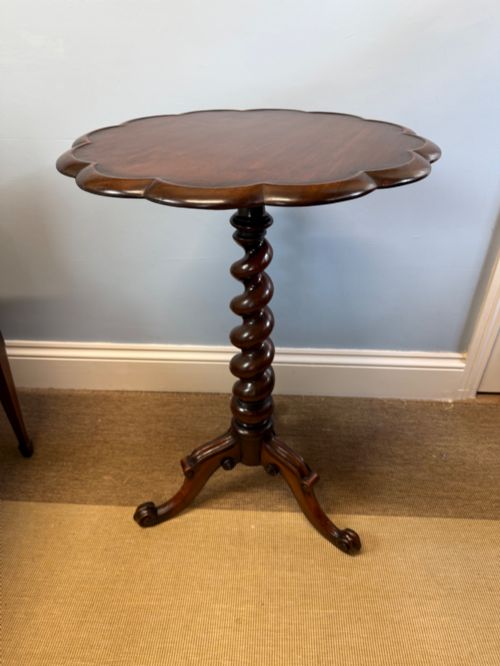
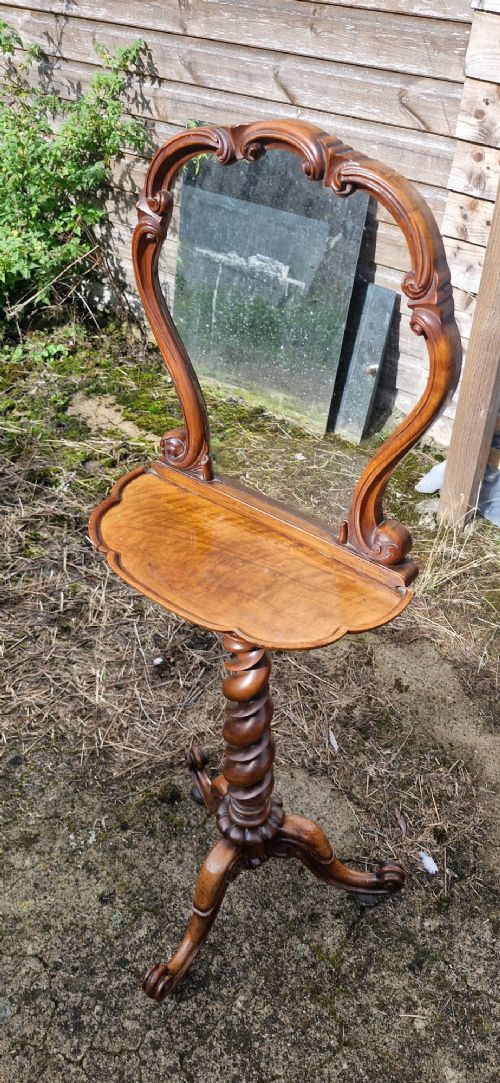
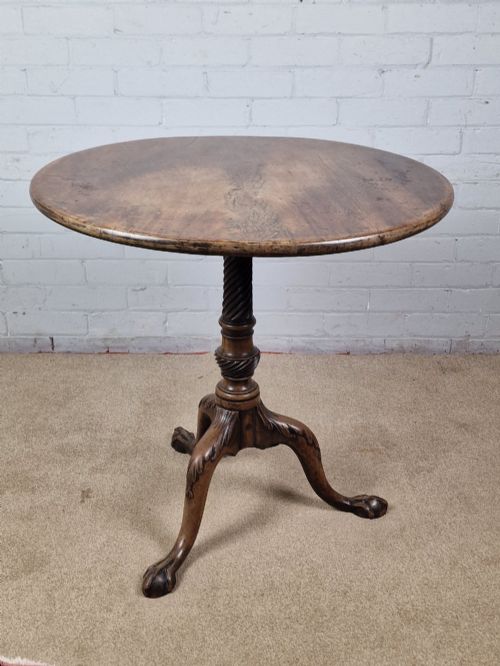
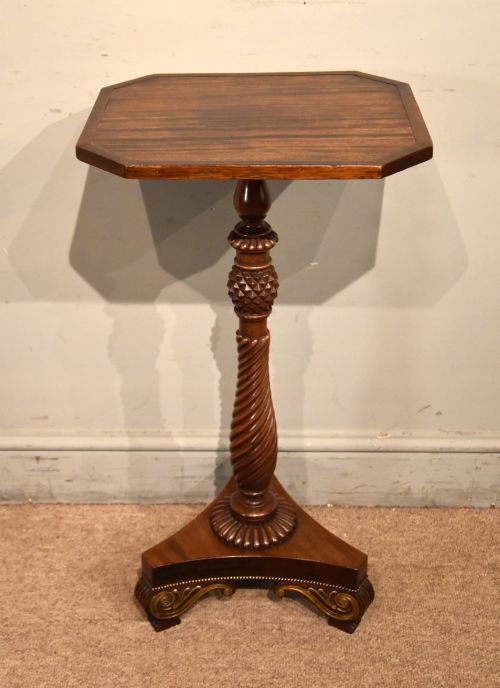


Spiral Carved Pedestal Table
A spiral carved pedestal table brings sculptural form and rich timber to a room, standing on a central column.
Spiral Carved Pedestal Table
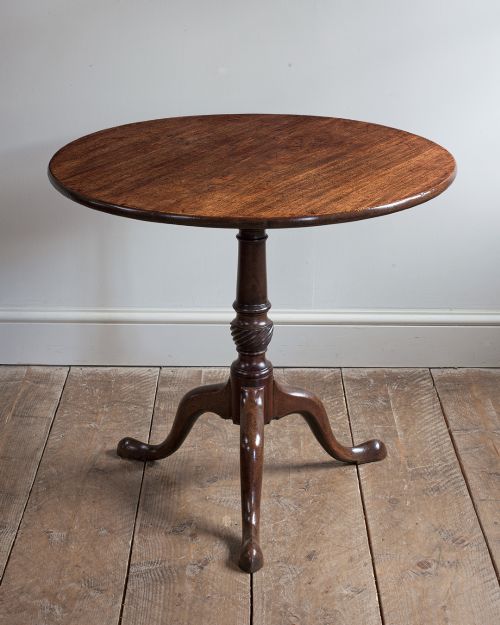
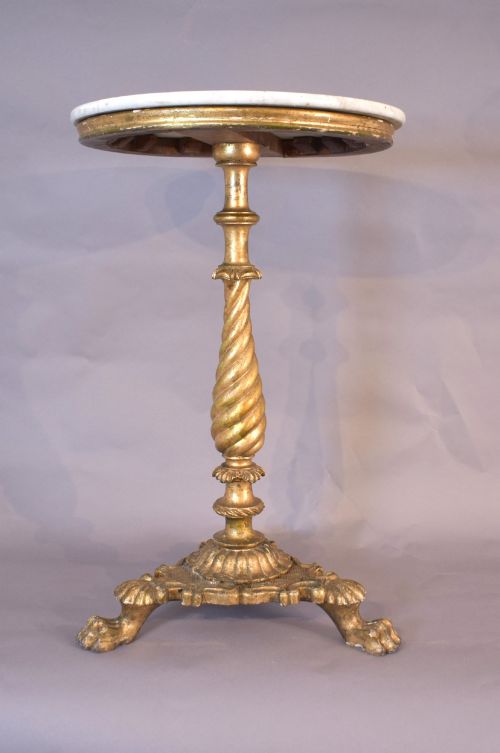
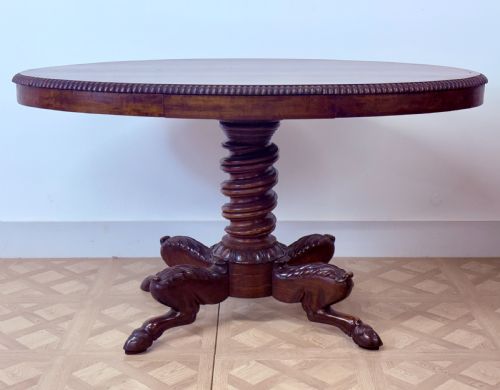
A spiral carved pedestal table is a piece of furniture built around a central column, frequently taking the form of occasional tables, side tables, and tilt-top tables. These pieces emerge across the 17th, 18th, and 19th centuries, carrying styles from Georgian and Regency to Victorian and Continental Baroque. You are most likely to encounter mahogany and walnut examples featuring tripod bases or circular tops.
The practical uses of these objects vary widely across the periods, serving as wine tables, lamp stands, kettle stands, and torchiere stands. Some variants offer clever domestic functions, including tilt-top mechanisms, secret drawers, and fitted interiors for tea or spirits. Their compact footprints make them versatile for placing beside seating or within reception spaces.
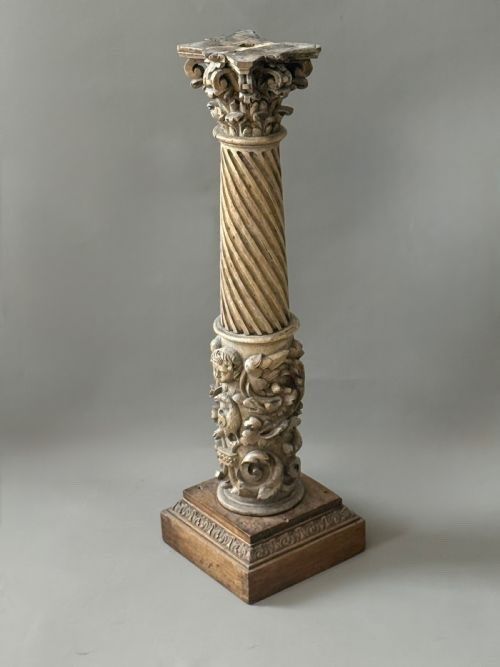
Makers shaped these supports from sturdy timbers, occasionally enriching the surfaces with boxwood stringing, paint, or gesso. The twist or spiral carved stem remains a defining feature, catching the light and drawing the eye downward to the feet. They span simple domestic furnishings to elaborate display surfaces.
How they were made
Cabinet makers constructed these tables primarily from solid timbers like mahogany and walnut, frequently utilising burr walnut for decorative tops. Turning lathes shaped the central pillars into distinct twists and spirals, while hand-carving defined the details on the tripod legs and stems. Boxwood stringing provided fine linear contrast on select surfaces.
Joinery methods varied according to the function, incorporating tilt-top catches, drop leaves, and stable tripod joints to bear the weight above. Artisans applied finishes that protected the wood while highlighting the grain figures, particularly on burr maple and mahogany examples.
The documented forms span the 17th, 18th, and 19th centuries, including specific dates like 1800, 1820, 1860, and 1930.
What varies in quality
The distinction between standard and superior pieces rests on the crispness of the spiral carving and the selection of timber figures. Richly figured burr walnut and carefully matched mahogany veneers elevate the visual weight of the surface.
Proportion and stability dictate the merit of a pedestal table, ensuring the central column and tripod base balance the top harmoniously. Superior examples display refined turning work and careful jointing that withstands daily use without losing rigidity.
The Spiral Carved Pedestal Table Glossary
- Pedestal table
- A table supported by a central pillar rather than four corner legs. This construction allows for generous legroom and a compact footprint.
- Tilt top table
- A table with a hinged top that folds flat when not in use. This mechanism allowed the piece to be stored against a wall to save floor space.
- Tripod base
- A three-legged support structure commonly found beneath pedestal tables. It ensures stability on uneven floors.
- Torchiere stand
- A tall, slender pedestal stand designed to hold a light source or decorative object. These vertical stands emphasise height and carved detail.
- Teapoy
- A small box or table designed to hold tea canisters and mixing bowls. They often incorporate compartments and rest on a central pillar.
- Boxwood stringing
- Inlaid lines of pale boxwood set into dark timber veneers. This technique creates geometric borders and outlines.
Spiral Carved Pedestal Table: Frequently Asked Questions
What is a spiral carved pedestal table used for?
These tables function primarily as occasional surfaces for lamps, drinks, or decorative objects. Their compact nature allows them to sit easily beside chairs or in corners.
Historically, specific variants served dedicated roles such as holding kettles, displaying silver, or containing tea equipment. Their versatile forms make them adaptable to contemporary sitting rooms and reception spaces.
How do I tell a Regency table from a Victorian one?
Regency pieces often display clean classical lines inspired by ancient Roman and Greek designs, frequently utilising dense mahogany with subtle brass or boxwood details. They typically date from the early 19th century.
Victorian examples span a broader range of revival styles and tend to feature heavier proportions, darker finishes, or more elaborate surface carving. Comparing the timber selection and leg profiles helps clarify the period of manufacture.
What does tilt-top mean?
A tilt-top mechanism allows the top of the table to pivot from horizontal to vertical via a hinged block beneath. This clever engineering allowed owners to tuck the furniture out of the way against a wall when the room was needed for other activities.
In daily use, the top locks securely into place with a small catch or brass pin. Surviving mechanisms demonstrate the practical ingenuity of period cabinet makers.
Where should I place a pedestal table at home?
A pedestal table fits naturally beside a sofa, armchair, or in an empty hallway corner where a surface is needed without blocking traffic. Because the central column eliminates corner legs, seating people around them or placing them in tight spots is straightforward.
Their decorative timber and carved stems also allow them to stand alone as display pieces for lamps or plants. Selecting a spot with good natural light helps highlight the wood grain and spiral carving.