

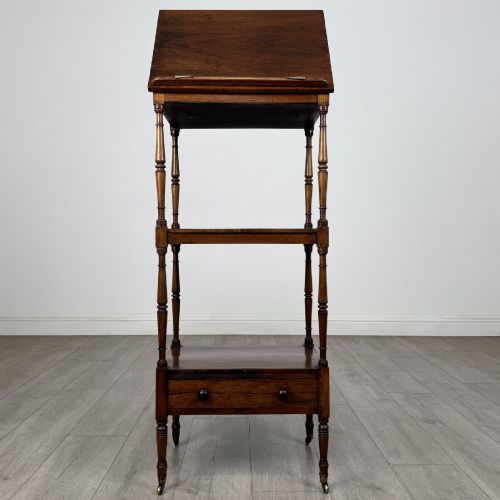
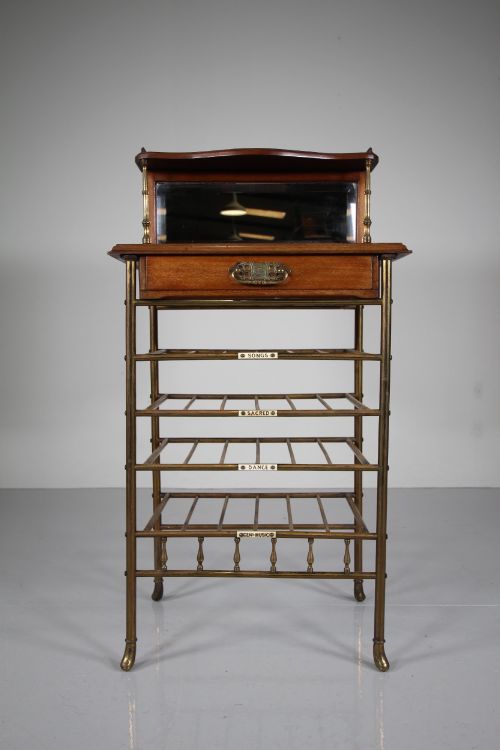

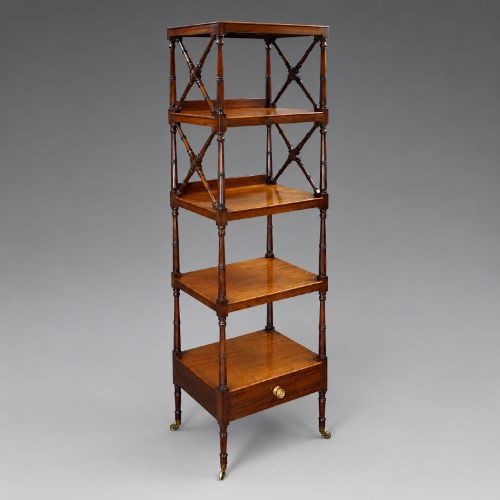
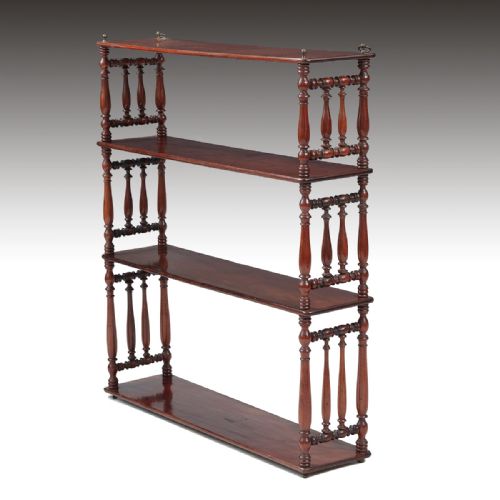



Spindle Shelf Unit
These spindle shelf unit pieces offer practical open display, bringing timber warmth and architectural tiers to your walls and floors.
Spindle Shelf Unit
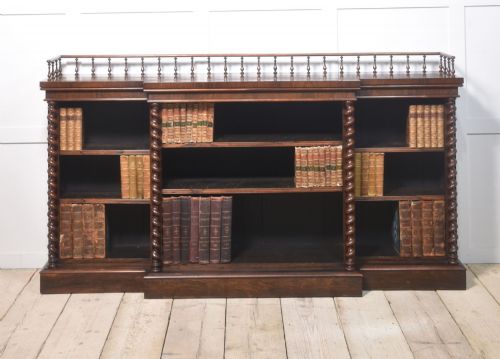
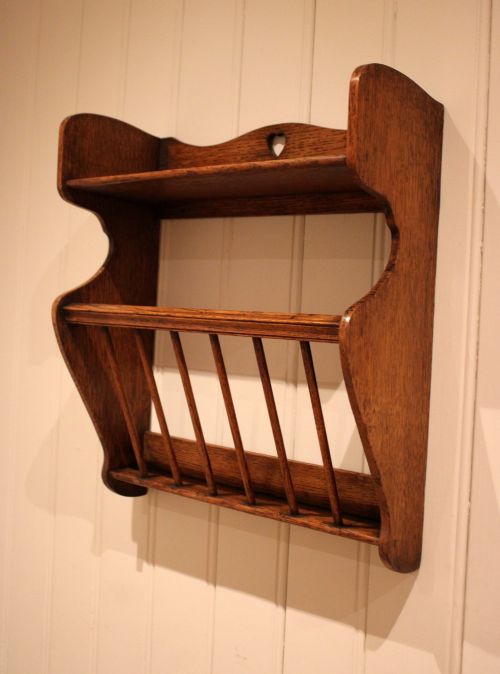
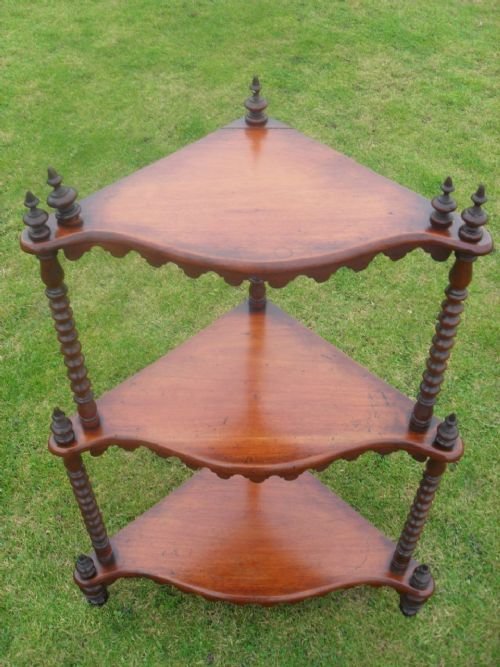
A spindle shelf unit combines upright supports with open tiers, providing functional storage for books, sheet music, and display objects. When you search for a spindle shelf unit, you encounter diverse forms ranging from wall-hanging shelves to large floor-standing whatnots and etageres.
The pieces span multiple periods from the Georgian and Regency eras through the Victorian period and into the turn of the twentieth century. Mahogany, walnut, and cherry wood appear frequently alongside occasional painted wood and satin birch.
Makers and designers of these tiered pieces utilised varying configurations, incorporating cupboards, mirror backs, and magazine racks into the framework. Floor-standing whatnots often feature multiple tiers, while wall shelves maximise vertical space in smaller rooms.
Materials and construction
Cabinet makers constructed these pieces primarily in dense hardwoods like mahogany, walnut, and rosewood, ensuring sufficient strength to support multiple tiers of books and ornaments. Oak and cherry wood also provide sturdy foundations for both wall-mounted and floor-standing variants.
Turned wooden supports and delicate spindle galleries define the structural detailing, executed by hand with traditional joinery. Glass panels, brass fittings, and mirrored backs occasionally supplement the timber framework.
Spindle Shelf Unit Retail Price Guide 2026
Typical asking prices for spindle shelf unit among the pieces listed under this phrase on Sellingantiques today, from the lower quarter to the upper quarter. They describe what is for sale here now, not the wider market.
One Victorian whatnot thoughtfully includes a built-in cellarette, proving that nineteenth-century collectors liked their reading material accompanied by convenient refreshment.
What separates the best examples
Timber selection dictates the initial tier of quality, with richly figured mahogany, burr walnut, and rosewood marking superior craftsmanship. Plain timbers finished with careful polishing sit alongside painted surfaces rendered in period tones.
Structural complexity and joinery integrity separate standard utility pieces from exceptional examples. Items incorporating serpentine fronts, integrated cupboards, or elaborate turned galleries demonstrate greater ambition by the maker.
Lambs of Manchester
The Spindle Shelf Unit Glossary
- Whatnot
- A piece of furniture consisting of a set of open shelves for displaying small objects. These tiered stands date from the eighteenth century onwards.
- Etagere
- A piece of furniture with a set of open shelves for displaying ornaments. The term originates from French cabinet making.
- Serpentine front
- A shelf or cabinet front curving outward at the centre and inward at the sides. This shape demands precise woodworking skill.
- Cellarette
- A cabinet or compartment used for holding bottles. Some larger floor-standing pieces incorporate this storage feature.
Spindle Shelf Unit: Frequently Asked Questions
What is a whatnot?
A whatnot is an open-shelved piece of furniture designed for displaying ornaments, books, and small personal items.
First appearing in the eighteenth century, these tiered units became highly popular during the Victorian era in various woods.
Where should I place wall shelves?
Wall-hanging shelves suit hallways, kitchens, and living rooms where floor space remains limited.
Fixing them securely to solid walls ensures they safely hold books, ceramics, and display collections.
How do I care for mahogany?
Mahogany furniture requires dusting with a soft, dry cloth and protection from direct sunlight and extreme temperature changes.
Occasional application of appropriate furniture wax helps maintain the timber's natural lustre.
What defines an etagere?
An etagere is an open shelf unit featuring multiple tiers supported by slender columns or turned uprights.
Originally developed in France, these pieces function primarily for display rather than heavy book storage.