

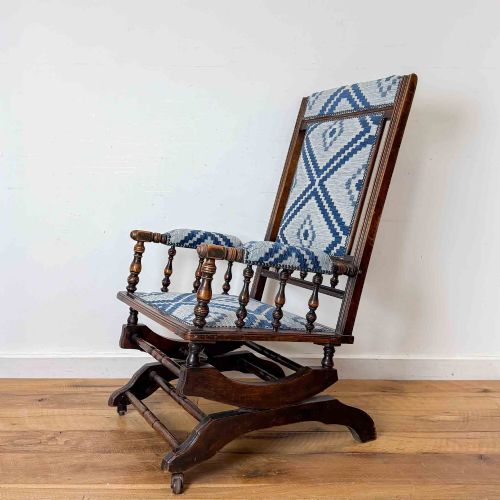
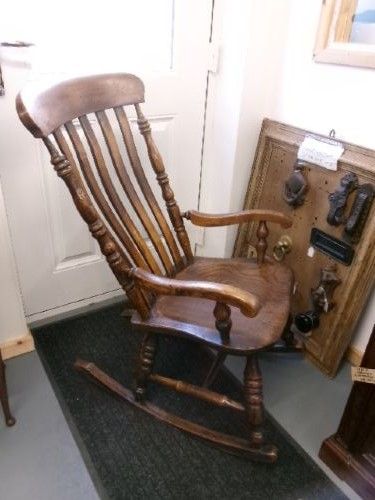
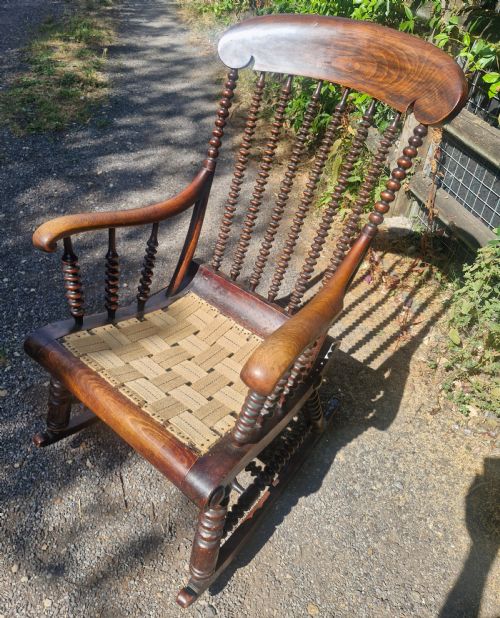
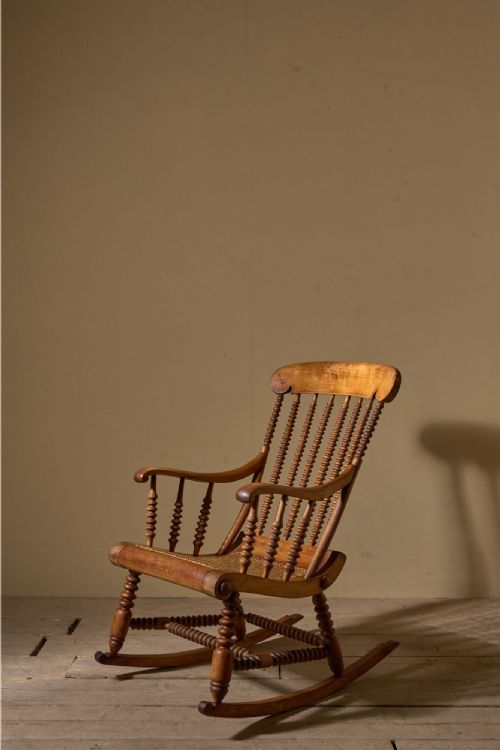
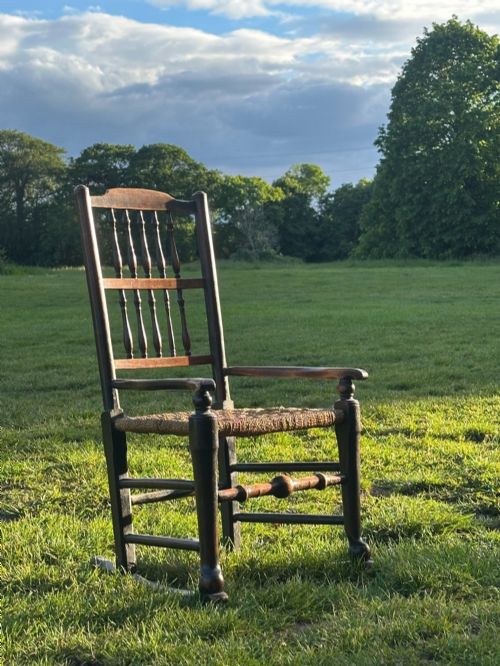
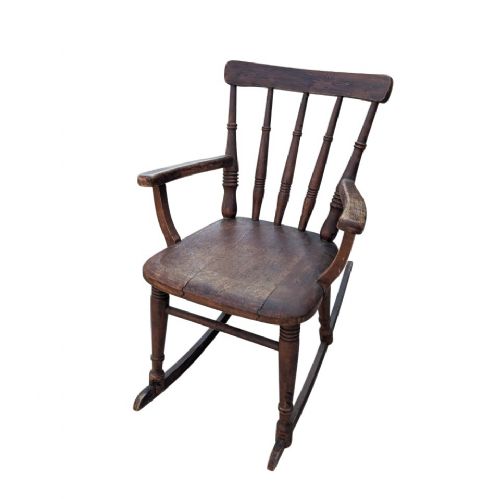


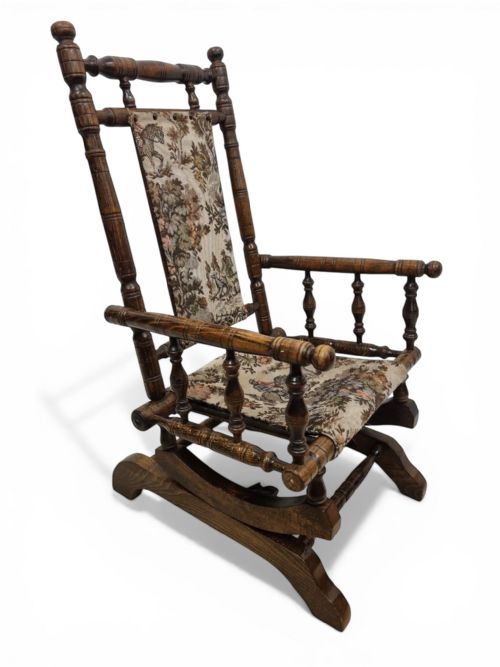


Spindle Rocking Chair
These spindle rocking chair examples span country houses and farmhouses, offering timeless motion and sturdy vernacular charm for the fireside.
Spindle Rocking Chair
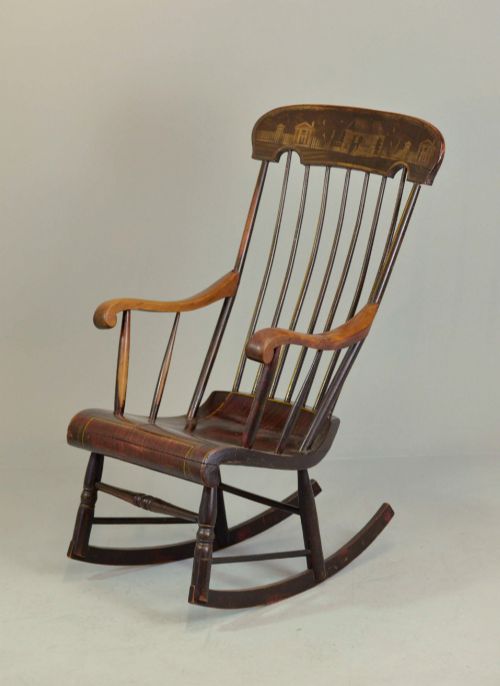
A spindle rocking chair brings together traditional seating forms and curved rockers designed for gentle motion. These pieces frequently emerge from regional English, Scandinavian, and American country traditions.
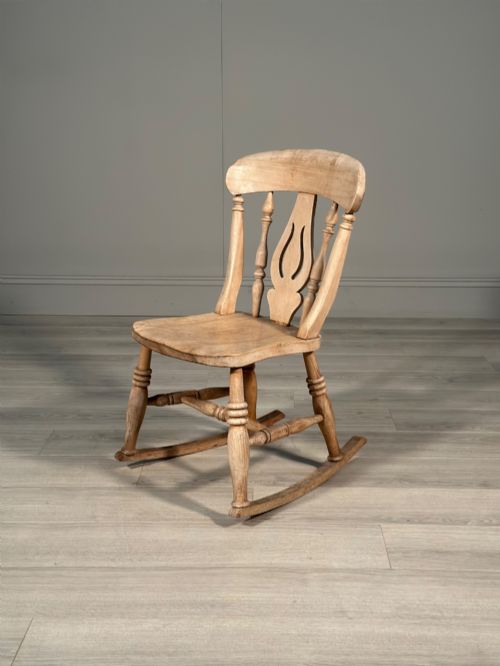
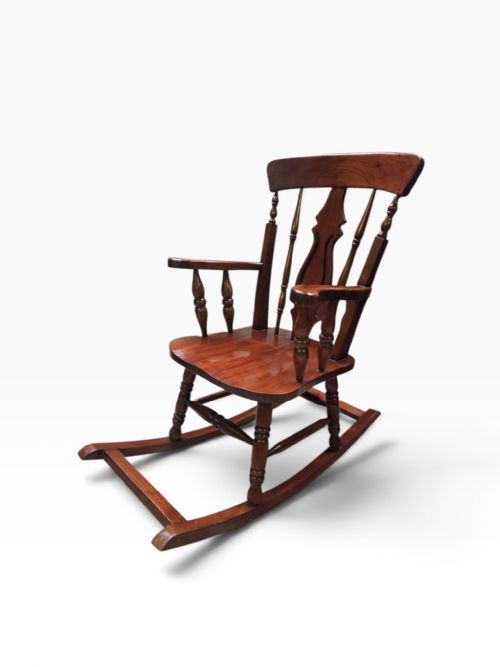
The most common examples encountered here are Victorian and nineteenth-century country armchairs, often featuring spindle backs and rush, cane, or wooden seats. Makers built these for everyday utility in farmhouses and nurseries rather than formal parlours.
Regional variations span from Lancashire and Cheshire elm armchairs to Scottish vernacular bobbin designs and painted Swedish children's seats.
How they were made
Craftsmen built these frames using robust native timbers such as oak, beech, elm, ash, and fruitwood, often combining woods within a single chair to balance strength and flexibility. Turned components like spindles and bobbin turnings required lathe work.
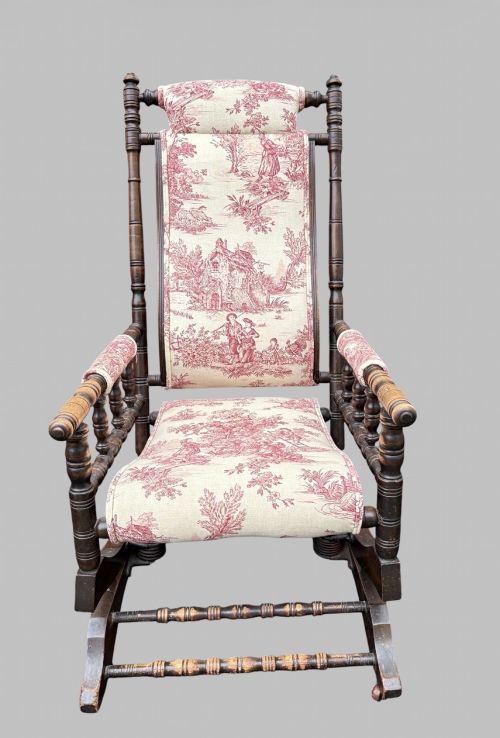
Seats incorporated solid moulded wood, woven rush, cane, sea grass, leather, or tapestry upholstery. Surfaces frequently survive in original paint or polished timber finishes.
Spindle Rocking Chair Retail Price Guide 2026
Typical asking prices for spindle rocking chair among the pieces listed under this phrase on Sellingantiques today, from the lower quarter to the upper quarter. They describe what is for sale here now, not the wider market.
Listings feature oak, beech, elm, ash, and fruitwood alongside rush, cane, and painted finishes across nineteenth-century and Victorian periods.
What varies in quality
Quality rests upon the integrity of the turned spindles, the balance of the rocker rails, and the harmony of regional proportions. A well-balanced frame distributes weight evenly across the curved rockers without listing.
The survival of original surfaces, whether scraped paint or aged timber patina, elevates a chair's character. Finer examples display meticulous lathe turning and carefully sculpted seats that enhance comfort.
The Spindle Rocking Chair Glossary
- Spindle
- A slender, turned wooden rod used to form the open backrest or sides of a chair. These members provide structural support while keeping the frame visually light.
- Bobbin turning
- A type of lathe work characterised by a series of rounded, spool-like shapes carved along the length of a wooden stretcher or upright. This decorative technique appears frequently on nineteenth-century vernacular seating.
- Windsor
- A traditional wooden chair style featuring a solid saddle-shaped seat into which the legs and back spindles are directly wedged and tenoned. These pieces often incorporate curved armbows and high spindle backs.
- Vernacular
- Objects designed and built by local tradesmen for practical everyday use rather than following strict high-style architectural rules. These regional pieces reflect local material availability and domestic traditions.
- Rocker
- The curved wooden rails attached to the bottom of the chair legs to allow forward and backward movement. Their gentle arc determines the smoothness of the motion.
Spindle Rocking Chair: Frequently Asked Questions
What is a spindle rocking chair?
A spindle rocking chair is a traditional wooden armchair supported by curved rockers, featuring an open backrest made of turned wooden rods or spindles. These chairs emerged from regional country workshops for domestic comfort.
They combine practical seating with gentle motion, making them popular additions to nurseries, bedrooms, and fireside corners.
Were these chairs used outdoors?
These seating pieces were primarily designed for indoor domestic use in farmhouses, country houses, and cottages. Their sturdy timber construction suited busy family spaces.
Moisture and fluctuating temperatures outdoors can damage the wooden joints and woven rush or cane seats, so they belong indoors.
What woods were used for these chairs?
Cabinetmakers and local joiners utilised native hardwoods and resilient timbers available in their region. Common choices include oak, beech, elm, ash, fruitwood, and occasional mahogany.
Different woods were frequently combined within a single frame, using flexible timbers for spindles and denser woods for seats and legs.