





Spelter Figural Art
Spelter figural art brings sculptural presence into domestic interiors through figures mounted on stone bases.
Spelter Figural Art
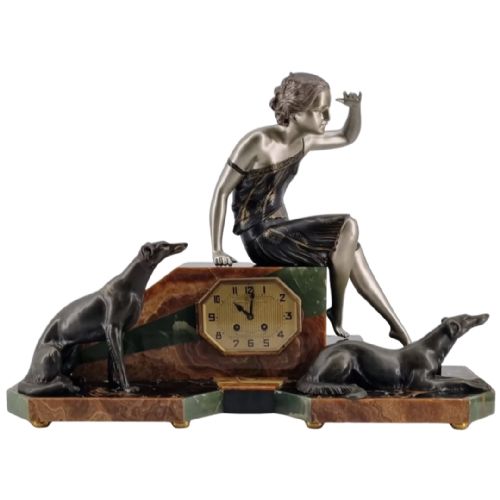
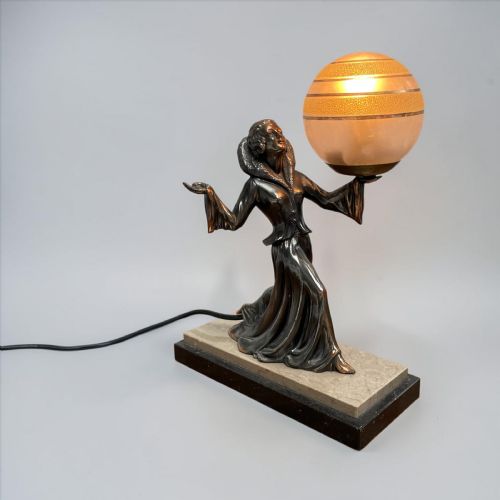
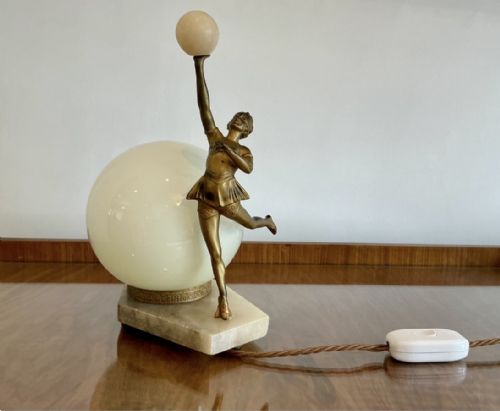
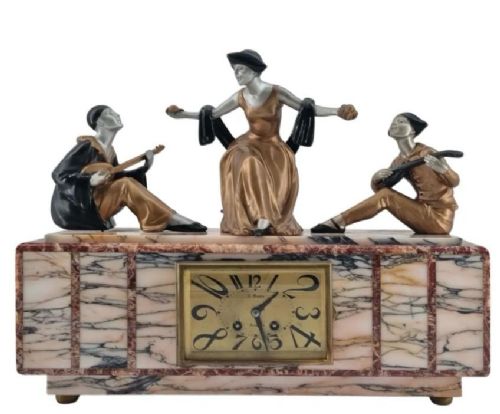
Spelter figural art encompasses decorative figures, lighting, and timepieces created from zinc alloy rather than heavier casting metals. When you examine spelter figural art on this page, you encounter domestic objects ranging from table lamps and mantel clocks to free-standing sculptures and candelabra.
The pieces appearing most frequently originate from the Art Deco period, typically featuring stylised female dancers, ladies, and allegorical groups. Alongside these twentieth-century items, nineteenth-century French examples reflect the earlier Belle Epoque and Beaux-Arts aesthetics.
Makers mount these metal figures upon substantial bases of marble, onyx, and alabaster to provide stability and visual contrast. These compositions function simultaneously as decorative sculpture and practical household furnishings.
How they were made
Foundries cast these pieces using a zinc-based alloy, commonly known as spelter, which melts at lower temperatures than bronze. Workers then applied patination, silvering, or paint to simulate the appearance of more expensive metals.
The finished metal figures receive mounting onto carved stone plinths formed from marble, onyx, or alabaster. Many designs incorporate secondary materials such as glass shades for lamps or brass elements within clock movements and mirrors.
Spelter Figural Art Retail Price Guide 2026
Typical asking prices for spelter figural art among the pieces listed under this phrase on Sellingantiques today, from the lower quarter to the upper quarter. They describe what is for sale here now, not the wider market.
Nineteenth-century French ateliers often paired patinated metal sculptures with functional clock movements and candelabra arms.
What varies in quality
The refinement of the casting and the crispness of the surface detail distinguish superior examples from ordinary production. Better pieces retain intricate hand-chasing on the metal and sophisticated patination rather than simple flat paint.
The choice and execution of the supporting base also indicate the grade of the piece, with dense, finely polished marble and onyx elevating the overall composition.
Uriano·Sega·L & F Moreau·Auguste Moreau·Francois Moreau
The Spelter Figural Art Glossary
- Spelter
- A zinc alloy utilised in European foundries as an economical alternative to bronze for decorative sculptures and lamps. It accepts patination and surface finishes readily.
- Patination
- The surface treatment or chemical colouring applied to the metal to create aged tones and visual depth. It ranges from dark brown patinas to silvered finishes.
- Art Deco
- A design style prominent during the 1920s and 1930s characterised by streamlined geometric forms, stylised figures, and modern materials. It dominates the later pieces in this category.
- Art Nouveau
- An ornamental style prevalent around 1900 featuring organic lines, natural motifs, and flowing floral elements. It appears frequently on nineteenth-century French lamps and clocks.
- Onyx
- A banded variety of chalcedony employed widely for the heavy plinths and bases supporting figural metalwork. It provides a polished, decorative foundation for lamps and clocks.
Spelter Figural Art: Frequently Asked Questions
What is spelter metal?
Spelter is a zinc-based alloy that European foundries poured into moulds to create decorative figures, clocks, and lamps. It offered a lighter and more affordable alternative to bronze.
Foundries often treated the surface with patination, silvering, or paint to achieve the desired decorative finish before mounting the figure on a stone base.
How do I clean spelter?
Dust these pieces gently with a soft, dry cloth to prevent accumulation in the crevices of the casting. Avoid liquid cleaners, abrasives, or polishes that can strip the original patination or paint.
Keep the items away from excessive moisture and direct sunlight to preserve the metal finish and the polished stone base.
When were these made?
The pieces span from the nineteenth century through the Edwardian era and into the 1920s and 1930s. The majority of the items date from the Art Deco period.
Earlier nineteenth-century pieces typically reflect French Belle Epoque and Beaux-Arts styles, while later items embrace streamlined Art Deco aesthetics.
Are these pieces signed?
Many sculptures, lamps, and clock figures carry signatures or foundry marks inscribed directly into the metal base. Names such as Moreau or Sega frequently appear on these works.
Signatures indicate the sculptor or the designing studio responsible for the original model used in the foundry casting process.