



Solid Wood Cabinet
A solid wood cabinet brings honest construction and lasting grain into a room, offering practical storage through centuries of craftsmanship.
Solid Wood Cabinet
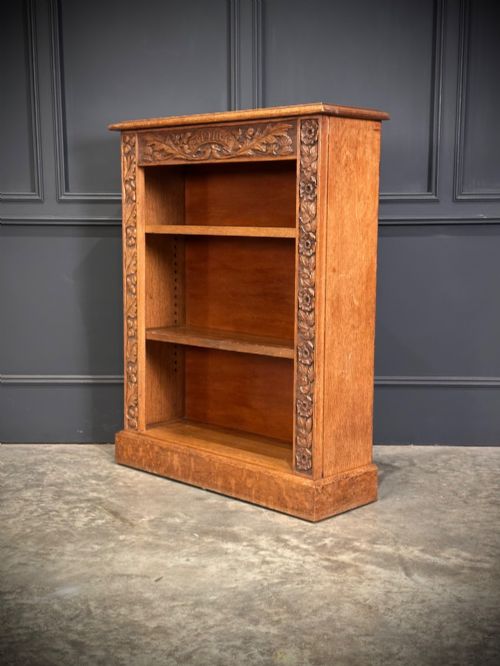
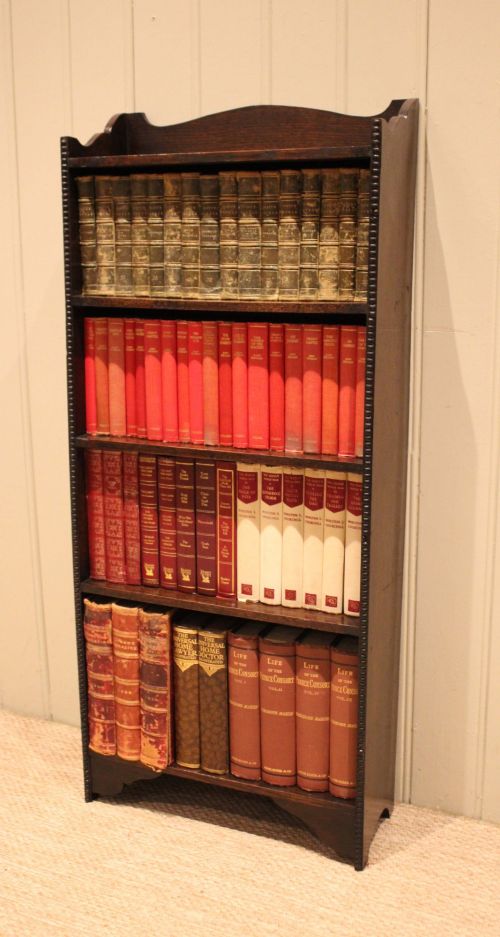
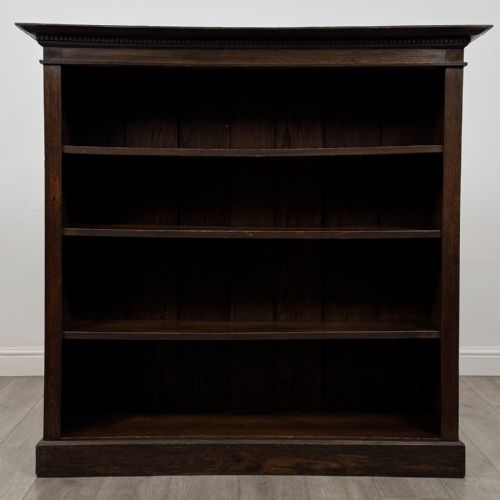
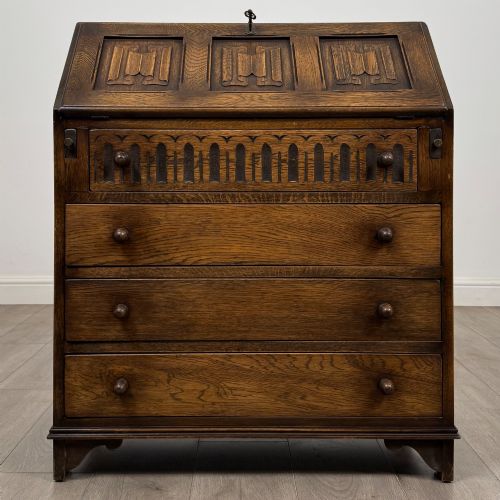
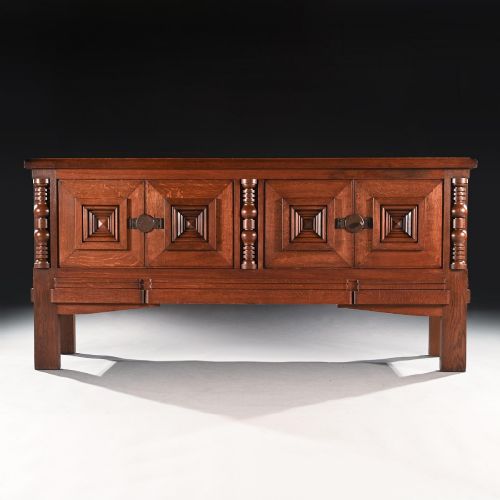
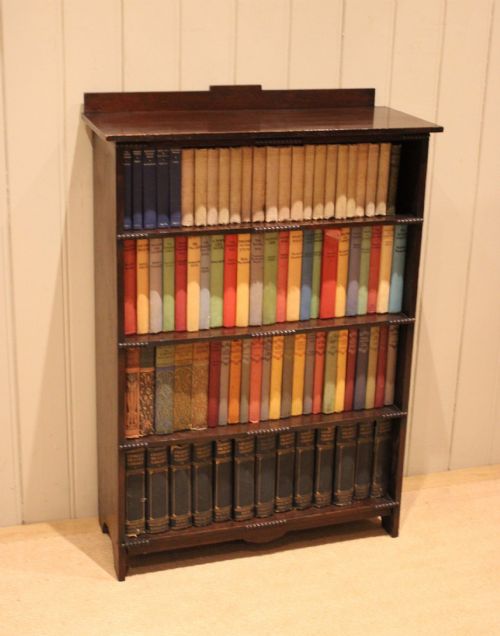
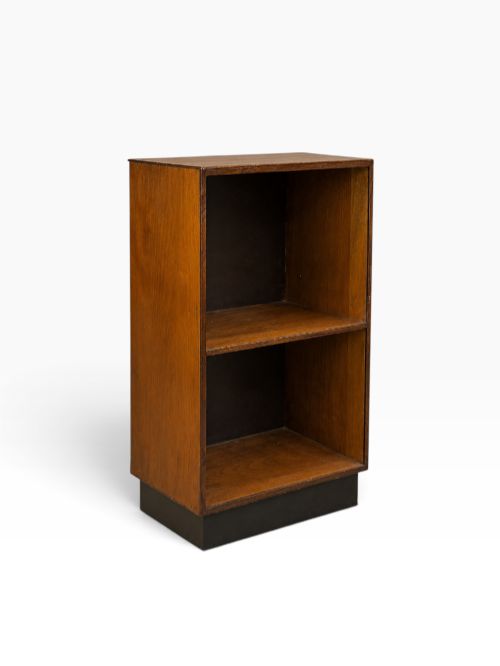
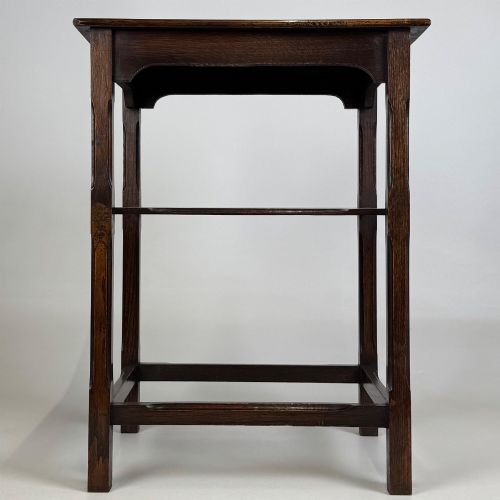
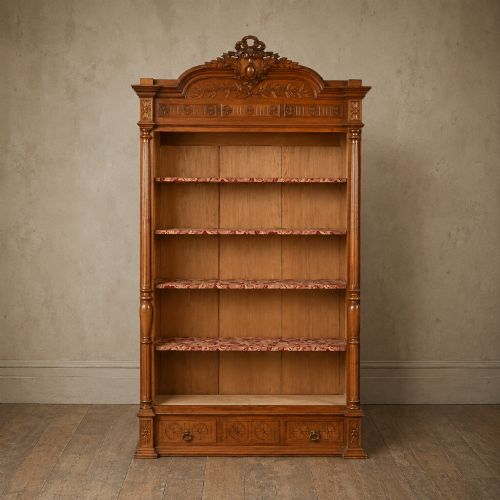
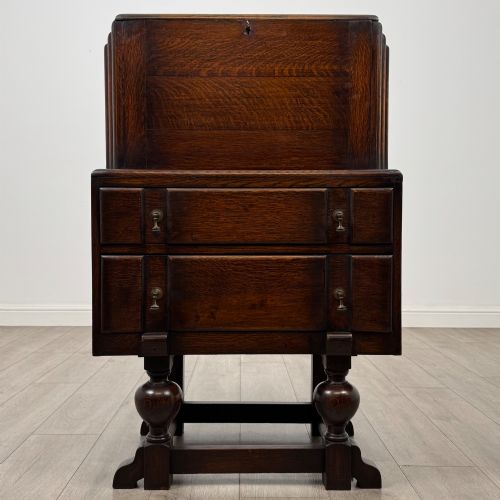
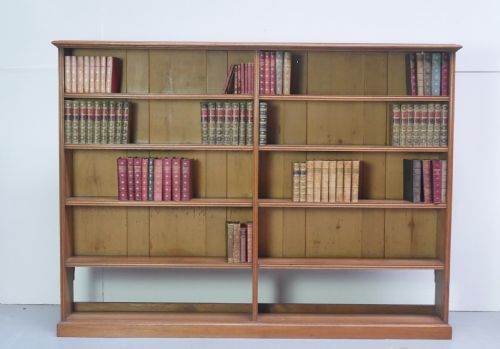
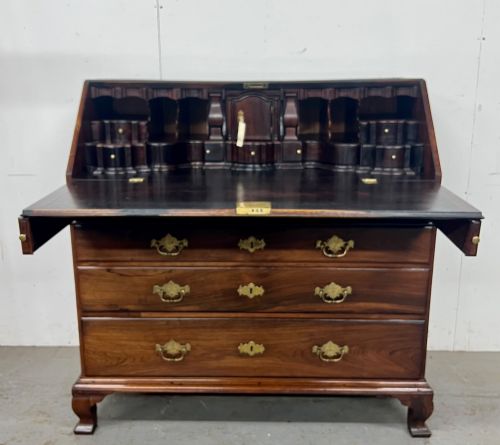
A solid wood cabinet encompasses diverse utilitarian forms built from substantial timber across the eighteenth, nineteenth and twentieth centuries. Buyers seeking a solid wood cabinet encounter practical household furniture ranging from tall bookcases and open plate racks to fitted writing bureaus and glazed display units.
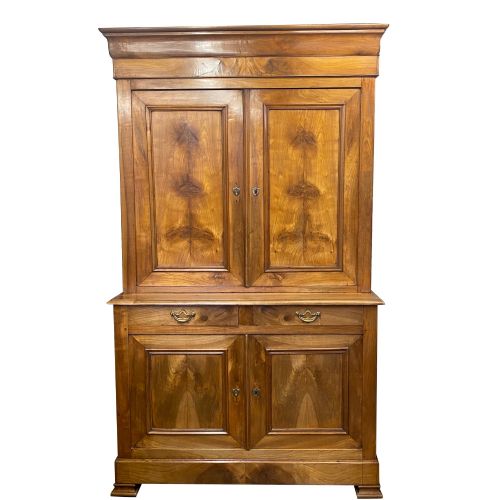
The Edwardian and Victorian periods dominate the selection, alongside eighteenth-century Continental examples and mid-century French pieces. Oak and mahogany appear most frequently, shaped into sideboards, buffets, corner cupboards and housekeeper's cupboards designed for daily domestic use.
How they were made
Cabinet makers utilised dense hardwoods such as oak, mahogany, cherry wood, walnut and Brazilian rosewood, supplemented by iron and brass hardware for hinges, handles and locks. Surfaces frequently display carved details, linenfold panels, beaded edges, dentil cornices and glazed doors.
Construction methods rely on solid timber joints suited to heavy storage demands, whether forming two-part housekeeper's cupboards, multi-drawer collectors' cabinets or open library bookcases. Timber selection dictated the structural integrity of each piece, ensuring long-term durability for domestic storage.
Solid Wood Cabinet Retail Price Guide 2026
Typical asking prices for solid wood cabinet among the pieces listed under this phrase on Sellingantiques today, from the lower quarter to the upper quarter. They describe what is for sale here now, not the wider market.
Several trade cabinets bear later hand sign-writing for historical gunsmiths, fishing supply shops, and public houses.
What varies in quality
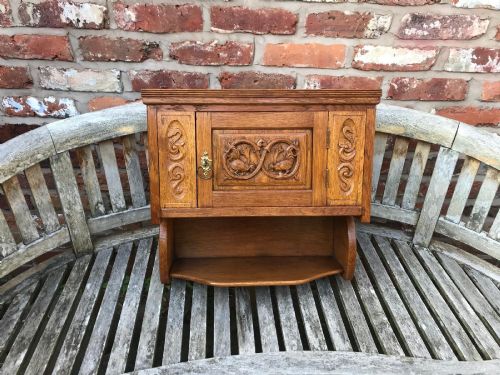
Quality rests upon the selection of timber and the ambition of the carving, ranging from plain utility pieces to elaborately worked Victorian oak and seventeenth-century revival designs. Finer examples exhibit considered proportions, precise joinery and sophisticated decorative motifs such as Green Man carvings or detailed dentil cornices.
The integration of functional elements - such as fitted writing desks inside bureaus, multi-drawer internal arrangements in collectors' cabinets, and original brass or iron hardware - distinguishes standard utility furniture from exceptional workshop production.
Charles Dudouyt·Brady of Edmonton
The Solid Wood Cabinet Glossary
- Linenfold
- A style of wood carving resembling folded linen, commonly seen on panels of Edwardian and earlier cabinet doors.
- Dentil cornice
- A moulding decorated with a series of small square blocks resembling teeth, placed beneath the upper edge of tall bookcases and cupboards.
- Chiffonier
- A compact sideboard featuring a combination of lower cupboards and upper shelving, popular during the Victorian period.
- Corner cupboard
- A triangular storage cabinet designed to fit neatly into room angles, frequently constructed in oak or mahogany during the Georgian era.
- Housekeeper's cupboard
- A large two-part storage cabinet traditionally used for linens and provisions in large nineteenth-century residences.
Solid Wood Cabinet: Frequently Asked Questions
What is a solid wood cabinet used for?
These versatile pieces serve multiple domestic storage needs, from housing book collections and displaying china to organising paperwork inside fitted writing bureaus.
Larger variations function as sideboards, buffets, or housekeeper's cupboards for dining rooms and kitchens.
How do I identify an Edwardian cabinet?
Edwardian pieces often feature lighter oak construction, sometimes incorporating linenfold panels, glazed doors, or dentil cornices typical of the early twentieth century.
They tend to balance traditional joinery with domestic utility suited to smaller Edwardian drawing rooms and studies.
What woods were used in these cabinets?
Cabinet makers predominantly utilised oak and mahogany, alongside cherry wood, walnut, ash, and Brazilian rosewood for more decorative commissions.
Hardware components in brass and iron complement the primary timbers across various historical periods.
Are these cabinets made from solid timber?
The selection consists entirely of solid wood construction, avoiding veneered substitutes in favour of substantial oak, mahogany, and regional hardwoods.
This robust build quality explains their survival across Victorian, Edwardian, and earlier eras.