

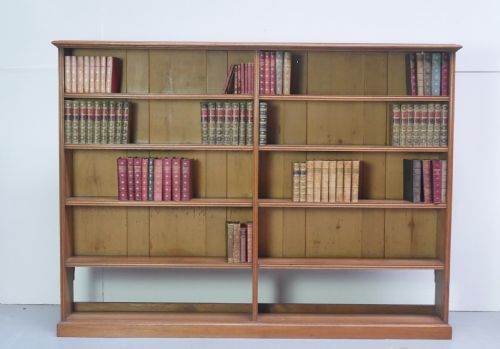


Solid Oak Library Shelves
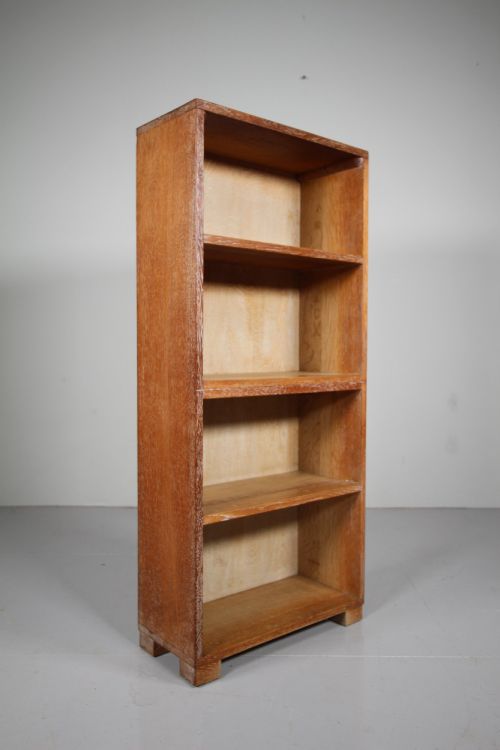
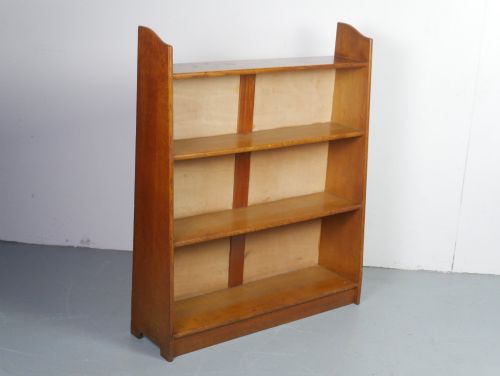
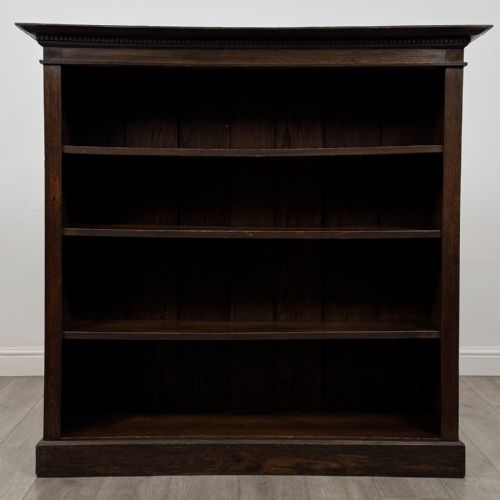
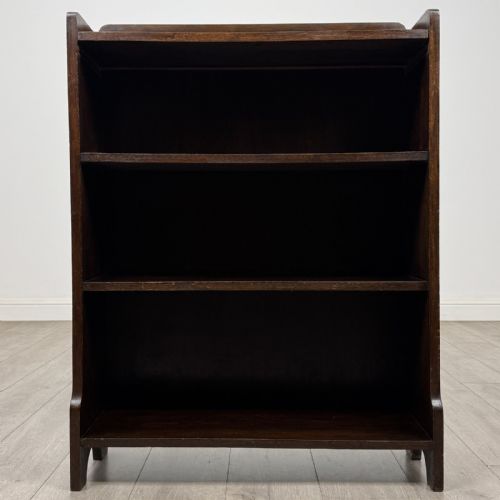
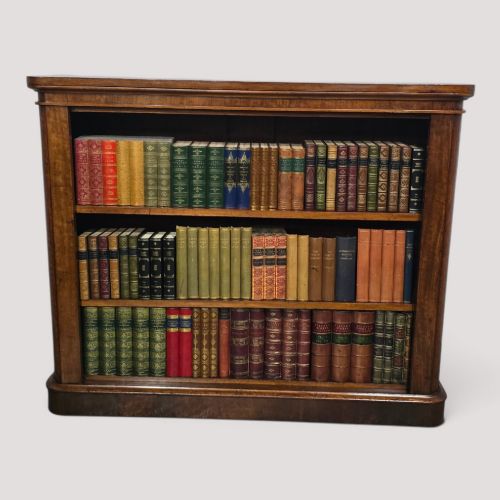
Solid oak library shelves provide sturdy, open storage for heavy volumes, appearing primarily as Edwardian and Victorian open bookcases.
Solid Oak Library Shelves
Solid oak library shelves span several decades of British craftsmanship, running from late Victorian pieces down through the Edwardian era and into the interwar years of the 1920s and 1930s. Buyers searching this category encounter open bookcases and adjustable shelving units designed specifically for domestic studies and home libraries.
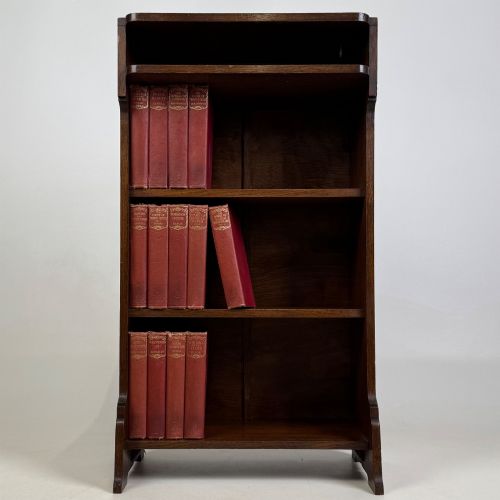
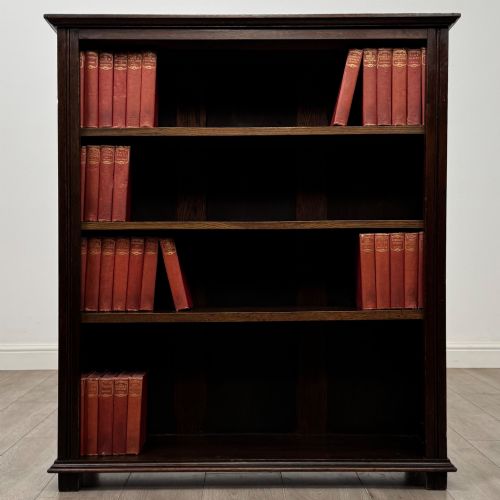
The prevailing form on this page is the open bookcase, often constructed in golden oak with straightforward uprights and tiered boards. Examples range from compact Edwardian models to large country house bookcases built to hold substantial rows of heavy volumes.
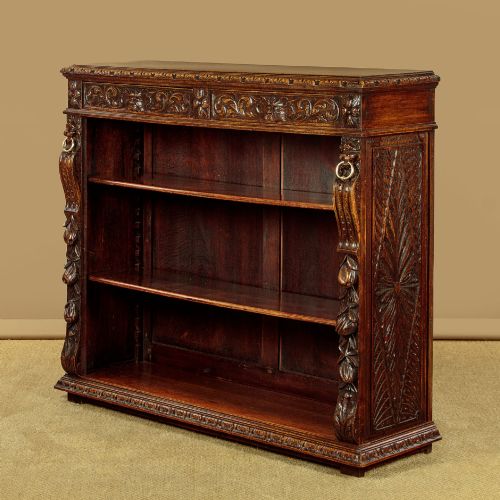
Stylistic variations reflect the changing tastes of the nineteenth and twentieth centuries, taking in the decorative flourishes of the Aesthetic Movement and the structural honesty associated with the Arts and Crafts tradition. Traditional formats and Jacobean Revival influences also appear among the listed items, offering carved details and darker patination.
Assessing quality
Quality rests on the selection of timber and the precision of the joinery, distinguishing utilitarian items from ambitious country house commissions. Finer examples display thoughtful proportions and careful timber matching across the visible panels and uprights.
Carving and decorative detailing set apart the top tier of pieces, where craftsmanship involves controlled hand-tooling rather than mechanical repetition. The presence of functional mechanisms, such as adjustable shelving tracks, further separates well-engineered library furniture from standard domestic storage.
Solid Oak Library Shelves Retail Price Guide 2026
Typical asking prices for solid oak library shelves among the pieces listed under this phrase on Sellingantiques today, from the lower quarter to the upper quarter. They describe what is for sale here now, not the wider market.
At least one revolving bookcase lets you spin your entire library with a gentle push.
Waring and Gillows
The Solid Oak Library Shelves Glossary
- Open bookcase
- A piece of storage furniture featuring exposed front shelves without doors. This format allows immediate access to book collections.
- Adjustable shelves
- Internal boards that can be moved to different heights using integrated racks or pins. This mechanism accommodates volumes of varying sizes.
- Golden oak
- A bright, warm shade of timber popular in Edwardian furniture production. It brings a luminous quality to domestic interiors.
- Aesthetic Movement
- A late nineteenth-century design style emphasising visual beauty above narrative subject matter. Pieces from this movement often display refined decorative elements.
Solid Oak Library Shelves: Frequently Asked Questions
How do I adjust the shelves?
Most period library shelves utilise wooden rack-and-pinion tracks or metal supports set into the interior sides. You simply lift the board and reposition the supports into the desired slots.
Take care when moving shelves on older units to avoid damaging the internal channels, especially if the timber has settled over decades of use.
Can these hold heavy books?
Solid oak construction provides exceptional natural strength and structural integrity. These units were originally built to house dense collections of reference works and bound volumes.
Even so, distributing the heaviest books across lower shelves helps maintain overall balance and prevents long-term board deflection.
Where should I place an open bookcase?
Positioning these pieces away from direct sunlight and heat sources protects the timber from drying out and warping. Interior walls in studies, living rooms, and libraries provide ideal environments.
Allowing adequate air circulation around the back and sides of the bookcase preserves the condition of the solid oak.
How do I date an oak bookcase?
Stylistic clues such as carved ornamentation, proportion, and hardware styles indicate the period of manufacture. Edwardian pieces often display lighter golden tones, while Victorian examples tend toward heavier proportions and deeper carving.
Examining the construction methods inside the carcass reveals whether the piece belongs to the nineteenth or early twentieth century.