


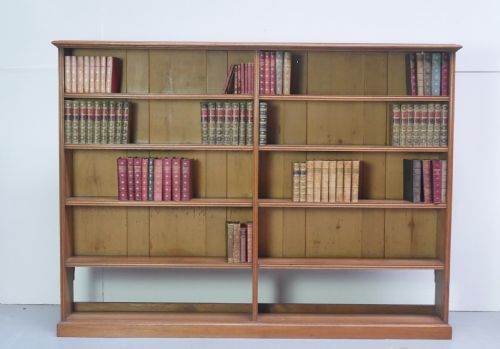


Solid Oak Library Shelf
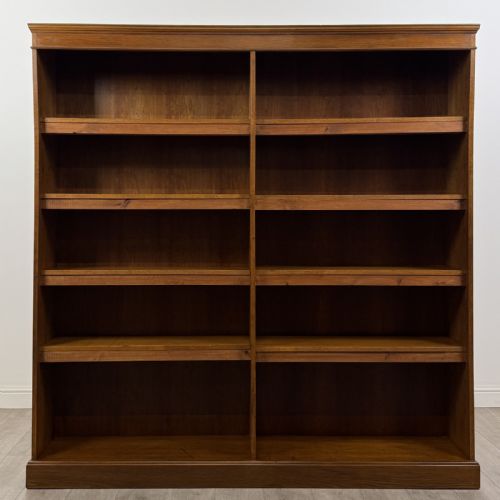
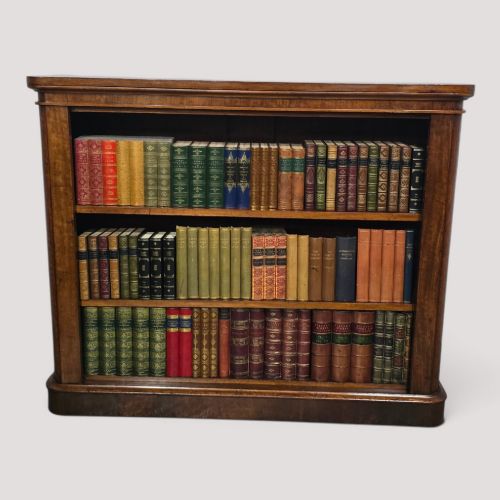
A solid oak library shelf brings heavy timber and rows of open books into a room, offering a sturdy home for volumes that sees daily service.
Solid Oak Library Shelf
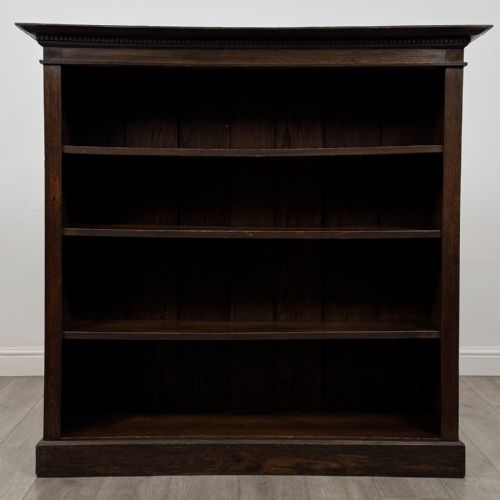
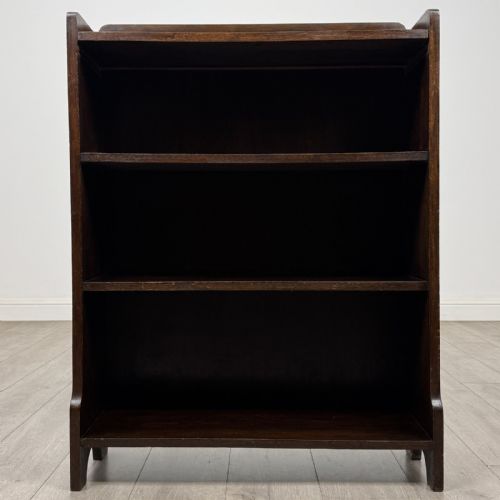
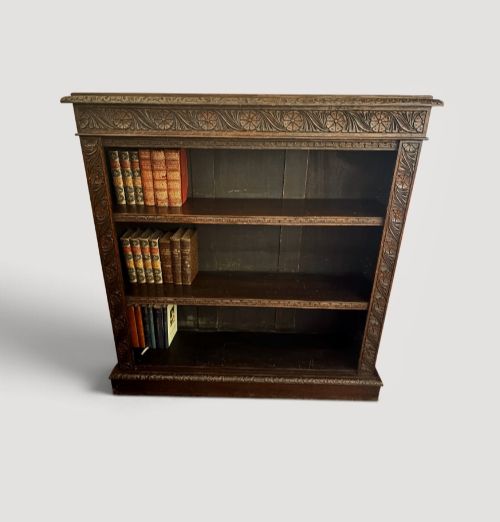
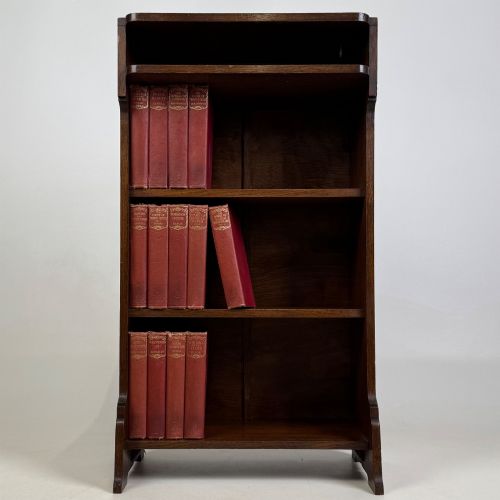
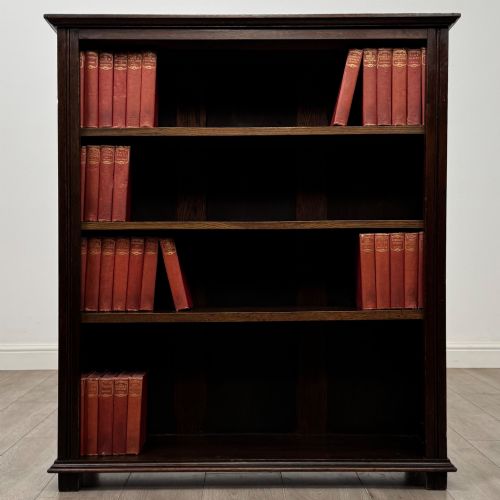
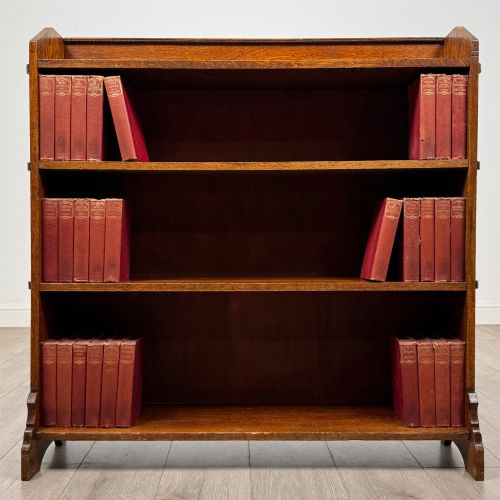
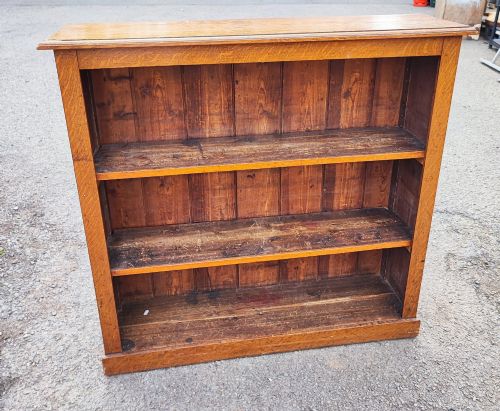
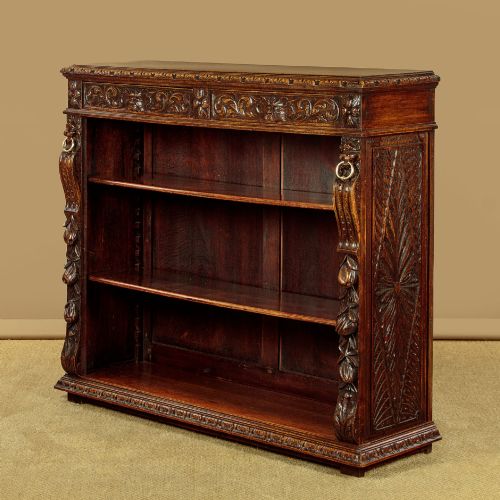
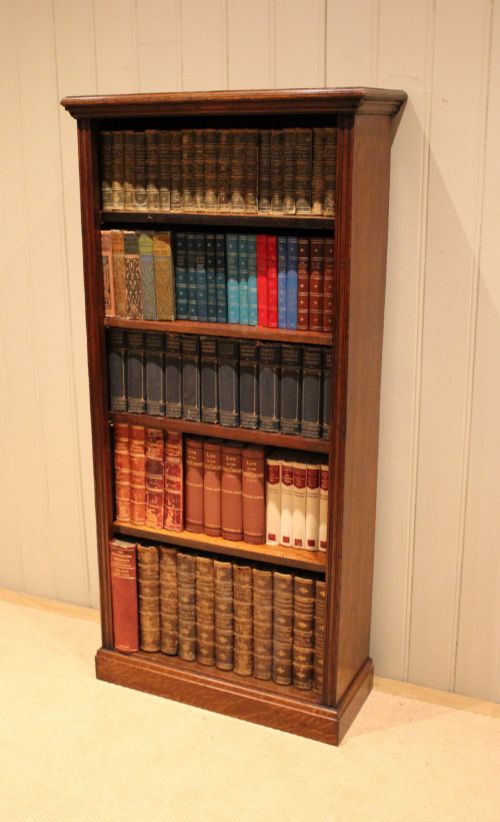
A solid oak library shelf takes the form of an open bookcase or standing bookshelf, designed to hold heavy collections within easy reach. These pieces range from small Edwardian golden oak cases to large Victorian carved library furniture.
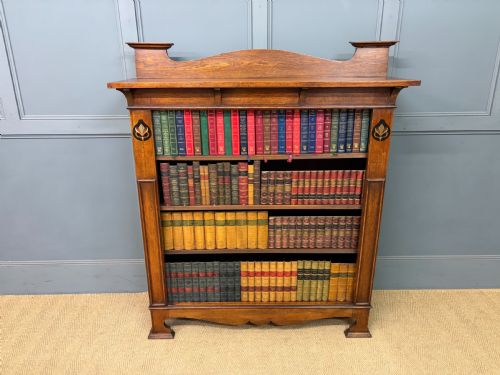
The Edwardian examples frequently feature raised galleries, dentil cornices, or carved edges, while Victorian and nineteenth-century pieces often provide adjustable shelving and deeper proportions. You will also encounter twentieth-century traditional and Arts and Crafts interpretations among the selection.
Most entries function as open front bookcases, though circular revolving bookcases and double width formats appear. The predominant wood across the items is oak, accompanied by occasional mahogany and brass fittings.
How they were made
Makers built these bookcases using solid oak planks, frequently finishing surfaces in golden tones or applying detailed carving along the cornices and edges. Structural joinery accommodated adjustable shelves, allowing owners to alter heights for different book sizes.
Selected pieces incorporate brass hardware for shelf adjustments or fixings, while decorative variations include marquetry details and country house style mouldings. Construction relies on traditional woodworking techniques suited to heavy timber bearing substantial weight.
Solid Oak Library Shelf Retail Price Guide 2026
Typical asking prices for solid oak library shelf among the pieces listed under this phrase on Sellingantiques today, from the lower quarter to the upper quarter. They describe what is for sale here now, not the wider market.
Listings span periods from the Victorian era and 19th Century through Edwardian times, 1920, and 1930, using oak, mahogany, and brass.
What varies in quality
The distinction between standard utility shelving and finer library pieces rests on the depth of the carving and the presence of architectural details like dentil cornices or raised galleries. Heavy timber selection and careful jointing elevate a piece from a basic storage box to a substantial country house bookcase.
Adjustability mechanisms also differentiate the range, with well-engineered brass supports marking out better examples from fixed-shelf alternatives. The richness of the oak grain and the crispness of executed carvings further separate standard production from superior craftsmanship.
Waring and Gillows
The Solid Oak Library Shelf Glossary
- Dentil cornice
- A decorative moulding featuring a repeating pattern of small square blocks resembling teeth, commonly found along the top of Edwardian and Victorian bookcases.
- Raised gallery
- A low decorative railing or rim around the top surface of a piece, designed to keep items from sliding off.
- Open bookcase
- A frontless shelving unit that displays book spines directly, contrasting with glazed or cabinet-door bookcases.
- Adjustable shelves
- Movable horizontal boards resting on pins or tracks, allowing the vertical spacing between shelves to change according to book heights.
Solid Oak Library Shelf: Frequently Asked Questions
What is a solid oak library shelf?
A solid oak library shelf is a sturdy open bookcase or shelving unit built from heavy timber to house book collections.
These pieces range in date from the nineteenth century through the Edwardian period and the 1920s, offering deep shelving and open access.
How do I adjust the shelves?
Many of these bookcases feature adjustable shelving systems supported by wooden pegs or brass fittings.
Lifting the shelf allows you to reposition the board into alternative slots to accommodate taller volumes.
Are these bookcases entirely solid oak?
The listings predominantly feature solid oak construction, sometimes complemented by secondary timbers and brass hardware.
Descriptions specify the primary materials used by the maker for each individual piece.
How do I date an oak bookcase?
Dating relies on stylistic details such as Edwardian dentil cornices, Victorian carving, or Arts and Crafts simplicity.
Periods span from the nineteenth century into the interwar years, each showing distinct decorative preferences.