
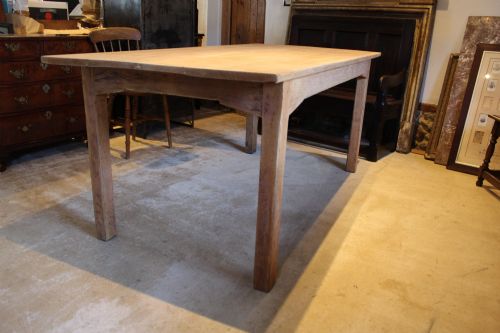
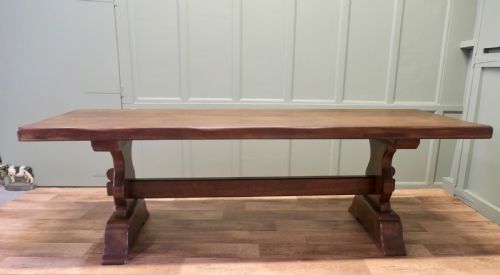
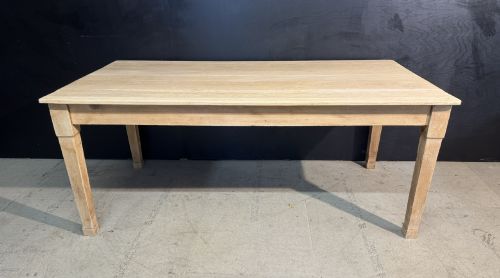
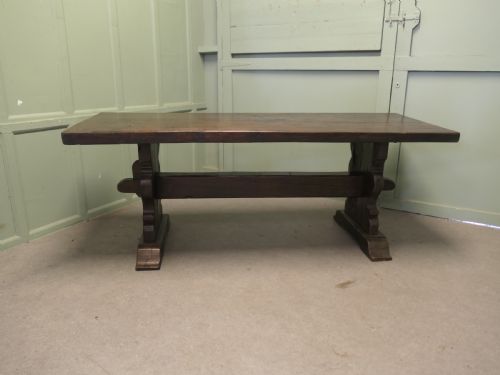
Solid Oak Farmhouse Table
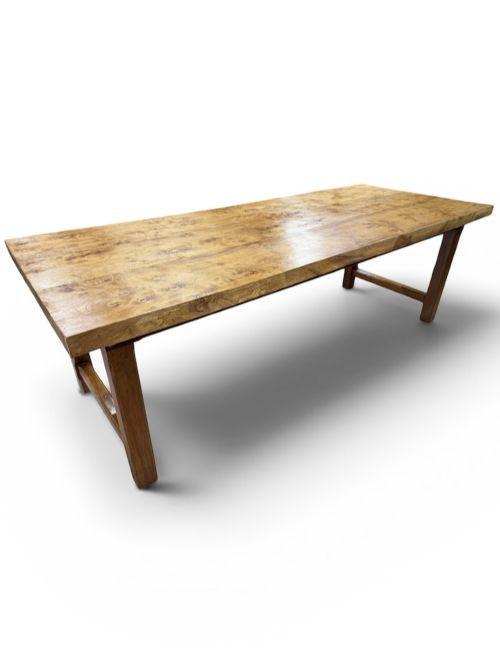
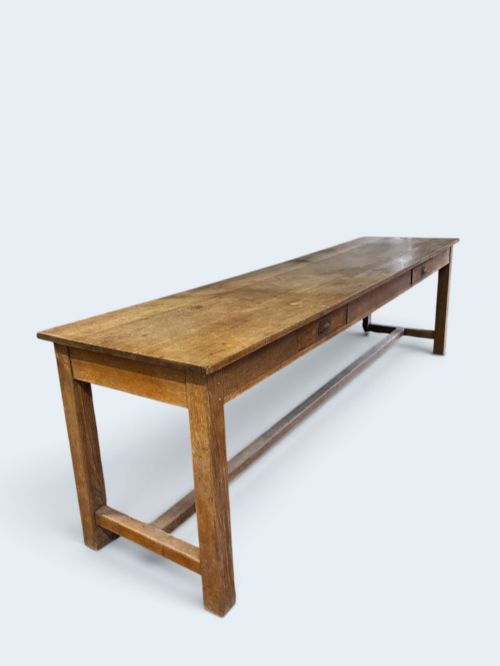
A solid oak farmhouse table grounds a room with timber grain, heavy proportions and centuries of domestic utility.
Solid Oak Farmhouse Table
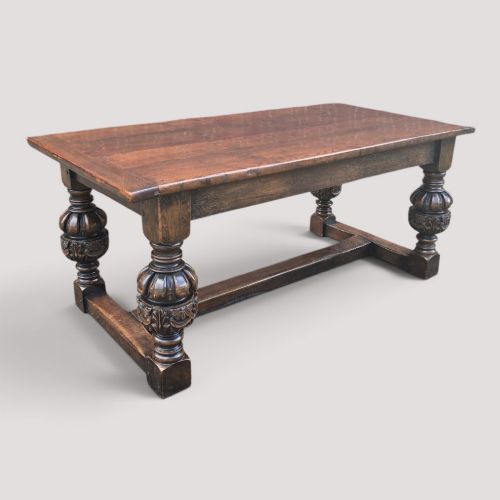
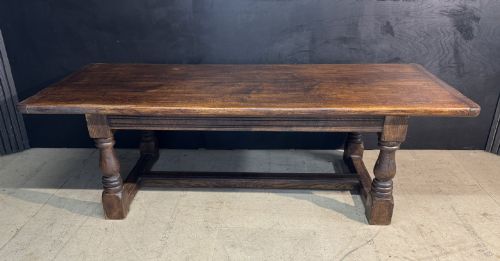
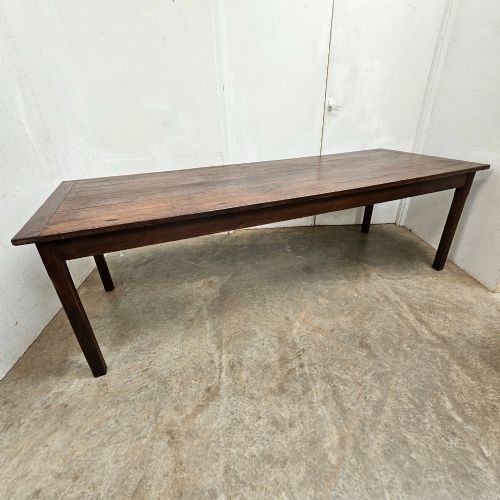
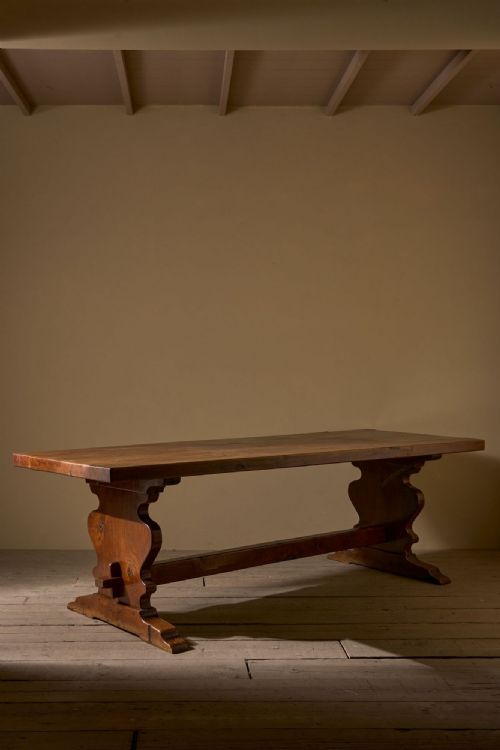
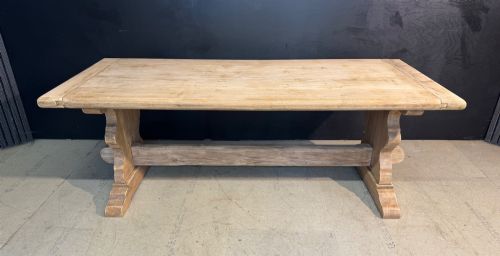
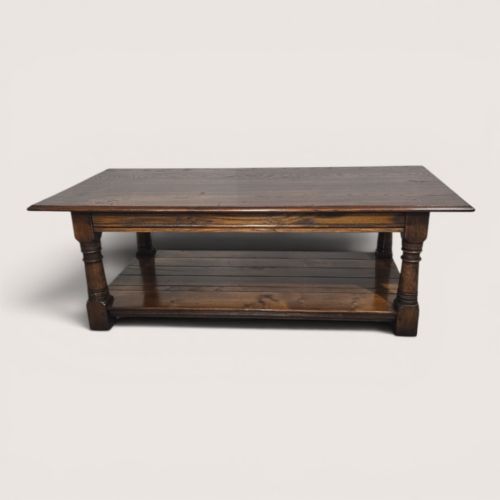
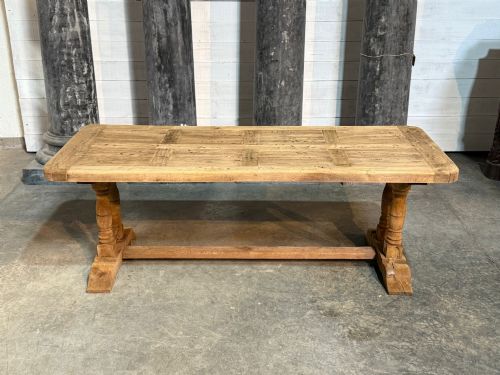
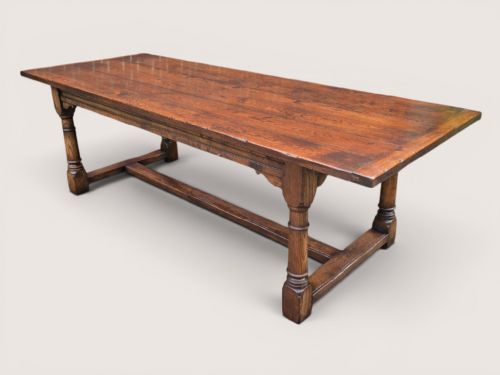
A solid oak farmhouse table is a heavy dining or kitchen board designed for daily household use, drawing on rural English, French and continental traditions. Buyers browsing this selection commonly encounter refectory formats, plank-top constructions and extended lengths designed to seat large families.
The periods represented span from the eighteenth century through the Georgian era, Victorian period, and into early twentieth-century Edwardian and 1930s reproductions. Forms range from standard dining tables and kitchen tables to serving tables, coffee tables, and benches in rustic country and provincial styles.
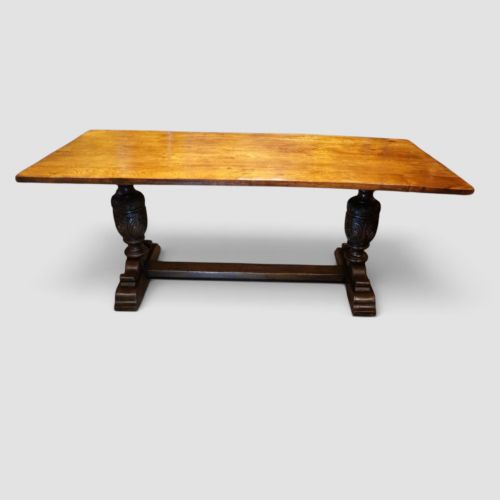
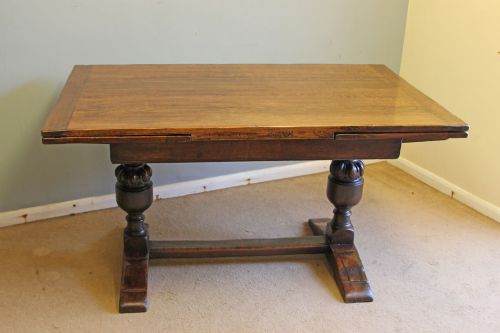
French oak and English oak dominate the origins, yielding substantial timber surfaces intended to withstand heavy domestic wear. Many examples incorporate refectory bases, draw leaves, or barrel legs suited to spacious kitchens and dining halls.
How they were made
Constructed primarily from solid oak and timber planks, these tables rely on thick top boards joined to sturdy framing and stretcher bases. Iron fixings and hardware occasionally reinforce joints, while secondary woods such as pitch pine appear in specific Victorian configurations.
Cabinetmakers utilised traditional joinery methods, including pegged mortise and tenon joints, to support the heavy weight of multi-plank oak tops. Surfaces were hand-planed and finished to highlight the natural grain, knots and figuring of the timber without synthetic veneers.
Listings feature solid oak, French oak, and timber planks across eighteenth-century, nineteenth-century, and early twentieth-century periods.
What varies in quality
Quality rests in the selection and thickness of the timber planks, with wider, straight-grained oak boards commanding greater appreciation than assembled strips. The integrity of the underframe and the tightness of historical joinery dictate structural longevity.
Proportion and execution distinguish regional vernacular styles, from simply turned legs to elaborately carved Elizabethan or seventeenth-century revival details. A balanced scale and stable stance separate utilitarian workshop pieces from finer formal dining boards.
The Solid Oak Farmhouse Table Glossary
- Refectory table
- A long, narrow dining table traditionally used in monastic refectories and later adopted for domestic kitchens and dining rooms. These pieces feature stretcher rails running low between the legs for added stability.
- Plank top
- A table surface constructed from multiple parallel boards of solid timber joined edge to edge. This method allows for wider tabletops while accommodating the natural seasonal movement of wood.
- Draw leaf
- An extension mechanism where auxiliary leaves slide out from beneath the main tabletop when additional seating length is required. The system expands the surface area without altering the primary height.
- Tavern table
- A compact, sturdy table form historically built for public houses and domestic service. They typically display thick wooden tops and robust legs braced by simple stretchers.
- Stretcher
- A horizontal wooden brace connecting the legs of a table to prevent them from bowing outward under heavy downward pressure. Stretchers are characteristic of traditional refectory and farmhouse builds.
Solid Oak Farmhouse Table: Frequently Asked Questions
How do I clean a solid oak farmhouse table?
Wipe timber surfaces with a damp cloth and mild soap, avoiding harsh chemical sprays that strip natural finishes.
Dry the wood thoroughly afterwards to prevent moisture rings and protect the grain.
Can I use a farmhouse table outdoors?
These tables are built for indoor domestic environments and exposure to damp outdoor conditions will warp solid oak planks.
Changes in humidity cause untreated or antique timber to split and joints to weaken.
How do I determine the period of my table?
Examine the tool marks on the underside of the planks, the type of joinery used in the frame, and the wear patterns on the feet.
Hand-cut pegs, pegged tenons and natural timber oxidation point towards earlier Georgian and Victorian construction methods.
How many chairs will my table seat?
Seating capacity depends on the overall length of the plank top and the placement of the base stretchers or legs.
Tables measuring over two metres typically accommodate eight to ten diners comfortably along the sides and ends.