

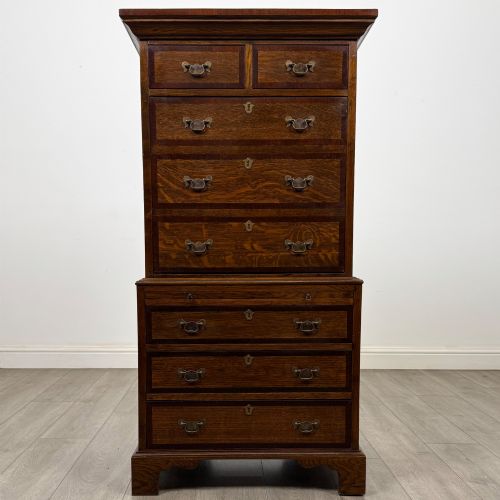
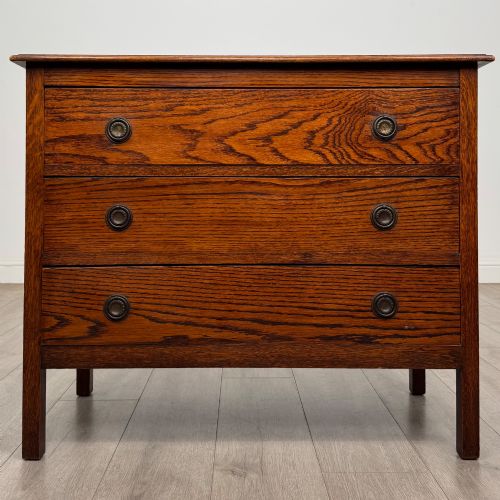
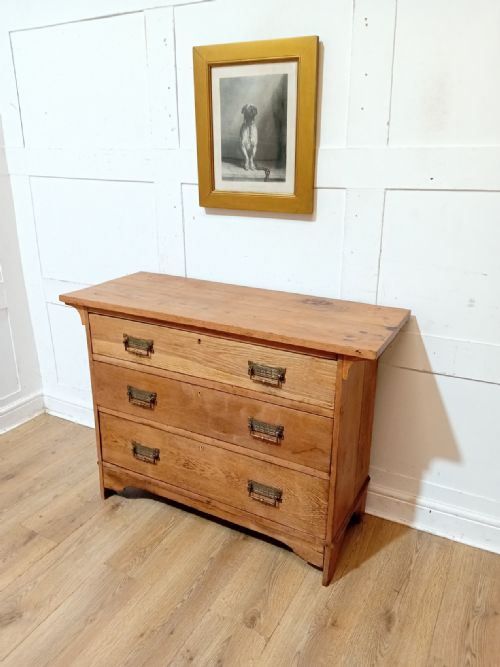
Solid Oak Bedroom Chest
A solid oak bedroom chest is a heavy storage piece built to hold linen and clothes, valued for its honest grain and enduring frame.
Solid Oak Bedroom Chest
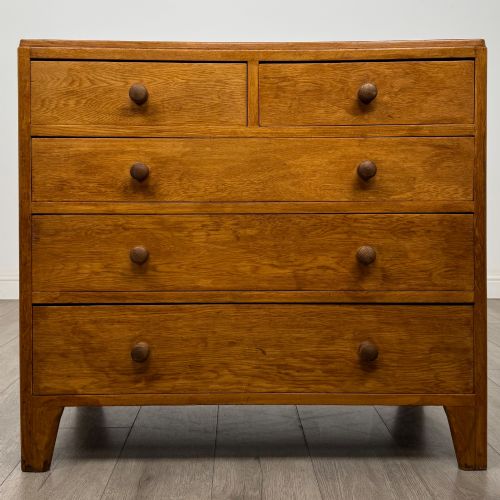
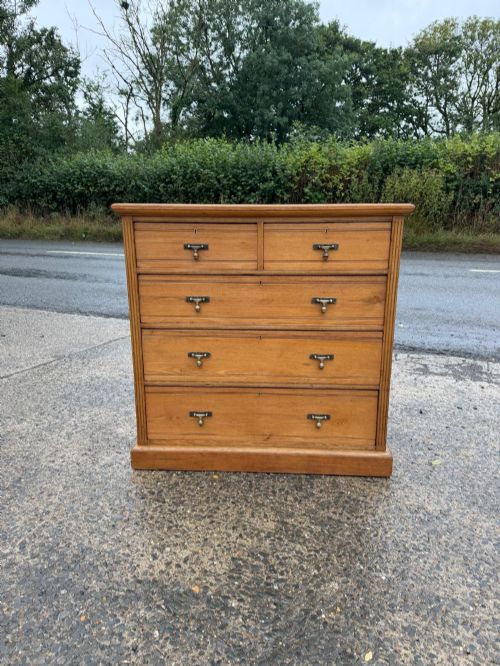
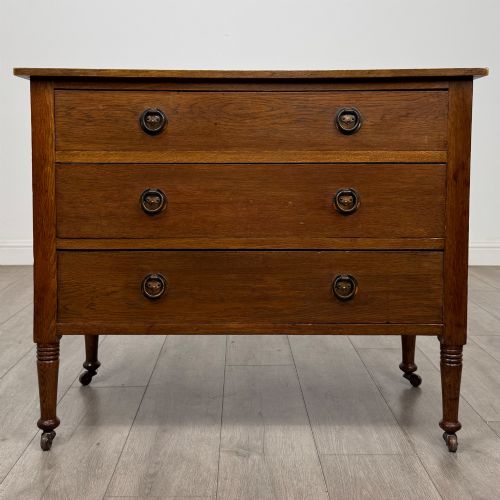
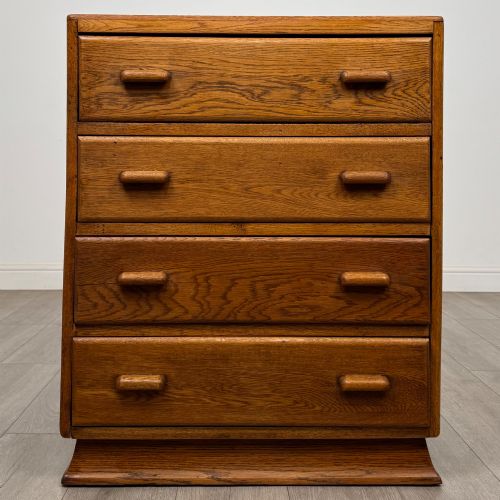
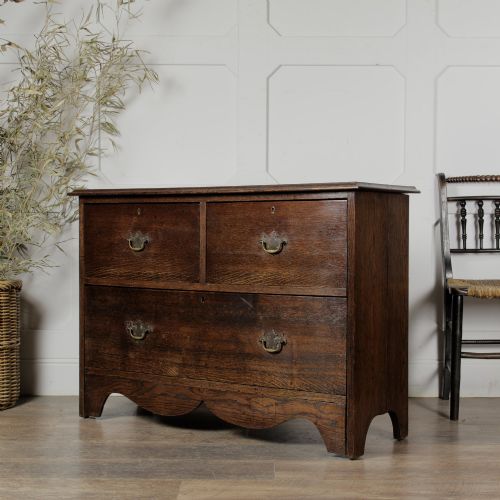
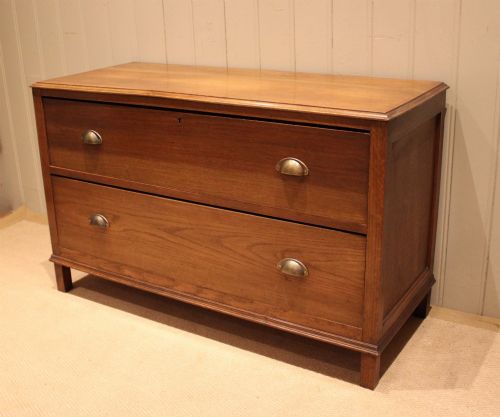
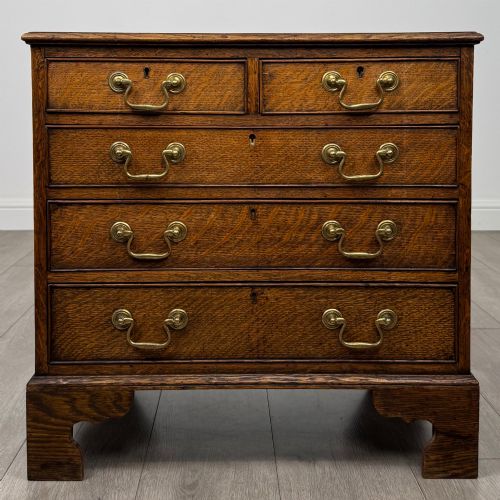
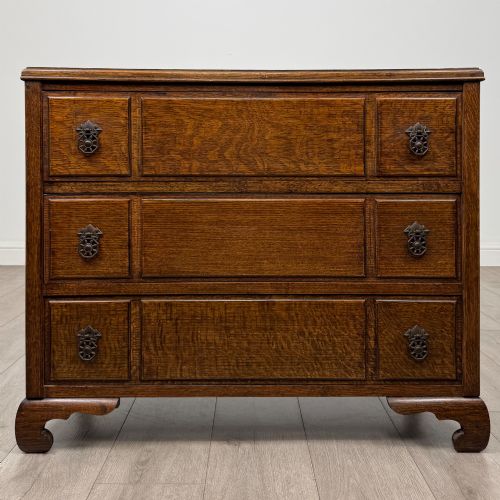
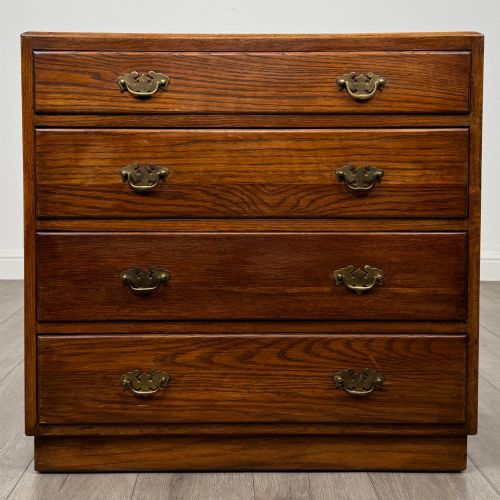
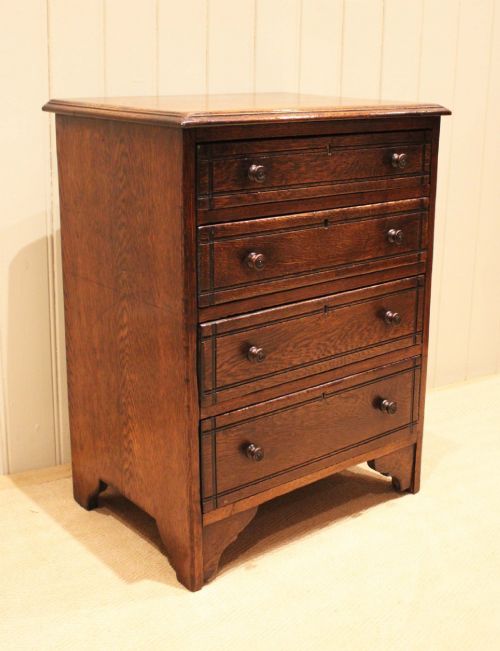
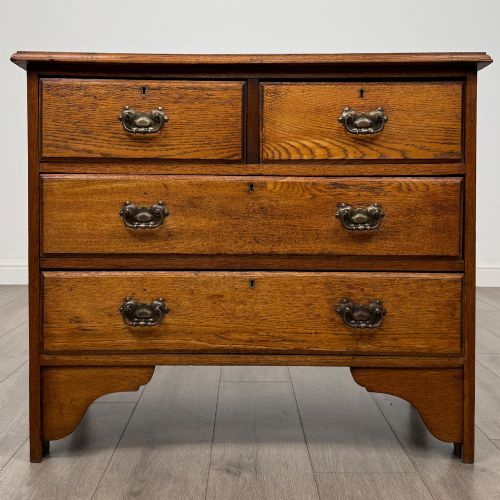
A solid oak bedroom chest provides dependable storage for clothing and household textiles, utilising sturdy timber that stands up to daily domestic use. These pieces range from low, compact drawer units to tall cupboards and dressing chests designed for bedrooms.
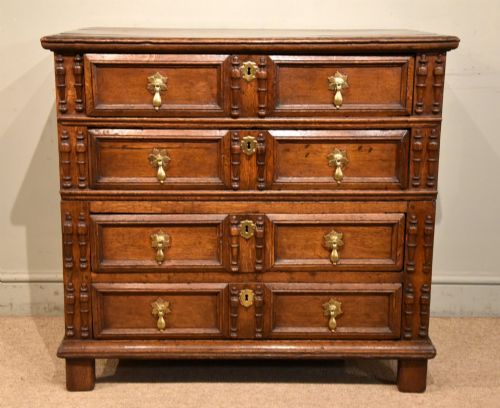
Edwardian and early twentieth-century examples dominate the selections here, alongside earlier Georgian, Victorian, and seventeenth-century variants. Buyers frequently encounter pieces displaying simple rectangular drawer configurations or fitted dressing mirrors and decorative brasses.
Materials and construction methods
Makers built these chests primarily using solid oak timbers, supported by brass handles, iron fittings, and occasional glass elements on mirrors. Wood inlay and painted limed finishes appear on specific Arts and Crafts designs.
Traditional joinery techniques ensured structural rigidity across centuries, employing pegged joints, panelled frames, and hand-cut dovetails for the drawers. Selected pieces integrate turned barley twist supports or applied mouldings to define their period style.
Early twentieth-century makers hid mirrors in dressing chests so effectively that unsuspecting buyers often discover secret compartments.
Factors defining the range of quality
Quality depends heavily on the crispness of the timber grain, the weight of the solid oak used in the carcase, and the retention of original hardware such as brasses and locks. Heavier pieces with thick drawer linings and clean interior construction sit at the upper end of the scale.
Design ambition separates basic utility chests from sophisticated studio pieces, particularly when examining signed Arts and Crafts models or finely proportioned Georgian and seventeenth-century examples. The integrity of the original surface finish and balanced proportions dictate the distinction between ordinary and superior pieces.
Heals·Heals of London·George Walton
The Solid Oak Bedroom Chest Glossary
- Tallboy
- A tall storage chest constructed by stacking one chest of drawers on top of another, often rising significantly above standard waist height.
- Dressing chest
- A low chest of drawers equipped with an integrated mirror and small accessory boxes, designed specifically for bedroom grooming.
- Commode
- A decorative low cabinet or chest of drawers originating in French furniture design but applied broadly to smaller storage furniture.
- Linen press
- A large tall cupboard enclosing sliding trays or shelves originally intended for storing household sheets and tablecloths.
- Barley twist
- A decorative turning technique resembling a spiralling rope, frequently utilised on table legs and supports during the seventeenth and early twentieth centuries.
Solid Oak Bedroom Chest: Frequently Asked Questions
What periods do these oak chests come from?
The pieces span from the seventeenth century through the Georgian and Victorian eras up to the Edwardian period and the 1930s.
Each period brings distinct stylistic traits, ranging from seventeenth-century panelled construction to clean-lined Arts and Crafts and Art Deco forms.
How do I use a dressing chest?
A dressing chest serves the dual purpose of storing folded clothing within its drawers and providing a surface with an attached mirror for grooming.
Place it against a bedroom wall with adequate natural light to utilise the mirror effectively while keeping everyday items organised.
What is the difference between a chest and a tallboy?
A standard chest of drawers sits at a lower height with two to four primary drawers suited for general bedroom storage.
A tallboy rises higher vertically, often incorporating additional drawer tiers or a cupboard section to maximise storage capacity in a compact footprint.
Are these chests made from solid wood?
The selections utilise solid oak alongside related timber elements, brass hardware, iron accents, and occasional wood inlay.
Construction methods rely on traditional carpentry to handle the heavy density of the oak timber.